


Industrial manufacturing
Industrial Technology


Unless you weld for a living, it is often difficult to know if your MIG welder is set up for optimal performance. If you find yourself asking questions such as “am I using the proper voltage?” or “do I have too much or too little wire?” then this article is for you! We will touch on the basics
MIG welding wire consists of a spooled-up electrode that’s fed through a MIG welding “gun” and is heated to melt metal and join workpieces together. Sounds simple enough, right? Well, it’s not quite that easy. There are a lot of different types of MIG welding wire, and in this article, we’ll
What Is a Weld Bead? A weld bead is created by applying filler material to a joint between two pieces of metal. A deposit of filler metal from a single welding pass, also known as a welding bead. Bead is deposited on and in the work surface when the wire or electrode is melted and fused i
MIG welding uses a hand-held gun that contains a spool-fed wire electrode, along with a gas nozzle that delivers a stream of gas to the weld site. This gas prevents the contact of oxygen, nitrogen, and other environmental gases with the weld bead – which helps ensure consistent, strong results.
What are welding gases? Welding gas is used in a range of different ways. These include shielding the arc from impurities like air, dust, and other gases; keeping welds clean on the underside of the seam opposite the arc (or purging); and heating metal. Blanketing gases are also used to prot
If you’re interested in welding and have wondered, “What is SMAW?” we’re here to help explain. SMAW stands for “shielded metal arc welding.” SMAW is a type of welding used in a variety of applications, including maintenance and repair, construction, industrial fabrication, and more. SMAW is
What are welding electrodes? Welding electrodes are lengths of wire that are connected with your welding machine to create an electric arc. Current passes through this wire to produce an arc, which generates a lot of heat to melt and fuse metal for welding. An electrode is a coated metal
A welding ventilation overview For processes such as welding, brazing, soldering, and torch cutting, the primary purpose of ventilation is to remove air contaminants from the worker’s breathing zone. Different ventilation strategies may be needed in each case to remove air contaminants from
Titanium is considered to be an exotic metal due to its low weight, good strength, and corrosion resistance. However, in the past, it was believed that proper titanium welding can be performed only in sealed chambers. It’s a reactive metal that can become contaminated by atmospheric gases.
Welding joins materials together by melting a metal workpiece along with a filler metal to form a strong joint. The welding process produces visible smoke that contains harmful metal fume and gas by-products. This fact sheet discusses welding operations, applicable standards, and suggestion
What is Submerged Arc Welding (SAW)? Submerged Arc Welding (SAW) is a joining process that involves the formation of an electric arc between a continuously fed electrode and the workpiece to be welded. A blanket of powdered flux surrounds and covers the arc and, when molten, provides electri
In the world of welding, your welder’s helmet is your shadow and probably your most important tool. The helmet becomes an extension of the welder, as it is on at all times during work. Due to the fact that the helmet never comes off while you’re working, it is of the utmost importance that
Lead is a waterproof metal that melts easily and is less prone to corrosion, making it an ideal choice for many welding projects. Although lead is often used for automobile parts and pipes, it is highly toxic when handled improperly. Take precautions by ventilating the area and wearing safet
How to Weld Copper Copper welding is not hard. The heat required for this type of welding is approximately twice that required for steel of similar thickness. Copper has a high thermal conductivity. To offset this heat loss, a tip one or two sizes larger than that required for steel is recom
Aluminum brazing has become prevalent in the manufacturing industry, repair shops, automotive industry, or even at the homes of our DIY guys and hobbyists. Most manufacturers and repair companies are using all-aluminum or mostly aluminum components for the repair of holes, cracks, rivets, le
What is Spray Welding? Spray welding refers to several welding processes in the form of thermal spraying. It is an industrial activity in which a powder or wire is atomized at high speed with compressed gas and sprayed onto a metal surface. Spray welding involves the use of industrial pla
Today, thermal spray coatings are utilized in a number of different industries. These coatings consist of wire and molten powder which are exposed to plasma or oxy-fuel combustion. The fire from the spray device will power the mixture that has been heated, and once it has been sprayed onto meta
If you are new to welding, you might be wondering whether you can weld a black iron pipe. You might even be wondering what this pipe is in the first place. In this article, we define briefly what a black tube is and discuss whether or not you can weld this kind of pipe. What is Black Pipe?
For many years the two most common methods of joining copper tubes and fittings have been soldering and brazing. These tried-and-true methods are in a number of ways similar, yet there are also several distinct differences that set them apart. This paper explains the similarities and highli
What is Carbon Arc Welding? Carbon arc welding (CAW) is a process that produces the coalescence of metals by heating them with an arc between a non-consumable carbon (graphite) electrode and the workpiece. In carbon-arc welding, a carbon electrode is used to produce an electric arc between t
Industrial Technology
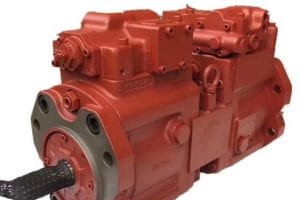
Kawasaki K5V Hydraulic Pump – Durable, Easy‑Installation Replacement for Rotary Mower
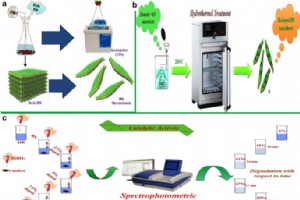
Bismuth‑Doped Boron Nitride Nanosheets: Enhanced Electronic and Optical Performance from Theory and Experiment
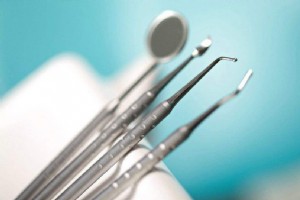
Titanium in Medicine: Advanced Applications from Orthopedics to Dentistry

Java BufferedWriter: Efficient Character I/O Explained
