



ArduTester V1.13: Automated Transistor Tester Powered by Arduino UNO
Components and supplies
 |
| × | 1 | |||
 |
| × | 1 | |||
 |
| × | 1 | |||
 |
| × | 1 | |||
 |
| × | 1 | |||
 |
| × | 1 | |||
 |
| × | 1 | |||
| × | 3 | ||||
| × | 3 |
About this project
This is an automatic Transistor Tester, to identify pinout and characteristics of various discrete semiconductors ( Transistors NPN, PNP, MOSFETs, etc ). It's also evaluating resistors, capacitors, inductances, etc... The original project was written in a mix of C and AVR Assembly Code for AVR gcc tooling AVR Studio.
My ambition was to port it into Arduino Web Editor, so simplifying tremendously the handling of the huge configurable software, making it instantly possible to edit, verify and upload to an Arduino UNO board without the need of installing any AVR tooling Suite or using Linux OS.
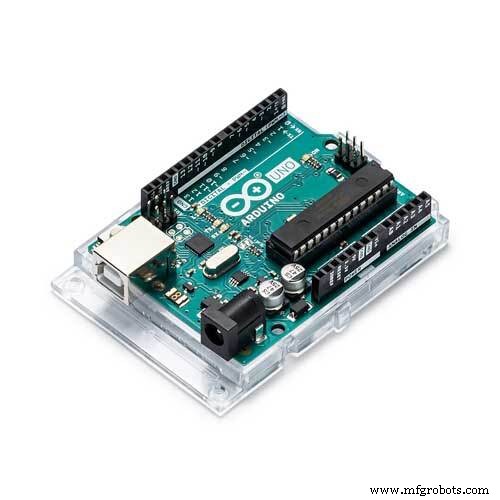
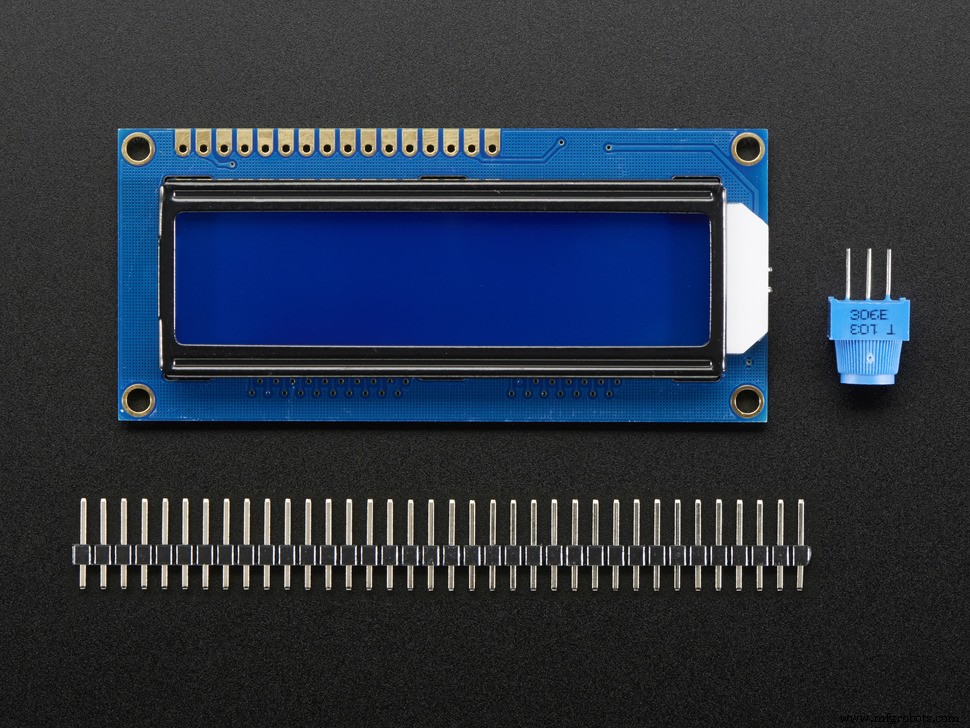
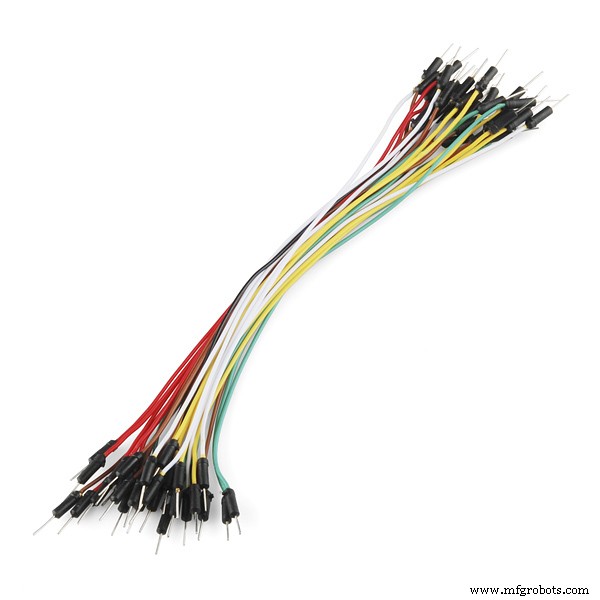
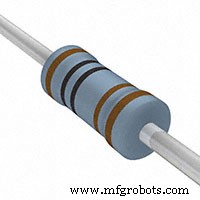
Most Arduino UNO Starter Kits contain the necessary components ( UNO R3 board, 1602 LCD, push buttons, Breadboard, Jumper wires, resistors ).
This project makes also Arduino open source, open hardware philosophy look better, because the previously .Hex files for Arduino UNO and MEGA 2560 provided from the Transistor Tester original project was not putting Arduino in a good light ( UNO version was provided without LCD, only serial monitor ).
Last but not least, there is almost no performance or accuracy lost with this Arduino Version ArduTester V1.13 when you compare with original TransistorTester !
How to Use the ArduTester V1.13 ?Connect component to test to any TP1, TP2, TP3 (component can be Transistors NPN, PNP, FET, Resistors, Capacitors, Diodes, LED and many more.)
Warning: TEST only capacitor you have discharged before !
Then press TEST push button and read the Test result on the 2 X 16 LCD.
Example of TEST with a Transistor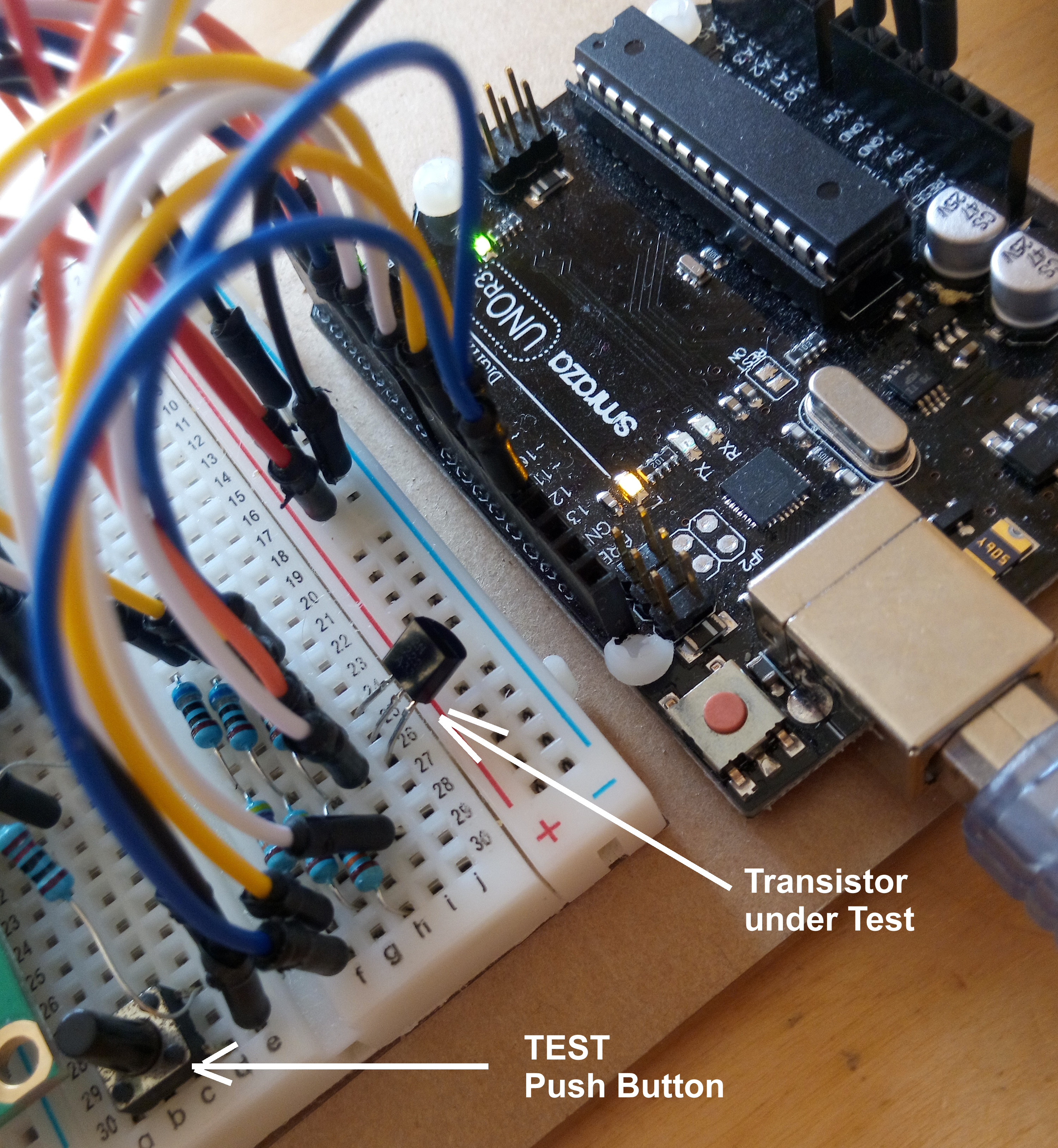
Press TEST again to get more parameters or a new Test.
Long TEST pressing after a Test is done gives a Menu selection: press TEST again to scroll in menu selection, and press long TEST to select a specific function.
more Menu Function goodies below...f-Generator ( Selectable Frequency Square wave Output at TP 2 ) ( Test Pin 2 )
10-bit PWM ( Frequency with Selectable Duty Cycle Output at TP 2 )
Case you are lost in Menu, press the Arduino UNO reset key.
Code
ArduTester V1.13 Sketch
Select Arduino/Genuino Uno Board, Verify and UploadSchematics
How place components and wire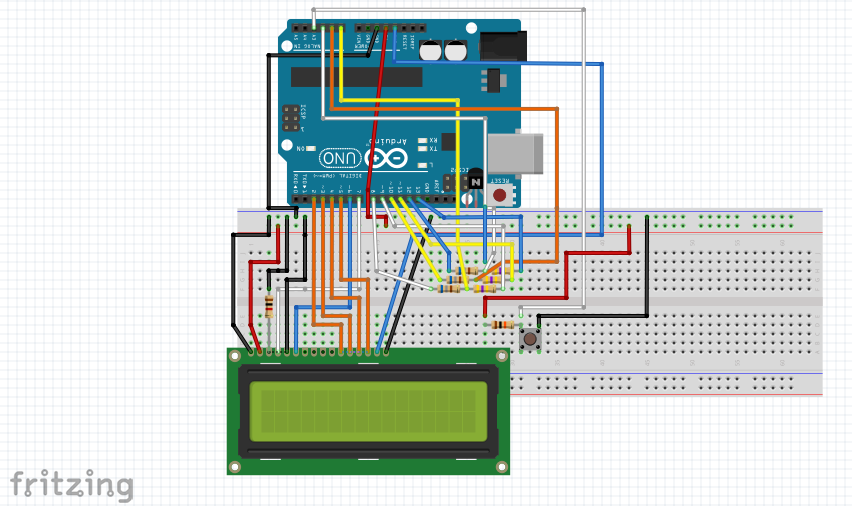 ardutester_v113_otPu7eBf45.fzz
Manufacturing process
- Arduino Nano Companion Kit – Essential Components & Tools for DIY Electronics
- Build an Isolated Analog Input Circuit for Arduino
- Build a TV Output Cable for Arduino UNO with Just Two Resistors
- DIY Automated Electronic Component Tester – Simple, Accurate, and Reliable
- Arduino Real-Time Clock LED Clock: Build a Reliable Time Display
- Build a Stunning POV Cylinder with Arduino Due – Step‑by‑Step Guide
- Efficient Resistor Sorting for Arduino Nano Projects: A Simple, Time‑Saving Method
- ArduTester Millennium: The Ultimate Arduino UNO & Mega 2560 Starter Kit
- Build a Reliable Arduino Kitchen Timer with LCD Display
- Transistor vs. Resistor: Key Differences Explained