



Shortbread: From Scottish Heritage to Modern Production
Background
Shortbread is a quintessential Scottish biscuit that has stood the test of time thanks to its simple yet precise recipe: flour, butter, and sugar. The production process is streamlined into three core stages—mixing, shaping, and baking—yet each step demands meticulous control to deliver the classic buttery, crumbly texture that defines shortbread. While it is a holiday staple during Christmas and New Year, shortbread enjoys year‑round popularity worldwide, cementing its place as the flagship of butter cookies across Europe. In the United States, several specialty companies now produce shortbread exclusively, honoring the tradition while catering to modern tastes.
History
The name “shortbread” has sparked debate: is it a cookie, biscuit, or cake? The term “short” refers both to the high butter content—providing a tender crumb—and the desired short, crisp finish. Historically, Scottish bakers defended the name to avoid biscuit‑related taxation. The biscuit’s origins are indisputably Scottish, with regional variations such as Shetland’s caraway‑seed “Bride’s Bonn” and Edinburgh’s citrus‑and‑almond‑topped festive versions. Though often served with tea, shortbread pairs beautifully with milk, coffee, wine, or champagne.
Raw Materials
The foundation of authentic shortbread is fine white flour, derived from wheat kernels with bran and germ removed, leaving a starch‑rich endosperm that gives dough its stretchability. The 1921 British regulation stipulates that at least 51% of the fat must be real butter for a product to bear the name “shortbread.” Unsalted or sweet butter is preferred to preserve flavor neutrality.
Sugar—either granulated or confectioners’—is refined from cane or beet, with crystal size influencing texture. The sugar is blended with butter, then folded in with flour to create a uniform dough. While some commercial recipes substitute vegetable shortening or add leavening agents like baking soda to reduce costs, premium producers maintain butter‑centric formulations to honor tradition.
Additional flavor enhancers—salt, eggs, cream, dried fruits, nuts, or chocolate—are optional but can elevate the profile of the finished cookie.
Design
Modern shortbread comes in a wide array of shapes and sizes, from classic round cookies with notched edges to custom designs printed with customer photographs. Historically, a single large round cookie was crafted by hand, pinching the dough between thumb and finger to create its iconic shape.
The Manufacturing Process
Ingredient Handling & Warehousing
- Key ingredients arrive in bulk and are stored in stainless‑steel tanks or silos with climate control to maintain optimal temperature and humidity. Refrigerated storage prevents spoilage of sensitive components.
Ingredient Assembly
- Precision scales and dedicated departments ensure exact quantities. Some ingredients undergo pre‑processing—such as milling or grinding—before entering the mixing zone.
Mixing and Forming
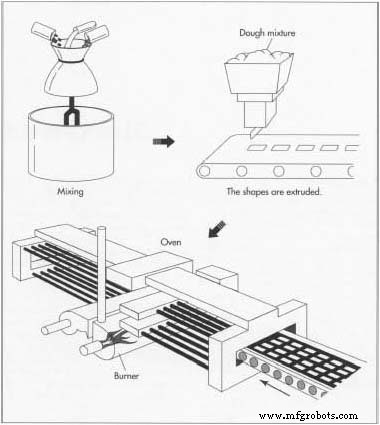
- The dough is mixed at room temperature to preserve butter integrity; over‑mixing would result in toughness. Typically, butter and sugar are combined first, then flour is folded in gently.
- Forming occurs on a rotary moulding machine, where dough thickness is tightly controlled. Uniform thickness prevents under‑baked centers or overly crisp edges.
Baking and Cooling
- Commercial ovens are long tunnel systems—up to 300 ft (91 m)—with adjustable conveyor speeds and segmented temperature controls. Each 18‑30 ft (5.5‑9.1 m) section is monitored to ensure consistent baking.
- Post‑baking, cookies travel through a cooling conveyor where controlled temperature descent locks in texture and prevents condensation that could compromise crispness.
Packaging
- To preserve crispness, shortbread is packaged in rigid, airtight containers such as tins, canisters, or plastic trays with protective paper wraps. Packaging often features traditional Scottish plaid motifs to reinforce heritage.
- Individual boxes are assembled into case cartons, palletised, and shipped with traceability codes that record production date and location.
Quality Control
Quality assurance begins at ingredient assembly, where raw materials are weighed, tested for pH, viscosity, and particle size. Dedicated QC labs verify that each batch meets established standards for appearance, color, aroma, and flavor.
Operational hygiene is enforced through protective clothing, jewelry restrictions, and stringent sanitation protocols to prevent contamination.
Finished cookies undergo final inspections for texture, taste, and visual appeal. Trained tasters compare each product against reference standards, ensuring consistency across batches.
The Future
Shortbread’s enduring appeal lies in its heritage, not its health profile. Yet to meet contemporary consumer demands, some manufacturers now offer low‑fat and organic variants. E‑commerce platforms enable small and medium Scottish and English bakeries to reach global customers, ensuring that authentic shortbread remains accessible both in traditional and “health‑conscious” formats.
Manufacturing process
- What is VMC Machining? An Expert Overview of Vertical Machining Centers
- Jawbreaker: The History, Ingredients, and Craft of a Classic Hard Candy
- Shortbread: From Scottish Heritage to Modern Production
- Jam and Jelly Production: History, Ingredients, and Modern Manufacturing
- Molasses: From Sugar Production to Culinary and Industrial Applications
- The Sweet Journey of Maple Syrup: From Native Roots to Modern Delight
- Sugar: From Ancient Roots to Modern Production
- Imperial Sugar Elevates Workforce with Strategic Skill Development
- Revolutionizing Care: Self‑Powered Diaper Sensors Detect Urine Glucose Wirelessly
- Virgin Media O2 Business Partners with British Sugar to Launch Secure 4G Mobile Network