



Hang Gliding: From Ancient Glides to Modern Engineering
Background
A hang glider is an unpowered, heavier‑than‑air aircraft that carries a pilot suspended beneath a flexible sail. Unlike conventional gliders, which resemble small airplanes, hang gliders look like large, aerodynamically shaped kites. They are typically launched from elevated terrain and glide down to lower ground, relying on thermals and wind currents rather than engine thrust.
History
Human attempts to fly with kite‑like devices date back over a millennium. In 1020, the English monk Oliver of Malmesbury reportedly leapt from a tower with cloth wings, gliding about 600 ft (180 m) before breaking both legs. Similar brief flights were recorded in Constantinople in the 11th century and in Italy in 1498. Leonardo da Vinci sketched numerous aircraft designs, though none were built at the time.
Modern gliding began with Sir George Cayley of England, who, by 1799, had established the basic glider configuration still in use today. His first successful model flew in 1804, and in 1853 he completed the first human‑carrying glider, lifting a coachman several hundred feet.
German pioneer Otto Lilienthal followed in the 1890s, constructing 18 gliders and performing over 2,000 flights. His meticulous records laid the groundwork for future designers, but he tragically died in a crash in 1896.
American engineer Octave Chanute, inspired by Lilienthal, conducted around 2,000 flights from Lake Michigan sand dunes at the turn of the century. Chanute’s findings influenced the Wright brothers, whose 1903 powered flight at Kitty Hawk marked a new era in aviation. After World War II, lightweight fiberglass wings revived interest in gliding.
The decisive breakthrough came from American inventors Gertrude and Francis Rogallo, who patented the flexible “para‑wing” in 1948. Their design, lacking rigid spars, took shape only when wind applied force. The subsequent development of Mylar, an ultra‑light, high‑strength plastic, dramatically enhanced performance.
During the late 1950s, U.S. government agencies explored the Rogallo kite for spacecraft re‑entry parachutes and even for powered military transport. In 1961, engineer Thomas Purcell built the first true hang glider—a 16 ft (4.9 m) wide Rogallo wing mounted on an aluminum frame with wheels, seat, and rudimentary control rods. Concurrently, Barry Hill Palmer in the U.S. and John Dickenson in Australia produced bamboo and aluminum gliders, respectively.
Although the U.S. abandoned the Rogallo design for spacecraft parachutes in 1967, hang gliding surged in popularity during the 1970s. The United States Hang Gliding Association was founded in 1971. While California remains a premier West Coast hub, Dunlap, Tennessee, boasts the eastern U.S.’s highest launching point on the Cumberland Plateau. Over time, the sport evolved from a risky novelty to a regulated activity, with fatal incidents dropping from 40 in 1974 to seven in 1995.
Raw Materials
A hang glider comprises a sail (wing), an aluminum airframe, stainless steel cables, and hardware. The sail is typically made from Dacron (polyethylene terephthalate) polyester cloth, prized for its strength, lightness, and durability. The airframe uses aluminum alloy tubing blended with magnesium, zinc, and copper to balance stiffness and weight. Stainless steel—an iron alloy with 12‑18 % chromium—forms the high‑strength cables and fasteners.
Images:
Samuel Langley (1834‑1906) was a pioneering astronomer who later turned his attention to aeronautics. Despite no formal college education, he invented the bolometer and later built steam‑powered aircraft models, including the famous Aerodrome series. Though his full‑scale Aerodrome failed to achieve sustained flight, his work inspired future engineers. Langley Air Force Base in Virginia honors his legacy.
The Manufacturing Process
Making Polyester Cloth
- Polyester fibers originate from petroleum‑derived chemicals obtained through catalytic cracking. The primary components—ethylene glycol and terephthalic acid—are combined and heated to create molten polymer.
- The melt is extruded through spinnerets, forming fine filaments that are cooled, stretched at high temperature to increase tensile strength, and woven into bright, durable cloth. The finished material is rolled for shipment to glider builders.
Making the Wing
- Cloth rolls (typically 54 in × 100–300 yd) are cut with an X‑Y precision cutter. The flat table, 40 ft × 5 ft, uses vacuum suction and a computer‑controlled blade to achieve cuts accurate to 0.0025 cm.
- Cut panels are numbered, sewn together on industrial machines, and assembled into the final wing shape. The process repeats for multiple color or pattern sections as required.
Making the Frame
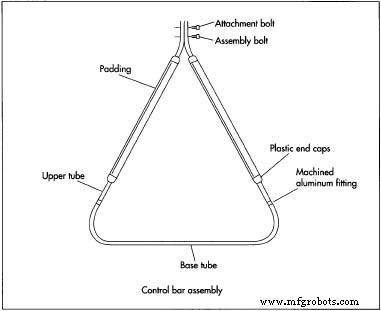
- Aluminum alloy tubing (1.5 in diameter, 10–20 ft length) is cut and drilled by electric saws and drills to prepare the skeletal structure.
- Stainless steel cables arrive in 5,000‑ft spools and are cut to length with heavy‑duty pliers.
- All components are hand‑assembled into the frame, secured with stainless steel nuts and bolts.
Assembling the Hang Glider
- The sail is fastened to the frame, followed by a comprehensive inspection and flight test by an experienced pilot. After verification, the glider is partially disassembled for storage and transport, then sealed in a cylindrical container for shipment.
Quality Control
Safety is paramount in hang gliding. Manufacturers adhere to Federal Aviation Administration (FAA) standards, whether for civil or military use. Prior to production, raw materials undergo strict inspection: aluminum tubing for straightness, stainless steel cables for flawlessness, and polyester cloth for weave integrity and absence of holes. Tensile testing measures fabric strength and permeability.
The wing’s construction is scrutinized at each stage, ensuring seams are properly folded and free of weak spots. Final visual inspection confirms the glider’s overall integrity. A live flight test verifies handling characteristics, stability, and response to pilot inputs before shipping.
The Future
While participation has declined since the 1970s, technological advances have made modern hang gliders far safer and more capable. Current models achieve longer flight durations, greater altitude, and more reliable handling. Continued innovation promises to shatter existing records and broaden the sport’s appeal.
Manufacturing process
- What is VMC Machining? An Expert Overview of Vertical Machining Centers
- Expert Guide to Aluminum Laser Marking: Precision, Durability, and Industry Applications
- MIG vs. TIG Welding: Selecting the Right Arc Welding Technique for Your Project
- Comprehensive Guide to Laser Marking: Types, Benefits, and Applications
- Key Considerations for High‑Volume Swiss Machining
- CNC Prototyping Guide: Precision, Speed, and Cost‑Effective Production
- Expert Shaft Manufacturing: Precision Processes & Custom Solutions
- Fiber Laser Marking: Precision, Speed, and Versatility for Modern Industries
- Hang Gliding: From Ancient Glides to Modern Engineering
- Expert Guide: Maintaining Your Small Mobile Crane for Safety & Longevity