



The Baseball Cap: From Design to Production – A Deep Dive
Background
A baseball cap is a lightweight, soft‑fabric hat that features a crown stitched from multiple fabric panels and a visor designed to shield the wearer’s eyes from the sun. Most mass‑produced caps include a central plastic extender on the back, allowing the wearer to adjust the fit. At the crown’s summit sits a button that conceals the seam where all panels converge. Team logos or lettering are typically embroidered on the front center of the crown.
Uniforms for both amateur and professional teams universally incorporate baseball caps, not only as a visual identifier but also as a functional component that protects players from glare. Today’s caps fall into two main categories: the older, boxy crown with horizontal stripes (often called the “old‑style” cap) and the conventional soft crown composed of six or eight triangular panels.
Manufacturers continue to produce caps in traditional wool, as well as in cotton and cotton‑synthetic blends that are easier to wash and maintain.
History
The precursor to modern baseball, often referred to as “base ball,” was known in both Britain and America during the 1700s. Soldiers in the American Revolution played a similar game, and by the 1840s amateur teams began forming along the East Coast. The Civil War facilitated the spread of a “national style” of baseball, which solidified into the sport we recognize today. Uniforms, especially caps, played a pivotal role in fostering team identity and camaraderie, much like police uniforms legitimise law enforcement.
Catalogs from the 1880s list three cap styles: the college cap (a boxy, horizontally striped design), the Boston cap (a triangular‑paneled cap with a visor), and the baseball hat (a fully brimmed, rain‑hat‑like model). These early designs hint at the enduring nature of the baseball cap’s form.
Soft sports caps from the 1800s—often variations of the yachting cap—served the same protective purpose. They were easier to wash than the stiff wool felt derbies of the era and remain largely unchanged in their basic silhouette.
Raw Materials
Most baseball caps are still crafted from solid‑color wool. Caps that feature corporate or team logos are frequently made from cotton or cotton‑synthetic blends. Visors always include a stiffener—either buckram or a plastic insert—chosen by the manufacturer. Some caps incorporate additional stiffeners in the front panels to support embroidered logos. Sweatbands may be cotton or thin leather, depending on the brand.
Design
Design variations are subtle, usually limited to fabric color and the front‑center logo. Some manufacturers have reduced the number of crown panels from eight to six for a more snug fit, while others experiment with visor inserts to enhance flexibility and durability. Logos can be embroidered with up to 30,000 stitches, often planned with computer software to ensure precision and consistency.
Historically inspired caps are occasionally re‑issued; these companies craft patterns by measuring and modeling intact vintage hats rather than disassembling them.
The Manufacturing Process
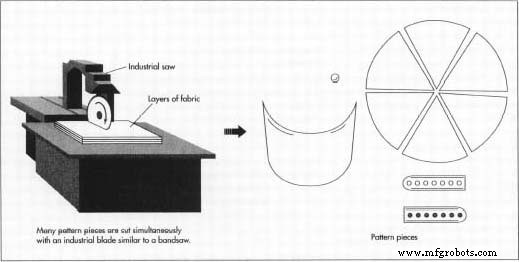
- Fabric layers—whether wool, cotton, or a cotton‑synthetic blend—are cut in bulk using a fabric‑cutting saw.
- For certain designs, a mesh inner layer is added behind the front panels to stiffen them before stitching.
- The crown panels are sent to the eyelet department, where a machine punches and secures eyelets—typically one per panel, with a total of 40 to 50 eyelets—to allow ventilation.
- Front panels destined for embroidery are processed by a computer‑controlled machine. Logos can range from 8,000 to 31,000 stitches, or alternative appliqués are affixed.
- Panels (six or eight) are sewn together in the sewing department. Heavy, stiffened wool requires skilled hand‑sewing and industrial‑grade machines. After stitching, the hat—without a visor—resembles a beanie.
- Raw crown edges are concealed with a cotton binding tape, ensuring a finished look and preventing unraveling during wear or washing.
- A self‑covered galvanized steel button is positioned at the crown’s center, where all panels converge.
- Visors are die‑cut to size and sewn onto the cap. Some manufacturers use a two‑piece visor with a central plastic stiffener; others embed a thin stiffener before stitching to maintain shape and reduce bulk.
- One‑size‑fits‑all caps incorporate an adjustable plastic band on the back; custom‑fit hats vary the back panel breadth to match head size.
- A sweatband is sewn inside, sometimes reinforced with buckram or thin leather. Labels may also be added during this step.
- Additional finishing steps include blocking and steaming to set the cap’s shape, and edge stitching to prevent fabric roll‑back.
- Once complete, the cap is packaged and shipped to retailers or directly to consumers.
 A baseball cap is a soft hat that consists of a soft fabric crown sewn of several sections of fabric, a visor that protects the eyes from the sun, and a plastic extender in the center back that can adjust the size of the cap.
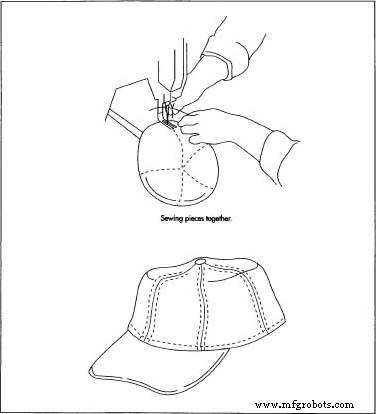 The baseball cap is sewn on an industrial grade sewing machine.
Quality Control
Quality checks are performed throughout the production line, with seamstresses and technicians inspecting each step—especially the eyelet density, stitch count, and material consistency—to meet industry standards for durability, color fastness, and fit.
Manufacturing process
- Choosing the Right Button Socket Cap Screws: A Practical Guide
- Hex Cap Screws: Definition, Applications, and Advantages
- The Craftsmanship Behind the Classic Baseball Bat
- The Craftsmanship and Standards Behind Every Official MLB Baseball
- The Evolution and Craftsmanship of Baseball Gloves: From 19th‑Century Beginnings to Modern Innovations
- Understanding Pile Caps: Function, Construction, and Benefits
- Cap Screws Explained: Types, Applications, and How to Choose the Right One
- Automatic Cap Nut Welder: Mastering Precision Nut Welding
- Automatic Cap Nut Welder: Enhancing Joint Safety & Efficiency
- Radiator Pressure Caps: Function, Importance, and Maintenance