



Lionel Model Trains: History, Manufacturing & Future
Background
In the 1938 Lionel Trains catalog, a heartfelt letter from a child captured the magic of Lionel’s electric engines: the promise of a fully remote‑controlled, whistle‑blowing train that could be coupled and uncoupled with the touch of a button. Lionel’s electric models dominated the toy market through the 1950s and remain a prized collectible today, with Lionel still the world’s largest toy‑train manufacturer.
History
Entrepreneur Joshua Lionel Cowen pioneered the first battery‑powered toy train in the early 1900s, launching a product that advertised other merchandise in his New York toy shop. While contemporaries such as a German electric streetcar (1893) and Carlisle & Finch’s model (1896) existed, Cowen’s “Electric Express” quickly became a consumer hit, prompting the expansion into steam locomotives, Pullman sleepers, freight cars, and electric trolleys.
By 1902 Cowen released Lionel’s inaugural catalog—a 16‑page black‑and‑white guide that evolved into the colorful wish books that became iconic marketing tools. Lionel also introduced die‑casting and early transformer technology, cementing its reputation for realistic, high‑quality models.
During World War I, the company produced navigational equipment for the U.S. Navy, later shifting to a model war train. Post‑war prosperity saw sales top $2 million in 1920, and the 1934 launch of a Mickey‑Minnie handcar, backed by Walt Disney, revitalized the brand during the Great Depression. Lionel’s streamlined engines and remote‑control features mirrored real‑world advances such as the Burlington Zephyr and Union Pacific’s “City of Portland.”
World War II halted metal‑train production, but Lionel continued with paper models like the “Wartime Freight Train.” Production resumed in 1945, and the 1957 pastel pink‑blue girls’ set sparked controversy. Cowen retired in 1958, selling the company to his grand‑nephew. Despite competition from airplanes, cars, and television, Lionel survived, now owned by four investors, one of whom is musician Neil Young, who helped design a wheelchair‑friendly remote‑control system for his sons.
Since 1970, Lionel trains are built in Mt. Clemens, Michigan, a Detroit suburb.
Raw Materials
The core components of Lionel trains are metal alloys—steel, aluminum, zinc—and high‑quality plastic.
The Manufacturing Process
Each Lionel model is designed using advanced CAD software before moving through a meticulous assembly line.
The Engine
- 1. The steam locomotive body is created via die‑casting: molten steel or zinc is heated to 900°F (482.2°C) and injected into a precision mold.
- 2. The mold is cooled in a tank, forming the raw locomotive shell.
- 3. Skilled machinists trim, cut, and mill the shell to achieve the final shape, with high‑speed cutters refining surfaces to thousandth‑inch accuracy.
- 4. The finished body enters the painting and assembly line.
The Cars
- 5. Plastic components are produced by injection molding: melted pellets are forced into a mold and hardened.
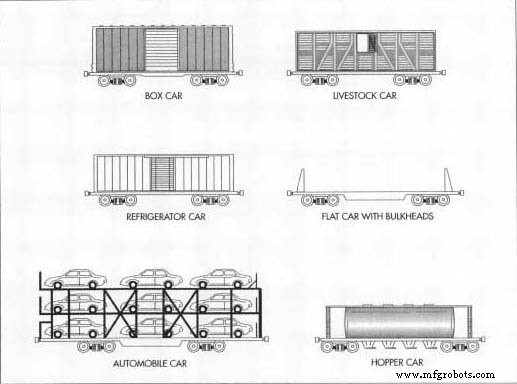
- 6. Metal parts (except the engine) are die‑cast and then sent to a drilling station where manual and automated tools attach thousands of accessories—ladders, headlights, handrails—created during sub‑assembly.
- 7. Die‑cast parts undergo phosphating, a chemical dip that opens metal pores to improve paint adhesion.
- 8. Components enter the painting station; multi‑color parts receive masking to protect unpainted areas.
- 9. Logos and lettering are applied via hot stamping (flat surfaces) and pad printing (raised, rounded, or die‑cast surfaces).
- 10. The engine mounts on a motorized chassis; cars attach to non‑motorized chassis that support wheels.
- 11. After rigorous quality tests, the completed models are packaged for shipment.
The Tracks
- 12. Sheet metal is cut into miniature rails and ties by a forming machine.
- 13. Rails and ties are joined in a hydraulic press.
- 14. Following quality checks, track segments are packaged and shipped.
Quality Control
Final assembly tests verify operational components: whistles, bells, and the locomotive’s ability to ascend a 30° incline in under 5.5 seconds. A color spectrometer confirms paint accuracy, ensuring every Lionel model meets the brand’s high standards.
The Future
Lionel’s designs mirror contemporary railroading and societal trends—from early milk cars to wartime freight and modern corporate logos. As technology evolves, Lionel continues to blend authentic craftsmanship with innovative features, ensuring its legacy for future generations.
Manufacturing process
- The History, Design, and Future of Toy Model Kits: From Ancient Origins to Modern Manufacturing
- Installing Windows 10 IoT Core on Raspberry Pi 3 Model B+: A Step‑by‑Step Guide
- Raspberry Pi 3 B+ – Updated Features, Specs & Buying Guide
- Recycling Sorting Robot Powered by Google Coral Edge TPU
- How to Convert Support to Model Material in Insight: A Time‑Saving Shortcut
- Simulink: MATLAB’s Advanced Simulation & Model-Based Design Tool
- DIY Automatic Train Control with Arduino – Simple, Reliable, and Customizable
- Suzie Model One: Precision CNC PCB Cutter
- Integrating SolidWorks with MATLAB/Simulink: A Step‑by‑Step Simulation Tutorial
- Understanding Benchwork: Definition, Applications, and Benefits