Industrial manufacturing
Manufacturing process

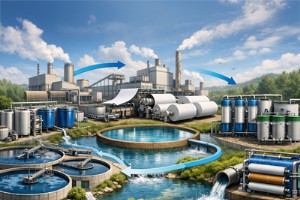
Pulp and paper industry is among the largest consumers of water in industries. Depending on the process used and grade of paper used, it can consume between 10,000 to 100,000 litres of water to produce one ton of paper. As freshwater resource is becoming progressively scarcer, water treatment c
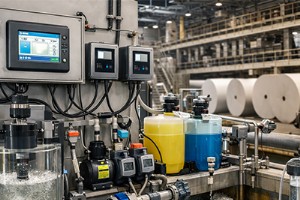
Introduction: Why Water Intelligence Defines Modern Paper Manufacturing Water is the lifeline of the paper manufacturing process as it affects the preparation of the fibers, sheet formation, the quality of its finishing, and environmental compliance. With the paper mills shifting to a higher pr
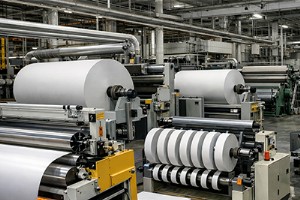
Industrial Paper Finishing & Converting Technologies: From Raw Sheets to High-Value Products Introduction: Where Paper Manufacturing Meets Market Demand The paper finishing and converting technology (industrial) is at a key point of intersection between the process of paper manufacturing
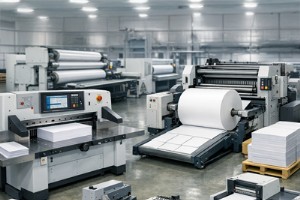
Introduction: Precision at the Core of Modern Paper Converting In the modern very competitive manufacturing environment, paper conversion and finishing processes require speed, accuracy and uniformity. Businesses are dependent on high cutting technologies to achieve tight tolerances and large v
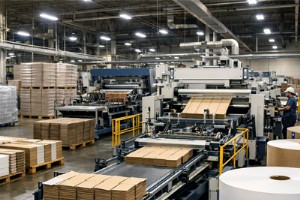
Introduction: The Strategic Role of Paperboard in Modern Packaging Industrial paperboard converting is one of the pillars of the modern day packaging economy. With rapid adoption of sustainable and efficient format by global industries, paper packaging and paperboard packaging are in place of r

Introduction: Why Paper Finishing Defines Print Excellence The choice of substrate in the commercial printing ecosystem can be described as the beginning of the whole process. Real separation between print quality, durability, and brand perception is in types of paper finishing and coating tec
Industrial Pulp & Paper Machine Types, Installation, Commissioning and Maintenance Guide Introduction: The Backbone of Modern Paper Production The pulp and paper industry is still developing in accordance with the sustainability targets, automation requirements, and growing production e
Introduction: Pulp and paper industry is an important part of manufacturing in the world as it provides the basic components of packaging, printing, tissue products and industrial use. The core of this industry is made out of state- of-the- art paper making machines which convert pulp fiber
Paper Mill Equipment Installation, Commissioning, and Factory Alignment: A Complete Guide When people discuss the pulp and paper industry, most conversations revolve around output, quality, or production speed. But ask anyone who has worked closely with a mill setup, and they’ll tell you—th
Why Maintenance Still Decides Profit in a Paper Mill In most paper mills, production targets get all the attention. But ask any maintenance head or plant manager—what really decides whether the month is profitable or stressful is not output capacity, but how stable the machines run. Paper mach
Introduction: You spend a while about paper mills, and this much you can soon make out--that everything is dependent upon the pulp. In large-scale paper manufacturing, the way pulp is produced quietly decides a lot of things later: strength, texture, even how the paper behaves during conve
If you speak to people who’ve spent time inside a paper mill, they’ll tell you something interesting — the real complexity isn’t in the paper machine. It’s in the pulping process. That’s where everything is decided. Strength, texture, brightness, even how the paper behaves during converting. B
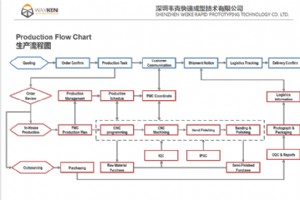
Posted on Dec. 1th, 2019, | By Hazel, WayKen Project Manager Production anomaly management on the production site refers to a series of measures and management means developed in order to detect, control, and solve errors, emergencies, and uncontrolled situations in the production process. Mainly se
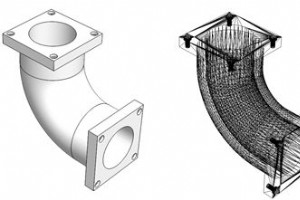
CAD is a term that stands for Computer-Aided Design. It is the process of using computer software to create three-dimensional models of proposed products. This type of software is used by many industries in order to create drafts and models. It can be used to design both two-dimensional drawings and
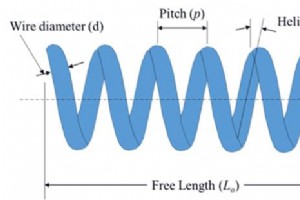
There are many factors that impact the quality and performance of a machining application. Often, the helix angle is overlooked. It is a simple geometric feature in helical end mills and other cutting tools. This factor can influence chip control, vibration, power requirements, etc.In this article,
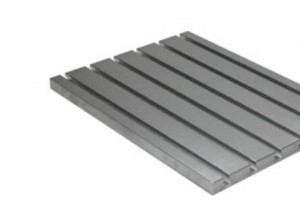
Even with advanced cutting tools, it may be challenging to produce parts with high accuracy and precision if there is no workholding method. Workholding fixtures help to hold parts firmly during machining. From milling vises to jigs and fixtures, many workholding options are available.However, the t
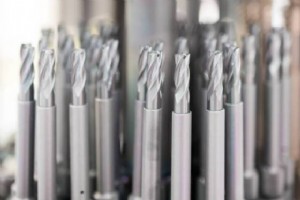
CNC milling is a highly versatile machining process that involves using rotating cutters to scrape out portions of a workpiece till the desired shape is achieved. The most common milling cutters are end mills, face mills, slab mills, fly cutters, etc.Of all these cutting tools, end mills are distinc

There are different types, and categories of milling cutter tools, each with different purposes and cutting abilities. Here are the common milling tool types.Categories#1: End Mill CuttersEnd mill tools are mill-cutting tools that cut in all directions, making them quite different from drill tools t
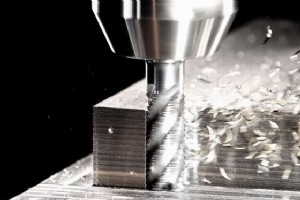
Generally, CNC machining basics comprise standard subtractive manufacturing operations such as turning, milling, facing, drilling, grooving, boring, etc. These processes involves the layer-by-layer removal of excess materials from solid workpieces and adding quality finishes to achieve the required
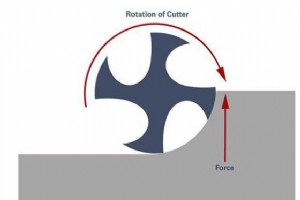
Milling is a form of subtractive manufacturing that involves cutting a stationary flat surface with a rotating tool. Climb and Conventional milling are the two main ways machinists use for milling a part. However, choosing between them is often challenging as both have merits and demerits.Here, we e
Manufacturing process