



Understanding Java: JDK, JRE, and JVM Explained
Java JDK, JRE and JVM
In this tutorial, you will learn about JDK, JRE, and JVM. You will also learn the key differences between them.
What is JVM?
JVM (Java Virtual Machine) is an abstract machine that enables your computer to run a Java program.
When you run the Java program, the Java compiler first compiles your Java code to bytecode. Then, the JVM translates bytecode into native machine code – a set of instructions that a computer’s CPU executes directly.
Java is a platform‑independent language. This is because Java code is compiled for the JVM, not for a specific physical machine. As the JVM executes platform‑neutral bytecode, Java runs consistently across operating systems.

Want a deeper dive? The JVM Architecture Explained.
What is JRE?
JRE (Java Runtime Environment) is a software package that bundles the Java class libraries, the JVM, and other components required to run Java applications.
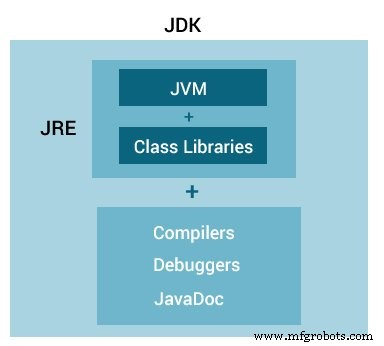
In effect, the JRE is the superset of the JVM – it includes everything the JVM needs plus the runtime libraries.

If you only need to run Java programs, but not develop them, the JRE is sufficient. You can download it from the Java SE Runtime Environment 8 Downloads page.
What is JDK?
JDK (Java Development Kit) is the complete toolkit required for developing Java applications. When you install the JDK, the JRE is installed automatically.
Beyond the JRE, the JDK bundles essential development tools such as the Java compiler (javac), JavaDoc, the Java debugger, and more.

Ready to code? Download the JDK and start building your Java projects.
Relationship between JVM, JRE, and JDK
Java
- Java Variables and Literals: A Comprehensive Guide
- Mastering Java While & Do‑While Loops: Step‑by‑Step Tutorial
- Java Classes and Objects: A Practical Guide
- Java Abstract Classes and Methods: A Comprehensive Guide
- Mastering Java Nested and Inner Classes: Types, Examples, and Best Practices
- Java throw vs throws: Mastering Exception Handling with Practical Examples
- Master Java Autoboxing and Unboxing: Practical Examples and Best Practices
- JDK, JRE, and JVM Explained: Key Differences and How They Work Together
- Java vs. C#: 10 Key Differences Explained
- Master Java: Understanding Objects, Classes, and Core OOP Concepts