


Industrial manufacturing

Three methods or functions are provided in the Java language to print the output. These methods depend on the method requirement and desired output in coding. Java print() method: Data displays in the same line using print statement in java. Java println()Method: Output print in the current line
Java Diamond Operator The diamond operator was introduced in Java 7 to make code more readable for Generics. A generic is a type of argument. Using generic we can pass any kind of object to be processed by the class methods. For example, if we are creating a list of strings before Java 7, then
The following resources contain additional information on Java 8. Please use them to get more in-depth knowledge on this topic.
Java 8 - Overview JAVA 8 is a major feature release of JAVA programming language development. Its initial version was released on 18 March 2014. With the Java 8 release, Java provided supports for functional programming, new JavaScript engine, new APIs for date time manipulation, new streaming

Java 8 Questions and Answers has been designed with a special intention of helping students and professionals preparing for various Certification Exams and Job Interviews. This section provides a useful collection of sample Interview Questions and Multiple Choice Questions (MCQs) and their ans
With Java 8, Base64 has finally got its due. Java 8 now has inbuilt encoder and decoder for Base64 encoding. In Java 8, we can use three types of Base64 encoding. Simple − Output is mapped to a set of characters lying in A-Za-z0-9+/. The encoder does not add any line feed in output, and
With Java 8, a new Date-Time API is introduced to cover the following drawbacks of old date-time API. Not thread safe − java.util.Date is not thread safe, thus developers have to deal with concurrency issue while using date. The new date-time API is immutable and does not have setter met
With Java 8, Nashorn, a much improved javascript engine is introduced, to replace the existing Rhino. Nashorn provides 2 to 10 times better performance, as it directly compiles the code in memory and passes the bytecode to JVM. Nashorn uses invoke dynamics feature, introduced in Java 7 to impro
Optional is a container object used to contain not-null objects. Optional object is used to represent null with absent value. This class has various utility methods to facilitate code to handle values as ‘available’ or ‘not available’ instead of checking null values. It is introduced in Java 8
Stream is a new abstract layer introduced in Java 8. Using stream, you can process data in a declarative way similar to SQL statements. For example, consider the following SQL statement. SELECT max(salary), employee_id, employee_name FROM Employee The above SQL expression automatically return
Java 8 introduces a new concept of default method implementation in interfaces. This capability is added for backward compatibility so that old interfaces can be used to leverage the lambda expression capability of Java 8. For example, ‘List’ or ‘Collection’ interfaces do not have ‘forEach’ met
Functional interfaces have a single functionality to exhibit. For example, a Comparable interface with a single method ‘compareTo’ is used for comparison purpose. Java 8 has defined a lot of functional interfaces to be used extensively in lambda expressions. Following is the list of functional
Method references help to point to methods by their names. A method reference is described using :: symbol. A method reference can be used to point the following types of methods − Static methods Instance methods Constructors using new operator (TreeSet::new) Method Reference Example Cr
Lambda expressions are introduced in Java 8 and are touted to be the biggest feature of Java 8. Lambda expression facilitates functional programming, and simplifies the development a lot. Syntax A lambda expression is characterized by the following syntax. parameter -> expression body Foll
Local Environment Setup If you want to set up your own environment for Java programming language, then this section guides you through the whole process. Please follow the steps given below to set up your Java environment. Java SE can be downloaded for free from the following link − https
JAVA 8 is a major feature release of JAVA programming language development. Its initial version was released on 18 March 2014. With the Java 8 release, Java provided supports for functional programming, new JavaScript engine, new APIs for date time manipulation, new streaming API, etc. New Feat
CompletableFuture class was introduced in Java 8 to represent the Future which can be completed by setting its value and status explicity. It can be used as java.util.concurrent.CompletionStage. It supports dependent functions and actions which got triggered upon the futures completion. In java
With Java 9, a new multi-resolution image API has been introduced which supports multiple images with different resolution variants. This API allows a set of images with different resolution to be used as a single multi-resolution image. Following are major operations of multi-resolution image.
Optional Class was introduced in Java 8 to avoid null checks and NullPointerException issues. In java 9, three new methods are added to improve its functionality. stream() ifPresentOrElse() or() stream() method Syntax public Stream<T> stream() If a value is present, it returns a seque
Diamond operator was introduced in java 7 to make code more readable but it could not be used with Anonymous inner classes. In java 9, it can be used with annonymous class as well to simplify code and improves readability. Consider the following code prior to Java 9. Tester.java Live Demo p
Java

The Evolution and Craft of the Modern Swimsuit: From Ancient Pools to High‑Tech Fabric

Design Engineering for Energy‑Efficient Power Plant Generation Systems

3 Proven Strategies to Accelerate Rapid Prototype Machining
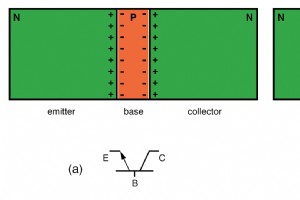
Understanding Bipolar Junction Transistors: Structure, Operation, and Amplification

