Industrial manufacturing

JDK 10 release has deprecated several APIs, features and Options from Java library. Following is the relevant details.SNMP Monitoring Support deprecated − jdk.snmp module supporting SNMP monitoring and management support for the JVM is now deprecated and is marked forRemoval=true.java.secu
JDK 10 release has removed several deprecated APIs, features and Options from Java library. Following is the relevant details.Unsupported LookAndFeels removed − Applications using Nimbus or Aqua LookAndFeels has to migrate to new syntax.Nimbus - existing codejavax.swing.UIManager.setLookAn
JDK 10 release has added 70+ new APIs and Options to Java library. Following are some of the important enhancements introduced.Optional.orElseThrow() MethodA new method orElseThrow() is available in java.util.Optional class which is now a preferred alternative for get() method.APIs to create Unm
JEP 286 − Local Variable Type InferenceLocal Variable Type Inference is one of the most evident change to language available from Java 10 onwards. It allows to define a variable using var and without specifying the type of it. The compiler infers the type of the variable using the value pr
JEP 322 − Time-Based Release VersioningFrom Java 10 onwards, Oracle has introduced a strict time based release versioning model for Java releases. Now Java will have a major release after every six months. Java 10 was released in Mar,2018 and moving onwards, all major versions are planned
Live Demo Option OnlineWe have set up the Java Programming environment online, so that you can compile and execute all the available examples online. It gives you confidence in what you are reading and enables you to verify the programs with different options. Feel free to modify any example and
Java 10 is a major release in Java release cadence and it was releasd on March 10, 2018. With Java 10, Oracle has changed the java release cadence to a new model, a 6 month release cadence and LTS model for Oracle Java SE products. LTS model stands for Long Term Support model.From Java 10 onward
The Java language supports three types of comments − Sr.No. Comment & Description 1 /* text */ The compiler ignores everything from /* to */. 2 //text The compiler ignores everything from // to the end of the line. 3 /** documentation */ This is a documentation comment and in g
An applet is a Java program that runs in a Web browser. An applet can be a fully functional Java application because it has the entire Java API at its disposal. There are some important differences between an applet and a standalone Java application, including the following − An applet is a
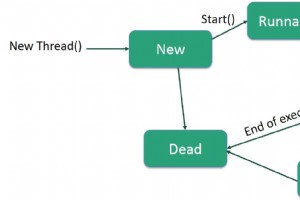
Java is a multi-threaded programming language which means we can develop multi-threaded program using Java. A multi-threaded program contains two or more parts that can run concurrently and each part can handle a different task at the same time making optimal use of the available resources speciall
To send an e-mail using your Java Application is simple enough but to start with you should have JavaMail API and Java Activation Framework (JAF) installed on your machine. You can download latest version of JavaMail (Version 1.2) from Javas standard website. You can download latest version of J
The term network programming refers to writing programs that execute across multiple devices (computers), in which the devices are all connected to each other using a network. The java.net package of the J2SE APIs contains a collection of classes and interfaces that provide the low-level communicat
Java provides a mechanism, called object serialization where an object can be represented as a sequence of bytes that includes the objects data as well as information about the objects type and the types of data stored in the object. After a serialized object has been written into a file, it can be
It would be nice if we could write a single sort method that could sort the elements in an Integer array, a String array, or an array of any type that supports ordering. Java Generic methods and generic classes enable programmers to specify, with a single method declaration, a set of related method
Prior to Java 2, Java provided ad hoc classes such as Dictionary, Vector, Stack, and Properties to store and manipulate groups of objects. Although these classes were quite useful, they lacked a central, unifying theme. Thus, the way that you used Vector was different from the way that you used Pro
The data structures provided by the Java utility package are very powerful and perform a wide range of functions. These data structures consist of the following interface and classes − Enumeration BitSet Vector Stack Dictionary Hashtable Properties All these classes are now legacy and Java-
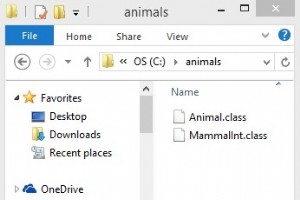
Packages are used in Java in order to prevent naming conflicts, to control access, to make searching/locating and usage of classes, interfaces, enumerations and annotations easier, etc. A Package can be defined as a grouping of related types (classes, interfaces, enumerations and annotations ) prov
An interface is a reference type in Java. It is similar to class. It is a collection of abstract methods. A class implements an interface, thereby inheriting the abstract methods of the interface. Along with abstract methods, an interface may also contain constants, default methods, static methods,
Encapsulation is one of the four fundamental OOP concepts. The other three are inheritance, polymorphism, and abstraction. Encapsulation in Java is a mechanism of wrapping the data (variables) and code acting on the data (methods) together as a single unit. In encapsulation, the variables of a clas
As per dictionary, abstraction is the quality of dealing with ideas rather than events. For example, when you consider the case of e-mail, complex details such as what happens as soon as you send an e-mail, the protocol your e-mail server uses are hidden from the user. Therefore, to send an e-mail
Java