


Industrial manufacturing

Normally, when we work with characters, we use primitive data types char. Example char ch = a; // Unicode for uppercase Greek omega character char uniChar = \u039A; // an array of chars char[] charArray ={ a, b, c, d, e }; However in development, we come across situations where we need to us
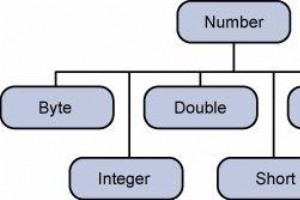
Normally, when we work with Numbers, we use primitive data types such as byte, int, long, double, etc. Example int i = 5000; float gpa = 13.65f; double mask = 125; However, in development, we come across situations where we need to use objects instead of primitive data types. In order to achieve
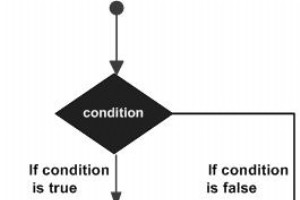
Decision making structures have one or more conditions to be evaluated or tested by the program, along with a statement or statements that are to be executed if the condition is determined to be true, and optionally, other statements to be executed if the condition is determined to be false. Follow
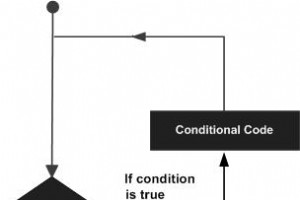
There may be a situation when you need to execute a block of code several number of times. In general, statements are executed sequentially: The first statement in a function is executed first, followed by the second, and so on. Programming languages provide various control structures that allow fo
Java provides a rich set of operators to manipulate variables. We can divide all the Java operators into the following groups − Arithmetic Operators Relational Operators Bitwise Operators Logical Operators Assignment Operators Misc Operators The Arithmetic Operators Arithmetic operators are
Modifiers are keywords that you add to those definitions to change their meanings. Java language has a wide variety of modifiers, including the following − Java Access Modifiers Non Access Modifiers To use a modifier, you include its keyword in the definition of a class, method, or variabl
A variable provides us with named storage that our programs can manipulate. Each variable in Java has a specific type, which determines the size and layout of the variables memory; the range of values that can be stored within that memory; and the set of operations that can be applied to the variab
Variables are nothing but reserved memory locations to store values. This means that when you create a variable you reserve some space in the memory. Based on the data type of a variable, the operating system allocates memory and decides what can be stored in the reserved memory. Therefore, by assi
A constructor initializes an object when it is created. It has the same name as its class and is syntactically similar to a method. However, constructors have no explicit return type. Typically, you will use a constructor to give initial values to the instance variables defined by the class, or to
Java is an Object-Oriented Language. As a language that has the Object-Oriented feature, Java supports the following fundamental concepts − Polymorphism Inheritance Encapsulation Abstraction Classes Objects Instance Method Message Passing In this chapter, we will look into the concepts - Cl
When we consider a Java program, it can be defined as a collection of objects that communicate via invoking each others methods. Let us now briefly look into what do class, object, methods, and instance variables mean. Object − Objects have states and behaviors. Example: A dog has states - c
In this chapter, we will discuss on the different aspects of setting up a congenial environment for Java. Local Environment Setup If you are still willing to set up your environment for Java programming language, then this section guides you on how to download and set up Java on your machine. Follo
Java programming language was originally developed by Sun Microsystems which was initiated by James Gosling and released in 1995 as core component of Sun Microsystems Java platform (Java 1.0 [J2SE]). The latest release of the Java Standard Edition is Java SE 8. With the advancement of Java and its
What Is Java? Java is a mature, multi‑platform, object‑oriented language that was first released by Sun Microsystems in 1995 and later acquired by Oracle. It runs on the Java Virtual Machine (JVM) and powers millions of applications worldwide. In this article you’ll learn: What Java is and its core
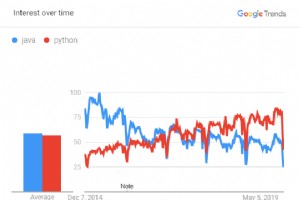
What is Java? Java is a platform‑agnostic, object‑oriented language that runs on the Java Virtual Machine (JVM). First released by Sun Microsystems in 1995 and now maintained by Oracle, Java powers everything from Android apps to enterprise web services. In this comparison you’ll learn: The fundame
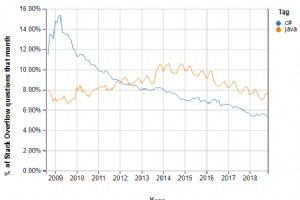
What is Java? Java, launched by Sun Microsystems in 1995, was engineered by James Gosling to let developers write once and run anywhere. Code is compiled into bytecode that runs on any Java Virtual Machine (JVM) implementation. In this article you will learn about: What C# is The history of Java an
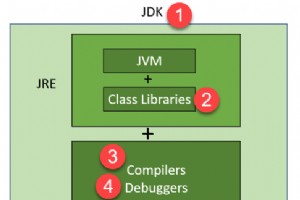
What is the Java Development Kit (JDK)? The JDK is a comprehensive toolkit that lets developers write, compile, debug, and run Java applications. It ships with the Java compiler (javac), core class libraries, and a suite of development tools such as the debugger and JavaDoc. The kit is available for
What Is C++? C++ is a powerful, intermediate-level programming language that extends C by adding object‑oriented capabilities from Simula 67. It blends low‑level memory control with high‑level abstractions, making it ideal for performance‑critical applications such as game engines, system software,
What Is Selection Sort? Selection Sort is a straightforward comparison‑based algorithm that repeatedly selects the smallest remaining element and swaps it into place. While not the fastest for large data sets, its simplicity makes it ideal for educational purposes and small arrays. How the Algorithm
What is Insertion Sort Algorithm? Insertion sort is a straightforward sorting technique ideal for small or nearly sorted data sets. In each iteration, the algorithm removes an element, compares it with the preceding elements, and places it in its proper position. Insertion sort operates in O(n²) tim
Java

Top 50 Warehouse Management Slide Decks: Boost Efficiency, Productivity, and Operations
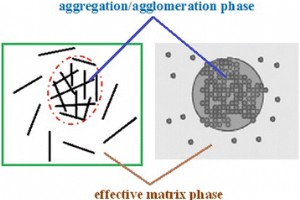
Assessing Nanoparticle Aggregation Impact on Polymer Nanocomposite Stiffness with a Two-Step Micromechanical Approach
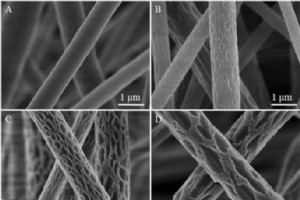
Controlling Secondary Surface Morphology of Electrospun PVDF Nanofibers via Solvent Choice and Relative Humidity

Discover 5 Key Insights About the DATRON M8 Cube

