



Python Packages: Structure, Importing, and Best Practices
Python Packages
Learn how to organize a growing codebase with Python packages, and how to import your own or third‑party modules efficiently.
Video: Python Packages – Organize Your Code
What Are Packages?
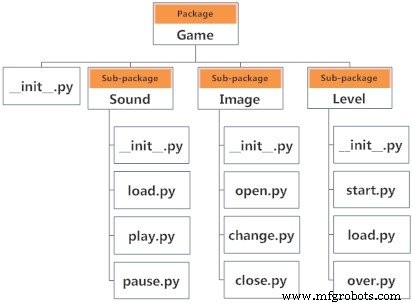
Just as we group files on disk into folders for clarity, Python uses packages to group related modules. A package is simply a directory that contains an __init__.py file—this tells Python to treat the folder as a namespace.
When a project expands, keeping similar modules together in a package keeps the project manageable and self‑documenting. Packages can also contain sub‑packages, mirroring the way directories can nest.
For example, a game project might look like this:
Importing Modules from a Package
Modules are imported with the dot (.) notation. To bring in start.py from the Game/Level package, use:
import Game.Level.start
If start.py defines a function select_difficulty(), call it with the full namespace:
Game.Level.start.select_difficulty(2)
To reduce verbosity, you can import the module into the local namespace:
from Game.Level import start
Now select_difficulty can be accessed as:
start.select_difficulty(2)
For even tighter imports, bring the function directly:
from Game.Level.start import select_difficulty
Then call it simply:
select_difficulty(2)
While concise, importing at the function level can lead to naming collisions if different modules expose identically named symbols. Using the full package path keeps the namespace explicit and safer.
Python resolves package imports by searching the directories listed in sys.path, just like it does for regular modules.
Python
- Mastering Python Data Types: A Practical Guide
- Mastering Python Operators: A Comprehensive Guide
- Mastering Python's While Loop: Syntax, Examples, and Best Practices
- Python List Operations: Creation, Access, Modification, and Advanced Techniques
- Mastering Python Tuples: Creation, Access, and Advanced Operations
- Mastering Python Dictionaries: Creation, Manipulation, and Advanced Techniques
- Mastering Java Packages: Creation, Importing, and Best Practices
- Master Emoji Handling in Python: Convert, Display, and Use Unicode Emoticons
- Java Packages: Managing Namespaces, Access, and Code Organization
- IC Packaging: Protecting Your Semiconductor Chips for Long-Term Reliability