



Selecting High-Performance Farm Equipment for Optimal Efficiency
Farmers who feed the world deserve the most advanced, reliable tools. Whether you manage livestock, poultry, crops, orchards, or a combination of these sectors, the right equipment can elevate every operation.
Read on to understand the key considerations when choosing agricultural machinery and how Cat® farming equipment delivers proven value worldwide.
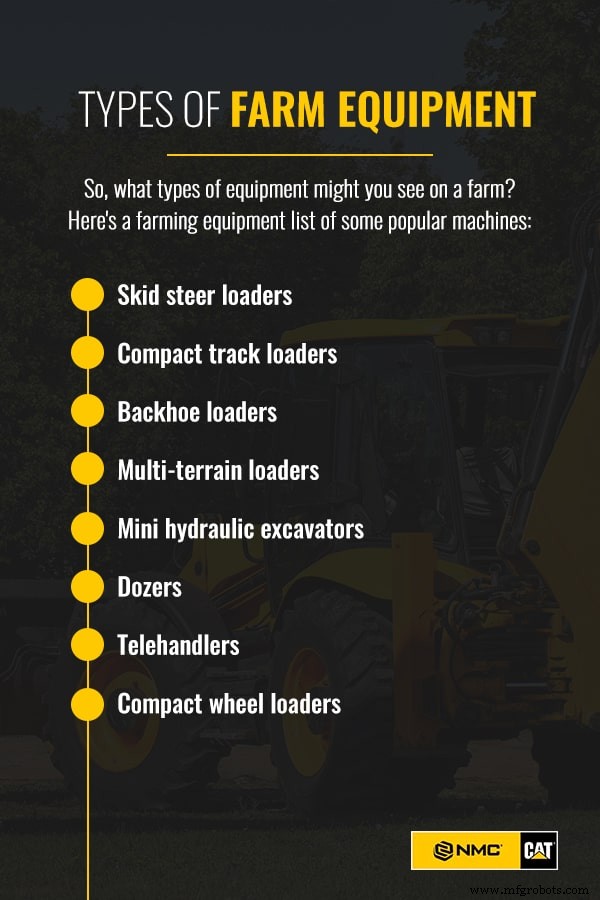
Types of Farm Equipment
Before selecting the best machine for your needs, it’s essential to review the range of options available. Typical tasks on a farm include moving hay bales, feed, crops, fencing, and fertilizer; trenching; mowing; clearing stumps; and many more. Small operations often benefit from versatile machines that handle multiple jobs, while larger farms can invest in a broader fleet. Many machines are designed for attachment compatibility, dramatically expanding their functionality.
Below is a curated list of the most common equipment you’ll find on modern farms:
- Skid‑Steer Loaders: Originally developed to clean turkey barns, today’s skid‑steers are renowned for their versatility. They feature a bucket and a range of attachments, and their independent differential steering provides a tight turning radius, ideal for tight spaces.
- Compact Track Loaders: Similar to skid‑steers but equipped with high‑flotation rubber tracks, these machines deliver a smooth ride on rough or sensitive terrain. Their design excels at earthmoving and works seamlessly with many attachments.
- Backhoe Loaders: Combining a front bucket with a rear blade, backhoe loaders are perfect for digging and moving earth. Hydraulic attachments—such as breakers, hammers, and augers—further enhance their versatility.
- Multi‑Terrain Loaders: Lightweight and low‑ground‑pressure, these machines are ideal for minimizing soil disturbance. While they may require more maintenance in harsh conditions, their light weight makes them suitable for delicate work.
- Mini Hydraulic Excavators: Offering the power of a full excavator in a compact package, mini excavators provide a zero‑tail swing for tight clearance and low ground pressure for a variety of surfaces.
- Dozers: Small dozers are excellent for demolition, leveling, and pushing tasks. Their large flat blade and tracks perform well on rough terrain.
- Telehandlers: Telescopic handlers lift and move materials vertically, commonly used for hay transport. Attachments such as pallet forks, sweepers, and work platforms extend their functionality.
- Compact Wheel Loaders: Similar to track loaders but with wheels, these machines excel on hard, smooth surfaces and provide articulated steering for confined spaces.
Other essential tools include sprayers, utility vehicles, trucks, trailers, irrigation systems, harvesters, balers, and plows. Cat also offers specialized farm tractors like wheel tractor‑scrapers, designed for efficient earthmoving.
Attachments
Most of the equipment above can be outfitted with a wide range of attachments to meet specific tasks. Cat farm equipment offers:
- Augers – bore through diverse soil types.
- Bale Grabs – pick up rounded hay bales with claw‑like bars.
- Bale Spears – pierce bales for easy movement, available in single or dual models.
- Brushcutters – control vegetation and produce coarse mulch.
- Couplers – enable quick attachment changes via hydraulic or mechanical systems.
- Buckets – heavy‑duty, light‑material, multi‑purpose, and general‑purpose options.
- Material Handling Arms – move oddly shaped loads with a swiveling arm.
- Pallet Forks – transport palletized goods.
- Rippers – tear up terrain and break through soil.
- Snow Pushes and Plows – sectional and straight models to clear snow.
- Silage Defacers – loosen compacted silage without damage.
- Thumbs – pair with a bucket for enhanced grabbing power.
- Utility Grapple Forks – pierce and secure straw or hay bundles.
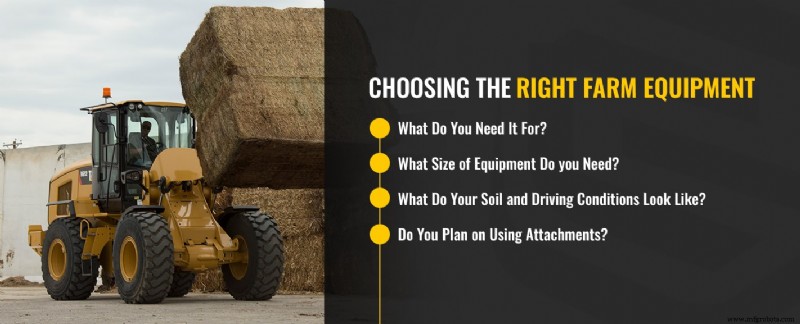
Choosing the Right Farm Equipment
Selecting the correct machinery is pivotal for optimizing farm productivity and ensuring long‑term value. Small farms face the challenge of balancing current needs with future growth, while larger farms must coordinate a diverse fleet. Before making a purchase, address these key questions:
1. What Do You Need It For?
Define the primary tasks your equipment must perform. A machine that can handle multiple roles—especially when paired with the right attachments—offers greater return on investment. For example, a skid‑steer with a material‑handling bucket may replace a dedicated telehandler, adding snow‑plowing capability in the process.
2. What Size of Equipment Do You Need?
Size matters. Oversized machinery can incur unnecessary operating costs and may not fit between crop rows. Undersized machines may require extra passes, reducing efficiency. Select equipment that matches your field dimensions, power requirements, and logistical constraints.
3. What Are Your Soil and Driving Conditions?
Abrasive soils demand heavier buckets and more robust machinery, whereas lighter soils allow for lighter equipment. Consider ground type—soft, sensitive, or hard—and choose tracks or tires accordingly. Tracks reduce ground pressure on delicate surfaces; wheels excel on paved or hard‑surface areas.
4. Do You Plan on Using Attachments?
Attachments can dramatically expand a machine’s versatility. Factor in the cost of attachments and the convenience of a quick‑coupler system if you anticipate frequent role changes. A single machine with multiple attachments often outperforms a fleet of single‑purpose machines.
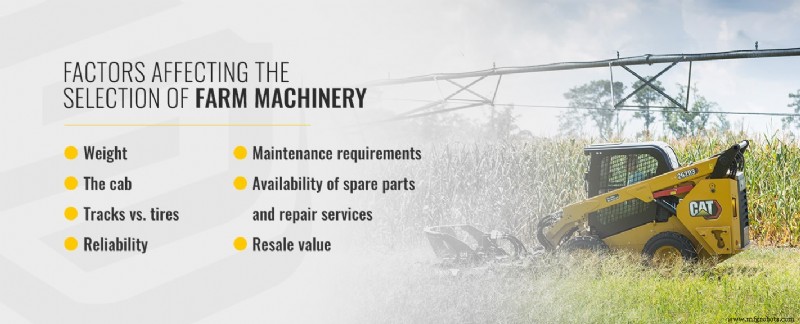
Factors Affecting the Selection of Farm Machinery
When comparing models, consider these critical factors:
- Weight and Power – Balance ground pressure with the horsepower needed for your tasks.
- Cab Comfort – A well‑designed cab improves operator safety and productivity; features such as climate control and visibility are essential.
- Tracks vs. Tires – Tracks minimize soil disturbance on soft ground; tires offer speed and traction on paved surfaces.
- Reliability – Cat is a globally trusted brand known for durable, long‑lasting performance.
- Maintenance Requirements – Assess routine upkeep and the ease of performing repairs.
- Spare Parts and Service Availability – Cat’s extensive dealer network—including NMC Cat locations in Nebraska and western Iowa—ensures timely parts and service access.
- Resale Value – Cat equipment is known to retain value, enhancing your investment’s long‑term payoff.
Taking a holistic view of these aspects will help you secure the machinery that best serves your operation.
Purchase Farm Equipment From NMC Cat
From soil to supermarket, reliable equipment keeps America’s food supply moving. NMC Cat has partnered with Cat for decades, providing farmers with new, used, and rental machinery, genuine Cat parts, and expert field services. Whether you need a skid‑steer, backhoe, or telehandler, our knowledgeable representatives can guide you to the right solution.
Ready to elevate your farm’s efficiency? Call 800‑628‑6025 or locate a NMC Cat dealer in Nebraska or western Iowa today.
Tags:
Equipment Maintenance and Repair
- Key Trends Shaping Equipment Maintenance in 2024
- Defining Leadership: What Truly Makes You a Leader
- Maintenance Mechanic Career: Duties, Skills, Salary & Advancement
- 8 Misconceptions About Management of Change — Why MOC Matters for All Businesses
- Pratt & Whitney Expands Operations in Oklahoma, Adding 100+ Jobs and Modernizing F135 Engine Maintenance
- Tulco Oils Uses CMMS to Keep Tulsa Plant Running Nonstop
- Master Maintenance Management with Limble CMMS – Video Tutorials & Proven Results
- Condition‑Based Maintenance: The Definitive Guide to Predictive Asset Care
- Mastering Maintenance Workflow: Proven Strategies for Enhanced Quality and Customer Satisfaction
- Preloading Ball Bearings: Boost Precision, Reduce Noise, and Enhance Performance