



Outsourcing Lubrication: Benefits, Drawbacks, and Strategic Considerations
A growing trend in industry is to outsource activities that are considered non‑core to a company’s core business. These can include security, facilities maintenance, sanitation, and fluid management. When it comes to lubrication, however, the question is whether contracting out this function delivers real value or simply cuts costs at the expense of performance.
Outsourcing can reduce overhead, enable precise staffing levels, and give access to highly skilled technicians. Yet many decisions are made on the basis of "cost per unit time" rather than "precision and effectiveness per unit time." The savings from lower labor costs can be eclipsed by the long‑term impact of poorly applied lubrication practices. If the primary motivator is merely to lower overhead, a contractor may compromise on technician expertise in order to submit a competitive bid.
Not every outsourcing contract is driven solely by cost. Some companies believe that their existing program is flawed and that an external firm can perform the job better and cheaper. In practice, a contract technician from a general supplier often achieves no more success than an in‑house tech. The key is to partner with a supplier that specializes in lubrication and can offer complementary services—such as contamination control and lubrication system design—to elevate the program’s overall effectiveness.
Below are two illustrative cases:
- A manufacturer suffered significant asset availability losses due to contaminated oil. Poor storage, handling, and equipment design—particularly breather and filter systems—shortened hydraulic pump and valve life, leading to costly downtime. The company identified lubrication as the root cause and outsourced the program. One supplier highlighted that solving the contamination issue required not only skilled technicians but also improved storage design and contamination controls. The supplier delivered these services and achieved the desired reliability gains.
- A plant faced reduced motor bearing life because of imprecise greasing. Reports from the motor rebuild shop revealed overgreasing, with grease found in windings. The company hired contract lube techs to tighten control. However, unless the outsourcing firm employs lubrication engineers who calculate the exact grease quantity using industry equations, the problem persists. The true solution—whether in‑house or outsourced—is to embed precision into the process through detailed job plans and procedures.
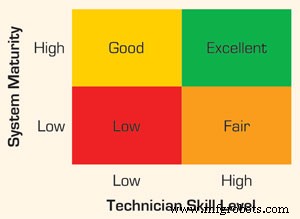
Figure 1. The importance of precision in lubrication programs.
These examples underscore that outsourcing can fail if the decision is based on a single act of changing hands rather than a comprehensive redesign of the lubrication system. A skilled lube technician cannot compensate for a flawed process; conversely, a competent contractor cannot add value unless the underlying system is optimized. Therefore, lubrication—and all maintenance activities—should only be outsourced after the process has been properly designed and integrated.
Outsourcing is likely to remain a norm rather than an exception, but it is crucial to remember that bad lubrication, whether done internally or by a contractor, will harm operations. Companies considering contract lubrication should ask: "Are we pursuing a long‑term strategic vision for lubrication excellence, or are we playing a numbers game that will ultimately cost more in the long run?"
Equipment Maintenance and Repair
- Stainless Steel Handles: Advantages, Disadvantages, and Expert Insights
- Advantages and Drawbacks of Metal Pickling: A Comprehensive Overview
- Die Casting: Advantages, Challenges, and Key Insights for Manufacturers
- Lost‑Foam Casting: Benefits, Drawbacks, and When to Use It
- Benefits and Drawbacks of Single‑Pass Boring in Manufacturing
- Cold‑Forming Metalworking: Advantages, Drawbacks, and Key Insights
- Infrastructure as Code: Benefits, Challenges, and Best Practices
- Cloud vs On‑Premise CMMS: Which System Delivers the Best ROI?
- LCD vs. CRT: Pros, Cons, and Which Is Best for You
- Balancing Benefits and Risks: AI in Predictive Maintenance