



Motor Storage Maintenance: Best Practices to Preserve Performance
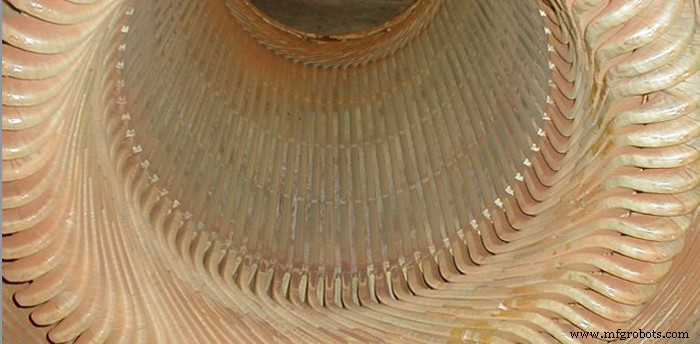
Keeping an extra motor on hand is essential for minimizing downtime when a production unit fails. To ensure that stored motors are as reliable as those in service, they must receive the same level of care.
Two primary risks arise during prolonged storage: condensation damage to windings and bearings. Moisture on stator coils degrades insulation, lowering the motor’s resistance to ground. When condensation contaminates bearing grease, the lubricant can harden, lose its protective qualities, and cause brinelling of the bearing race.
Investing in proper storage maintenance protects this valuable asset and safeguards your operational uptime.
- Environment
- Store motors in a clean, dry environment with humidity below 60 % and temperatures between 50 °F and 120 °F to prevent condensation.
- If the motor is equipped with space heaters, energize them when ambient conditions reach the dew point or at least 48 hours before the motor returns to service.
- Limit shock and vibration to no more than 2 mils peak-to-peak at 60 Hz to avoid bearing brinelling.
- Ensure all drains are fully operable and positioned at the lowest point. Breathable and automatic “T” drains should allow air and fluid to circulate freely, preventing moisture buildup around the shaft.
- Lubrication
- Oil‑lubricated bearings should be filled with oil upon entry into storage, as they arrive dry from the factory.
- Grease‑lubricated bearings require relubrication every six months. Follow the nameplate specification, and use only compatible grease if a different type is necessary.
- Rotate the motor shaft monthly to distribute lubricant evenly and avoid false brinelling.
- Insulation Resistance Checks
- Periodically test insulation resistance during extended storage and record the results.
- A drop of 50 % or more in resistance-to-ground relative to the initial reading signals moisture in the windings, necessitating electrical or mechanical drying before the motor can be re‑commissioned.
When a motor is removed from storage, it should be ready for immediate service. Simple maintenance steps performed during storage dramatically improve reliability upon deployment.
This article was written by Kay Cabaniss, Industry Business Manager of the Energy Efficiency Team at Baldor Electric Company.
At J/E, we are an authorized distributor for Baldor. We carry bearings, gearings, and PT components. For inquiries, visit our contact page or email info@je-bearing.com.
Equipment Maintenance and Repair
- Stepper Motors: Types, Characteristics, and Practical Applications
- Brushless DC Motors: Design, Construction, and Advanced Applications
- Tesla Polyphase Induction Motors: Design, Operation, and Applications
- Understanding Single‑Phase Induction Motors: Types, Operation, and Efficiency Improvements
- Specialized Motors: Shaded‑Pole, Servo, Hysteresis, and Eddy‑Current Clutch Applications
- Understanding AC Commutator Motors: Design, Types, and Applications
- Extending Motor Life: Expert Maintenance Tips
- Master DC & Servo Motor Control with Arduino – Step-by-Step Tutorial
- Industrial Motors: Types, Functions, and Applications
- Understanding BLDC Motors: A Professional Guide