



Reversing a Gear Pump: How to Transfer Fluid to Higher Pressure
Gear pumps are used to move fluid from one place to another. They can be turned by hand or by an electric motor, and the amount of fluid they can move is determined by the size of the pump and the pressure difference between the two places where it is being moved.
In this article, we will explore a different way of using a gear pump – turning it backwards! By doing so, we will be able to extract fluid from a lower pressure area to a higher pressure area. This principle is used in many different applications, such as in hydraulic systems, air conditioners and car engines.
What is a Gear Pump?
A gear pump is a device that uses gears to change the speed, or rotational direction, of a fluid. This can be useful in transferring fluids between different tanks, or between different parts of a machine. Gear pumps are typically used to move liquids or gases.
gear pump, fluid pump, hydraulic pump, gear driven pump
How Gear Pumps Work
Gear pumps are used to move fluids or slurries in a controlled manner. They can be used in a variety of industries, including oil and gas, chemical, food processing and manufacturing, and water treatment. The basic principle behind gear pumps is that the gears work in reverse. This means that the input shaft turns in the opposite direction of the output shaft.
The gears in a gear pump are connected by rotating joints. This allows the input and output shafts to move together, while the gears rotate. The gear pump’s impeller or pump rotor creates a rotational motion that forces the fluid through the pump body.
Gear pumps can be classified according to their input and output rotation speeds. A slow-speed gear pump will have an input shaft that turns slower than the output shaft, while a high-speed gear pump will have an input shaft that turns faster than the output shaft.
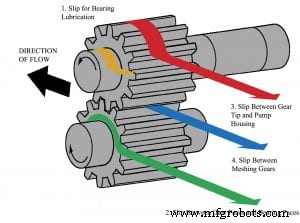
Can you run a gear pump backwards
How to Run a Gear Pump in Reverse
gear pumps can be used to move fluid in both forward and reverse directions. The main advantage of using a gear pump in reverse is that the gearbox can be easily reversed, so that it can be used to pump fluid from a lower or higher position. A gear pump in reverse can also be helpful when you need to remove fluid from a difficult-to-reach location.
To run a gear pump in reverse, follow these steps:
1) Shut off the power to the gear pump.
2) Disconnect the belt or chain that powers the gearbox.
3) Turn the gear pump around so that the input shaft is facing the output shaft.
4) reconnect the belt or chain to the gearbox and turn on the power.
5) The pump will now move fluid in reverse direction.
What are the Pros and Cons of Using a Gear Pump?
When it comes to using a gear pump, there are pros and cons to consider. The pros of using a gear pump include the fact that it can be used in a variety of applications, including water pressure washing and cleaning. The con of using a gear pump is that it can be difficult to move the equipment around, and it may not be suitable for certain applications.
When choosing a gear pump, it is important to consider the application for which it will be used and the size of the gear pump.
Overall, gear pumps are a versatile tool that can be used in a variety of applications. However, care must be taken to choose the right gear pump for the job, as well as the size and application.
Can a Gear Pump be Turned Over?
One of the most common questions asked about gear pumps is whether or not it is possible to turn them over. The short answer is yes, it is possible to turn a gear pump over provided that the bearings are in good condition and there is no debris blocking the gears. To do this, you will need to remove the cover on the pump and unscrew the blade assembly. Once these components are exposed, you will need to use a wrench to turn the rotor counter-clockwise until it comes off of the shaft. Once this has been done, you can remove the shaft and bearings from the pump housing.
If you are not sure whether or not your gear pump is in good condition, you can always contact a professional to take a look.
Why would someone want to run a gear pump backwards?
There are a few reasons why someone might want to run a gear pump backwards. Perhaps the gear pump is broken and needs to be fixed, or the person wants to see how much power the gear pump can produce. In any case, running a gear pump backwards is not recommended because it can cause damage.
If a gear pump is running backwards, the gears will start to spin faster and they will damage the pump. Also, if water or oil is flowing through the pump while it is running in reverse, it can cause serious injury.
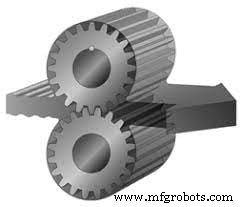
Can you run a gear pump backwards
What happens when you run a gear pump backwards?
If you’re thinking about trying this at home, think again! In theory, running a gear pump backwards should create enough pressure to move liquid or gas through the system. However, in practice this is rarely the case. The gears in a gear pump are designed to work together to produce a flow of fluid. When you try to reverse the flow of the gears, they can become jammed and will likely not work at all.
In general, gear pumps are not designed to be run in reverse. If you need to move liquid or gas through a system using a gear pump, it is best to contact a professional manufacturer or supplier of pumps and equipment.
Conclusion
Yes, it is possible to run a gear pump backwards. However, doing so can cause damage to the pump and may even require that it be replaced. If you are considering running a gear pump backwards, consult your manufacturer or an experienced mechanic first to make sure the procedure is safe and feasible.
Can you run a gear pump backwards,please click topkitparts see more
Industrial equipment
- How to Detect a Faulty Hydraulic Pump: Key Indicators
- Running a Hydraulic Pump with an Electric Motor: How and Why It Works
- How to Reverse the Rotation of a Hydraulic Pump: Safe & Efficient Methods
- Assessing Hydraulic Pump Efficiency: Key Indicators & Best Practices
- Run a Hydraulic Pump Without Oil? Use a Water Pump for Safe, Emergency Operation
- The Consequences of Running a Hydraulic Pump Dry: What You Need to Know
- Can a Hydraulic Motor Serve as a Pump? Exploring Dual-Function Fluid Power Systems
- Determining the Horsepower Needed to Run a Hydraulic Pump
- Can Hydraulic Motors Operate in Reverse? An Expert Insight
- The Consequences of Running a Hydraulic Pump in Reverse: Risks and Prevention