



Synaptics and ID R&D Launch AI-Driven Voice Biometrics for Secure Payment Authentication
Recent breakthroughs in artificial intelligence have pushed voice biometrics beyond identification and personalization, enabling secure payment authentication. Synaptics and ID R&D now offer an AI‑powered voice biometrics solution with built‑in anti‑spoofing that runs directly on Synaptics’ SoCs, optimized for the neural processing unit (NPU) in the VS600 series. The technology is tailored for edge devices such as set‑top boxes (STBs), smart speakers and home security systems.
Synaptics supplies AI‑enabled SoCs to smart‑home products that process video, audio and imaging streams. A common scenario is an STB that includes cameras for video conferencing, where instant voice‑based authentication can streamline user interactions.
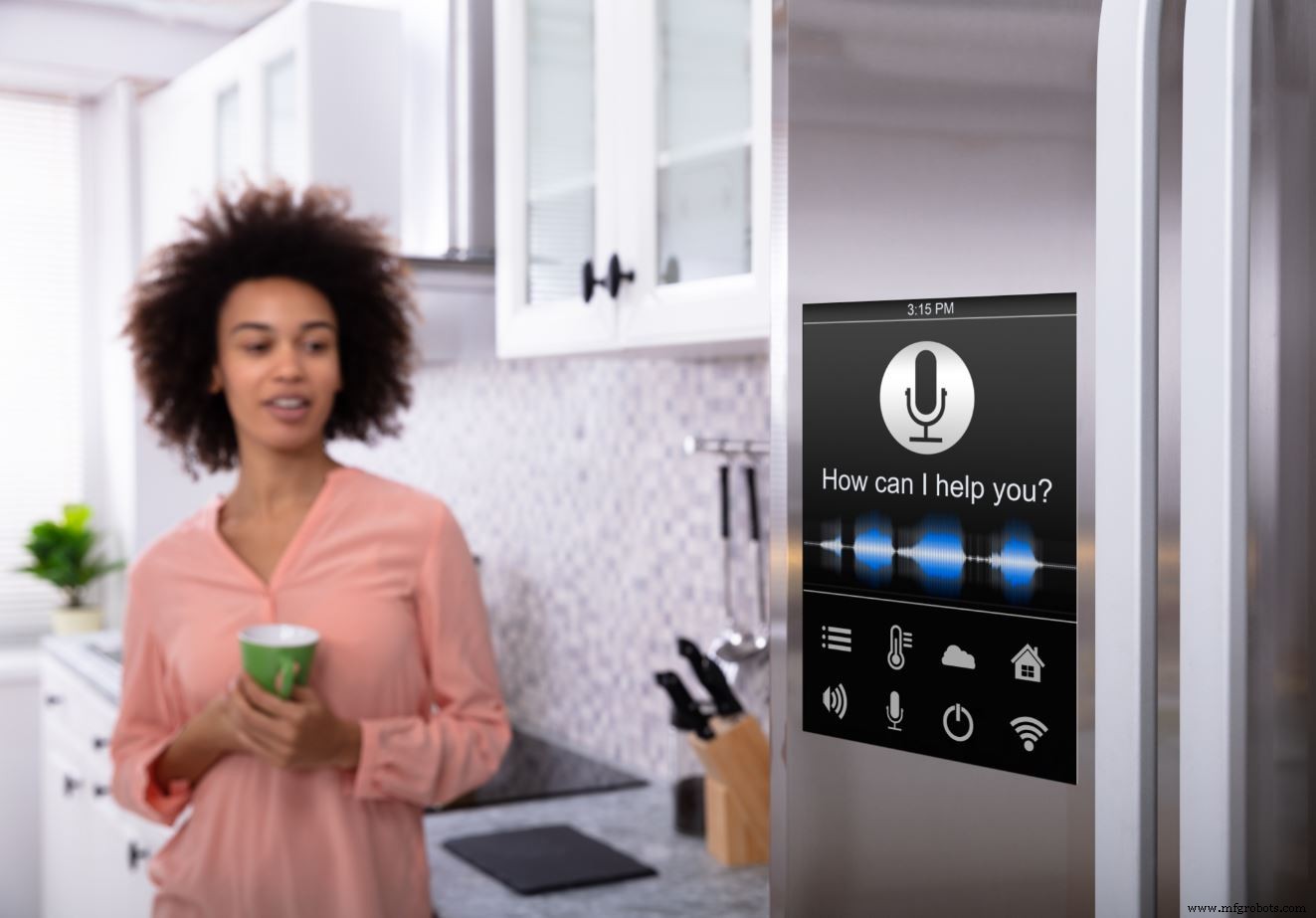
Voice biometrics is now accurate enough to enable payment authentication in smart home devices
"Voice is becoming a standard interface for set‑top boxes and other smart‑home devices," said Vineet Ganju, Vice President of Marketing at Synaptics, to EE Times. "Voice controls let users navigate services like Netflix hands‑free, and adding biometric authentication removes the need for PINs or remote‑control passwords.
For example, when a viewer selects a pay‑per‑view title, the system can instantly authenticate the user’s voice and authorize the purchase, dramatically reducing friction and improving the overall user experience," Ganju added.
On‑device enrollment
ID R&D’s AI extracts more than 400 acoustic features—frequency, pitch, pronunciation, accent and other nuanced cues—from each voice sample. Unlike earlier systems, the technology is language‑agnostic and works with any spoken phrase. Enrollment is performed locally on the device: the user repeats a phrase three times, after which the model learns the user’s vocal signature.
The algorithm delivers a false acceptance rate (FAR) of less than 1 in 10,000, comparable to the odds of someone guessing a PIN. The false rejection rate (FRR) hovers around 5%, and the spoof acceptance rate (SAR) for replay or synthetic attacks is below 7%, meeting the Android biometric standard for secure unlocking.
"By combining a FAR of 1/10,000 with anti‑spoofing that outperforms the 7% Android benchmark, we provide a robust foundation for voice‑based payment authorization," said John Amein, Senior Vice President of Sales at ID R&D.
Anti‑spoofing capabilities
The anti‑spoofing module also leverages AI. It samples audio at a rate far exceeding the typical 3,500 Hz bandwidth of human speech, capturing higher‑frequency artifacts that differ between live voices and playback devices. This analysis reveals subtle inconsistencies—such as phase shifts or overly smooth transitions—that humans may miss but AI can detect. The system also flags synthetic voices generated by text‑to‑speech engines, which, while increasingly realistic, still exhibit detectable anomalies.
Neural processing unit performance
Synaptics’ VS600‑series SoCs feature a dedicated NPU. The VS680 NPU delivers 6.75 TOPS, while the newer VS640 offers 1 TOPS, striking a balance between performance and cost. Both NPUs provide ample compute to run ID R&D’s voice biometrics and anti‑spoofing algorithms concurrently. In benchmark tests, the NPU accelerated voice inference tenfold compared to the CPU, while reducing CPU utilization by a factor of three.
Synaptics supplies a developer toolset that enables partners like ID R&D to tailor their algorithms for the NPU. ID R&D is Synaptics’ first partner in this space, and Synaptics plans to collaborate with additional vendors for future applications beyond voice biometrics.
"We anticipate that speech‑recognition engines covering a full English vocabulary can run offline on the 1 TOPS NPU,” said Ganju. "This capability ensures a smooth out‑of‑the‑box experience for users who may not connect immediately to Wi‑Fi.
The initial software build from ID R&D will be available on Synaptics’ VS600 development kits later this month.
>> This article was originally published on our sister site, EE Times.
Internet of Things Technology
- Minterm vs Maxterm: A Comprehensive Guide to Karnaugh‑Map Simplification
- pH Measurement: Fundamentals, Electrodes, and Best Practices
- Key Features of a Robust Edge Computing Solution for IoT
- Industrial IoT: A Practical Guide to Successful Implementation
- Fully‑Managed IoT Gateway Accelerates Development and Deployment
- Technologic Systems' TS-7180 SBC Powers Industrial IoT
- How Voice Interfaces Are Democratizing Interaction: Trends, Tech, and Market Growth
- Renesas & Syntiant Launch Low‑Power Voice‑Controlled Vision AI for Embedded IoT Systems
- Azima DLI Launches Bundled WATCHMAN Programs for Reliable Plant Operations
- Revolutionizing MRO with Voice-Enabled IIoT