Industrial manufacturing
 MfgRobots >> Industrial manufacturing > >> Industrial Internet of Things >> Internet of Things Technology
Internet of Things Technology

While the Internet of Things (IoT) continues to evolve, so too does our grasp of how it delivers tangible value in a business context. Early adopters largely experimented with the technology; today, IoT is no longer a novelty but an expected component of modern operations. Consequently, companies ar

Since the FCC opened the ultra‑wideband (UWB) spectrum for unlicensed commercial use in 2005, UWB has become a buzzword in the IoT community. The technology’s standout feature is its ability to pinpoint a device’s location in real time with an accuracy of 20 cm or better. UWB achieves this precision
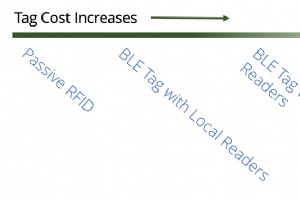
Radio frequency identification (RFID) technology is available in two main variants: passive and active. While active RFID has surged in recent years, passive RFID remains a popular choice for many organizations that need to track thousands of items at a low cost. The question is whether passive RFID

Manufacturers consistently face the challenge of maximizing output while keeping costs in check. Asset tracking technology has become a trusted solution, delivering measurable productivity gains and significant cost savings. Below are three common productivity barriers and how asset tracking directl

Many organizations default to passive RFID for asset tracking because the tags are cheap, but this convenience comes at the cost of limited range and no real‑time data. In contrast, battery‑powered asset tags—whether active RFID or Bluetooth Low Energy (BLE)—offer measurable benefits in cost, accura
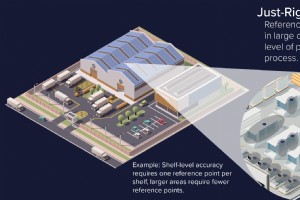
Accuracy and precision are critical when selecting an asset‑tracking solution for manufacturing and healthcare environments. The metric tells you how close the reported location is to the actual position. While many prospects assume that higher precision is always better, the optimal level depends o

Tracking the indoor location of tools, personnel, or equipment is a complex challenge. While GPS is ubiquitous for outdoor navigation, its satellite signals are too weak to penetrate most building envelopes. To locate assets indoors, you need an infrastructure that includes readers or reference poin

At Link Labs, our flagship solution, AirFinder, tackles the challenge of tracking assets and personnel while keeping costs down. In an era where resources are finite, enterprises must prioritize solutions that deliver clear ROI. From the outset, we built AirFinder around three cost pillars: Tag co

When a part or tool disappears, production lines must pause, re‑route, and often re‑work, eroding throughput and margins. Frequent disruptions compound into significant delays, driving up warehousing, labor, and material costs. Asset tracking—whether it’s parts, people, or equipment—offers a clean,

Workplace panic buttons give employees confidence that help is just a press away. For roles that routinely interact with strangers—such as nurses, housekeepers, hotel staff, and hospital personnel—these devices are a vital safety layer. Choosing the right system means understanding the technology th
A real‑time location system (RTLS) tracks people or objects inside buildings with a precision that can range from centimeters to room‑level accuracy. The right balance between accuracy, cost, and operational impact is critical for adoption. Customers evaluate accuracy alongside total cost of owner
At Link Labs, we routinely consult with operations leaders about locating assets inside buildings. The most common concerns are accuracy, reliability, and data‑usage costs. Two positioning methods come up repeatedly: GPS and Bluetooth low‑energy (BLE) indoor positioning. Weak indoor accuracy can fr
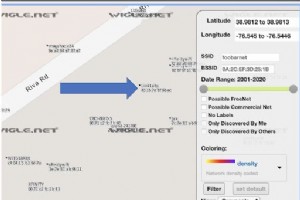
Wi‑Fi remains a go‑to technology for real‑time location systems (RTLS) due to its ubiquity and low upfront cost. However, achieving the precision required in mission‑critical environments—such as hospitals, warehouses, or manufacturing plants—can be difficult. Below we compare the main Wi‑Fi positio
The Real‑Time Location System (RTLS) market stands out as one of the fastest‑growing segments within the broader Internet of Things ecosystem. Falling hardware costs and a surge of new entrants have fueled a wave of innovative solutions that deliver tangible value across industries. With evolving re
Following the completion of large‑scale records digitization, most hospitals are turning their attention to real‑time location services (RTLS). RTLS solutions enable rapid asset tracking, temperature monitoring, staff positioning, hygiene compliance, patient flow analytics, and bed‑capacity manageme

If you’re wondering “What is asset tracking?”, you’re not alone. Asset tracking is a systematic process that lets you know where your high‑value equipment, tools, or even personnel are in real time, and where they’ve been. While asset tracking focuses on location, asset management encompasses the fu
When selecting asset‑management software, the two non‑negotiable capabilities are accurate asset identification and real‑time location tracking. These fundamentals guarantee you are managing the right assets and know exactly where they are. Asset identification technology to ensure you’re managing
For millennia, businesses have relied on written records to keep a finger on inventory and cash flow. From clay tablets to modern ledgers, the goal has remained the same: accurate, timely data that drives decisions. Today, a handful of tools—spreadsheets, barcode scanners, and even the humble pen a

In this article we outline 16 strategic benefits of asset management, divided into two key categories: the overarching business advantages of a robust asset management strategy, and the specific gains realized when asset tracking software is incorporated as an integral part of that strategy. Overal
Asset locating, tracking, and monitoring have become ubiquitous across business and consumer domains. Consumers use devices such as Tile, a compact Bluetooth tracker, and crowd‑sourced smartphone readers to find everyday items like keys, remotes, and phones. Meanwhile, transportation, agriculture, a
Internet of Things Technology