Industrial manufacturing
 MfgRobots >> Industrial manufacturing > >> Industrial Internet of Things >> Internet of Things Technology
Internet of Things Technology

Before you commit to an asset‑tracking system, you need to know whether it will actually cut costs or simply add convenience. Ask yourself these six essential questions: Is your team wasting valuable time hunting for equipment? If nurses in a hospital or logistics staff in a warehouse spend minutes

In October 2016, the Mirai botnet turned everyday IoT devices into a weapon, flooding Dyns DNS servers with traffic and taking down high‑profile services such as Amazon, Twitter, and PayPal. That attack underscored the critical need for robust IoT security. At Link Labs, we’ve seen how simple miscon

For contractors, subcontractors, and equipment rental firms, real‑time location tracking is no longer a luxury—it’s a strategic advantage. By deploying compact tracking devices, companies can safeguard assets, streamline operations, and elevate safety standards. Below are seven practical scenarios w

Whether you’re deploying RTLS within your organization or building a solution for clients, AirFinder offers a simple, cost‑effective platform that delivers accurate, real‑time asset visibility. Streamlined, battery‑powered infrastructure. Traditional RTLS technologies such as passive RFID or infrar

AirFinder delivers a proven, real‑time location tracking solution that meets the unique needs of healthcare organizations. The system is designed to be simple to deploy, cost‑effective, and non‑intrusive to existing networks. Seamless, IT‑friendly integration: AirFinder operates entirely off‑site a

Over the past fifteen years, Wi‑Fi has transitioned from a nascent, low‑performance technology to a cornerstone of modern connectivity. With billions of devices now relying on Wi‑Fi for everyday tasks, continuous innovation is essential. The key questions driving recent standards are twofold: can th

WiFi-based real‑time location tracking (RTLS) is one of the simplest methods to pinpoint assets indoors. A WiFi tag emits a beacon, which is received by multiple time‑synchronised access points (APs). The APs stamp the signal with a timestamp, forward the data to a location server, and the software

Machine‑to‑Machine (M2M) communication is the direct exchange of data between devices without human intervention. Whether via serial, power‑line, or wireless links, M2M enables machines to collaborate autonomously, a cornerstone of today’s Industrial Internet of Things (IIoT). When people mention M2
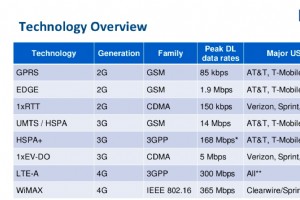
Mobile network operators are steadily retiring Code Division Multiple Access (CDMA). For engineers, OEMs, and IoT strategists, the pressing question is: What does the CDMA phase‑out mean for my company’s IoT roadmap? In this article, we provide an expert overview of the technology landscape, key shu
Whether you’re deploying indoor positioning in a hospital, warehouse, construction site, or correctional facility, asking the right questions is crucial to selecting a solution that delivers value, accuracy, and ease of use. 1. What level of accuracy do we actually need? Start by defining the precis

Radio‑frequency identification (RFID) encompasses a spectrum of technologies that operate across different frequencies and power levels. Below is a concise comparison of the three most common variants – passive RFID, active RFID, and near‑field communication (NFC) – and an analysis of their suitabi

Active RFID, also known as active RTLS, employs battery‑powered sensor tags that broadcast data to nearby access points, then forward that data to the cloud for real‑time visibility.Because of its low cost, high scalability, and long battery life, Active RFID has become the preferred solution for lo

Passive RFID is highly effective for inventory identification, but it falls short when precise location tracking or real‑time visibility is required. Depending on your operational environment—whether you need to monitor stationary assets, dynamic inventory, or safety‑critical movements—other RF and

Today the buzz around the Internet of Things (IoT) has shifted from hype to tangible value. Across industries, companies are investing in larger‑scale connectivity, anticipating measurable returns. The transportation sector is no exception. According to recent industry forecasts, transportation and

In early 2017, the global fleet of cargo container ships numbered roughly 5,000, with countless first‑party shippers relying on liners to move goods worldwide. Since GPS became mainstream in the late 1990s, the ability to pinpoint a container’s location has transformed the shipping industry, allowin

Bluetooth Low Energy (BLE) offers a powerful, low‑power solution for transmitting location data quickly. With just a BLE transmitter and a reader or access point, you can begin deploying a reliable indoor positioning system. Below we break down the two BLE‑based technologies that dominate RTLS (Real

Temperature‑sensitive goods—ranging from fresh meat and fish to critical chemicals and life‑saving pharmaceuticals—must remain within strict temperature limits from the factory floor to the end‑user. Even a deviation of two to four degrees can compromise safety or efficacy, making robust cold‑chain

For most of human history, skilled labor drove manufacturing. The Industrial Revolution in the 1700s introduced the first collaboration between people and machines, accelerating production and elevating quality. Today, the Internet of Things (IoT) is poised to usher in a new era—where data‑rich, net

Top 5 Benefits of Smart Warehouse Systems for Modern Logistics Today’s supply chains demand rapid, customized fulfillment. Made‑to‑order production and priority shipping are no longer exceptions—they’re the new standard. This shift places unprecedented pressure on warehouses, whether you operate a

Ensuring an uninterrupted cold chain for temperature‑sensitive products is inherently challenging, yet the task becomes markedly simpler when you’re only storing items rather than moving them. While storage typically relies on basic tools—a thermometer, clipboard, and periodic checks—transportation
Internet of Things Technology