Industrial manufacturing
 MfgRobots >> Industrial manufacturing > >> Industrial Internet of Things >> Internet of Things Technology
Internet of Things Technology

For years, Sigfox and LoRa dominated the low‑power wide‑area network (LPWAN) arena. Although their business models and underlying technologies differ, both aim to enable mobile operators to deploy city‑wide and nationwide IoT networks. In recent years, new entrants such as Narrowband IoT (NB‑IoT) an

Managing the cold chain for vaccines is a high‑stakes operation. Vaccines must be kept at an average of 5 °C throughout transport and storage, with the acceptable window of 2–8 °C. Exposure outside this range erodes potency and can render doses ineffective. Even today, U.S. facilities struggle to

In today’s world, knowing the exact location of critical assets—from hospital imaging equipment to delivery trucks and even personal vehicles—has become a standard expectation. Whether you’re in healthcare, logistics, construction, or manufacturing, the ability to monitor physical assets in real tim

As the global count of connected devices climbs toward 125 billion by 2030, the low‑power wide‑area network (LPWAN) technologies that support them are evolving rapidly. NB‑IoT, LoRa, and Sigfox are often compared in headlines, but each technology serves distinct needs. Understanding their technical

“What is LoRa?” is a question that can mean different things depending on the context. The term spans multiple layers of the wireless stack: Modulation scheme – a chirped, multi‑symbol radio waveform that encodes data with exceptional receiver sensitivity and low bit‑error rates. Hardware ecosystem
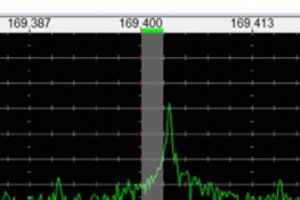
Low‑power, wide‑area network technology—commonly called LPWAN—allows devices to communicate over extensive geographic regions while transmitting only small data packets. Unlike traditional Wi‑Fi or cellular solutions, LPWAN is tailored for IoT sensors and controllers that need minimal power consumpt

With Verizon and AT&T deploying nationwide 4G LTE‑Cat M1 (LTE‑M) networks since 2017, cellular IoT standards like LTE‑M and NB‑IoT have become mainstream. Cellular connectivity engineered for IoT devices offers low bandwidth and ultra‑low power consumption, but many businesses still find the deploym

In some ways, the term “Internet of Things (IoT)” has been hijacked by what I call the “smart toaster phenomenon.” For years, IoT device manufacturers have been touting the benefits of smart, connected home appliances—things like smart toasters (which toast your bread perfectly to your liking every

Real‑time asset location intelligence is becoming a top priority for modern executives. Thanks to the rapid expansion of the Internet of Things, any organization can now track assets—high‑value or not—and unlock powerful business insights from that data. Across industries, companies are monitoring a

Everyone knows the Global Positioning System (GPS) for outdoor navigation, but GPS signals are blocked by walls and ceilings. That’s where an indoor positioning system (IPS) comes in, delivering reliable location data inside buildings. What Is an Indoor Positioning System? IPS is the technology that

The oil and gas industry operates under constant pressure to reduce costs, extend asset life, and meet increasingly stringent environmental regulations. In this high‑stakes environment, connected technology is no longer optional—it’s essential for staying competitive. For decades, companies have tur

Shipping companies know the pain of a “dark” container—one that disappears from the fleet and causes weeks of delays. Traditional bar‑code scans and paperwork only confirm that a container was loaded or unloaded; they do not reveal its exact location, status, or environmental conditions during trans

As the Internet of Things (IoT) accelerates, Forbes reported 8.4 billion connected devices in 2017, with the figure projected to exceed 20 billion by 2020. The rapid adoption is unlocking new efficiencies, but it also exposes a set of interconnected challenges that can stall ROI and threaten securit

GPS asset tracking, introduced roughly 25 years ago, is the most familiar solution for locating people and vehicles. It powers cell phones, digital maps, and fleet management in trucking and transportation. While GPS excels at pinpointing mobile assets, it is ineffective or cost‑prohibitive for man

Planning to leverage Narrowband IoT (NB‑IoT) for your next data‑collection solution? This article distills the key architectural considerations that will help engineers and product designers build reliable, value‑adding devices. NB‑IoT vs. LTE‑M: Core Architectural Differences NB‑IoT and LTE‑M are

IoT projects are fraught with uncertainty, and one constant you can rely on is the presence of ‘unknown unknowns’—factors that surface only when you start building. Many teams chase the traditional product‑development cycle, focusing solely on known variables. They believe that a deep understanding

At AirFinder, we witness daily the transformative power of the industrial Internet of Things (IIoT) across manufacturing, one of the two sectors most deeply undergoing digital change. Our customers use AirFinder’s technology to tackle large‑scale challenges—from boosting efficiency and safety to sla

If you’re evaluating LoRaWAN for your IoT deployment, understanding its strengths and limitations is essential. Lately, the protocol has gained traction—see the machineQ case study—which proves it works well for simple applications on public networks. However, for private, industrial, or enterprise

In early 2024, the National Institute of Standards and Technology (NIST) released draft publication NISTIR 8228, titled Considerations for Managing Internet of Things (IoT) Cybersecurity and Privacy Risks. It lays the groundwork for a series of guidance documents aimed at helping both federal agenci

When manufacturers hear the phrase ‘connected factory,’ many picture automated lines and robotics already in place. Yet, in the context of the Internet of Things (IoT), a connected factory goes further—adding a second layer of connectivity that captures, monitors, and optimizes every facet of produc
Internet of Things Technology