


Industrial manufacturing
 MfgRobots >> Industrial manufacturing > >> Industrial Internet of Things >> Internet of Things Technology
Internet of Things Technology
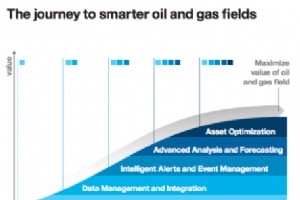
Oil and gas companies face a relentless drive for higher production and lower costs. In this environment, the Internet of Things (IoT) offers a practical pathway to meet those goals. This article examines the monitoring methods historically used in the sector, how they are evolving, and the capabili

Editorial note: Discussing “monitoring” in the context of public spaces can raise privacy concerns. At Link Labs, we emphasize that IoT‑enabled public space mapping is designed to support people’s needs while safeguarding personal privacy. The Internet of Things has long transformed private‑sector s

This year alone, hundreds of new IoT startups are emerging. If you’re one of them, your first priority should be a clear revenue strategy. A robust business model informs every decision—from whether to manufacture in‑house, source components, or partner with specialists, to how you’ll generate reven

Link Labs is a leading manufacturer and integrator of LoRa‑based systems. We receive many inquiries about LoRa, so we’ve compiled the most frequently asked questions to help you understand what LoRa is, what it isn’t, and how it can benefit your projects. 1. What is LoRa and why is it such a powerfu

Whether you’re an industry veteran or a curious newcomer, these 14 experts consistently deliver groundbreaking insights that shape the future of the Internet of Things. Their research, commentary, and product innovations keep the ecosystem moving forward and inspire the next wave of IoT breakthrough

As the low‑power, wide‑area network (LPWAN) market continues to grow, developers have an expanding toolkit of wireless protocols for Internet of Things (IoT) devices. In this article, we compare Bluetooth Low Energy (BLE) with ZigBee to help you determine which technology best suits your project’s r

A wireless sensor network (WSN) or IoT network is a distributed system of nodes that collect sensor data and relay it to a central gateway via wireless links. The collected data is then aggregated and processed to provide actionable insights. WSNs are optimized for transmitting small, infrequent dat

As part of our ongoing series on machine‑to‑machine (M2M) wireless solutions, this article compares two dominant protocols—Zigbee and Wi‑Fi. Whether you’re designing a new IoT product or optimizing an existing deployment, understanding the trade‑offs in bandwidth, range, and power consumption will g

2015 marked a turning point for the Internet of Things (IoT). Major corporations across the globe rolled out formal IoT strategies, signaling the technology’s transition from niche to mainstream. As 2016 approaches, the industry faces a new set of critical hurdles that will shape its trajectory. 1.

What Is Weightless? Weightless is an open‑standard family of low‑power, wide‑area network (LPWAN) protocols that enable secure, scalable connectivity for a wide range of IoT applications. The Weightless Special Interest Group (SIG) has defined three distinct protocols—Weightless‑N, Weightless‑W, and

From the first connected toaster in 1990 to the sophisticated wireless control systems of 2015, the Internet of Things (IoT) has evolved from a novelty to a global industry. IoT lets us sense, control, and interact with the physical world in real time, unlocking data‑driven insights that streamline

Machine‑to‑machine (M2M) communication enables devices—such as smoke detectors, smart locks, environmental sensors, and water meters—to exchange small packets of data autonomously. Each IoT application imposes its own constraints on range, power, and cost, so selecting the right network architecture

At Link Labs, we’ve found that the fastest way to stay ahead in the Internet of Things (IoT) ecosystem is to attend the most influential industry events. While hundreds of conferences exist worldwide, five stand out for their depth, prestige, and impact. 1. Sensors Expo & Conference The Sensors

Recording patient statistics and outcomes has always been a cornerstone of modern medicine. Knowing a patient’s baseline vitals allows clinicians to detect deviations, track recovery, and intervene promptly. Yet the way this data is captured is evolving rapidly—thanks to the Internet of Things (Io

For anyone following the connected‑devices industry, the terminology has evolved from “Machine‑to‑Machine” (M2M) to the broader “Internet of Things” (IoT), and more recently to the Cisco‑driven “Internet of Everything” (IoE). Although these acronyms sometimes overlap, each carries distinct implicati

Building a successful IoT solution requires more than solid system architecture. You must also determine how the device will connect to the internet, how it will receive credentials, how it will be provisioned and managed, and ultimately which connectivity module best supports your product’s goals.

The energy industry is among the earliest adopters of Internet of Things (IoT) and machine‑to‑machine (M2M) technology. From electric smart meters to demand‑response systems, the sector has long leveraged connected devices to improve efficiency and reliability. With the rapid growth of renewable gen

ZigBee, based on the IEEE 802.15.4 standard, excels in low‑power, low‑data‑rate scenarios where nodes are static and evenly spaced. In such environments, a mesh topology can provide robust, self‑healing connectivity with minimal overhead. However, when nodes move, RF conditions change, or coverage g

Bluetooth is a low‑power, short‑range wireless standard that operates in the 2.4 GHz ISM band, available worldwide without licensing. It uses 79 1‑MHz channels to transmit data in packets, making it ideal for continuous streaming applications such as wireless speakers, headsets, and keyboards. See

Wireless IoT Network Protocols Below is an extensive, though not exhaustive, list of Internet of Things (IoT) protocols. If you’re evaluating options, this guide offers a clear starting point. Note: Choose a protocol only after you’ve defined your application’s exact requirements. Compatibility, pow
Internet of Things Technology

Biz4Intellia IoT: Cutting-Edge Oil Well Monitoring for Smarter Operations
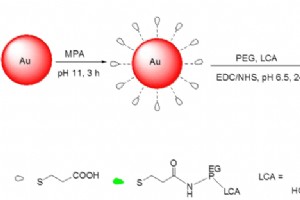
Lithocholic Acid–Functionalized Gold Nanoparticles Induce Selective Apoptosis in Liver Cancer Cells

Resolving the U.S. Military’s Missing Weapons Issue Through Advanced Tracking Solutions

Introducing Multi‑Site CMMS: Centralize, Secure, and Scale Your Maintenance Operations
