Industrial manufacturing
 MfgRobots >> Industrial manufacturing > >> Industrial Internet of Things >> Internet of Things Technology
Internet of Things Technology
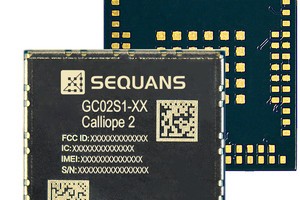
The Calliope 2 GC02S1 series delivers low‑cost, low‑power, IoT‑centric Cat 1bis modules that support VoLTE and throughput surpassing LTE‑M, ideal for wearables, hearables, smart‑city devices, and high‑bandwidth data aggregators. Key technological advances reduce both cost and power consumption, ena

Silicon Labs has released the Z‑Wave 800 series system‑on‑chip (SoC) and module lineup—EFR32ZG23 (ZG23) SoCs and ZGM230S modules—expanding its Series 2 platform. These sub‑GHz solutions support both Z‑Wave Mesh and Z‑Wave Long‑Range, making them ideal for smart‑home, multi‑dwelling unit, hospitalit
Silicon Labs and Memfault have joined forces to integrate advanced development and operations tools with the EFR32 and EFM32 MCU families. Through this partnership, engineers can accelerate product development, mitigate launch risks, and ship IoT solutions that are continuously monitored and improv

When estimating the performance of a wireless link, the free‑space model—where path loss grows with the square of distance—is often the starting point. However, this model falls short when one or both antennas operate close to the earth’s surface. In such cases, radio waves bounce off the ground, le
Link Labs is pioneering a new Lo-Lo network—Low Power/Long Range—by engineering a groundbreaking physical layer that extends radio reach well beyond conventional Wi‑Fi or Bluetooth. Coupled with a sophisticated MAC that lets devices remain in low‑power sleep until data transmission is required, this
1. How Did We Get Here? Each year, headlines expose new vulnerabilities: in 2014, Russian hackers compromised 1.2 billion credentials (https://blogs.wsj.com/digits/2014/08/05/security-firm-russian-hackers-amassed-1-2-billion-web-credentials/) and a recent study shows that in‑flight Wi‑Fi can expose
Wireless data connectivity in the Internet of Things (IoT) ecosystem generally follows one of two patterns. Short‑range protocols such as Bluetooth, Wi‑Fi, and Zigbee. Long‑range cellular modems. While broadband wireless is familiar in homes and mobile devices, the real challenge lies in extendi
At Link Labs, we specialise in turning complex wireless technology into market‑ready solutions that solve real customer challenges swiftly and efficiently. Our track record in developing long‑range wireless physical layers into commercial products gives us unique insights that are equally valuable t
During a recent interview with Businessweek, Link Labs shared its enthusiasm for the Internet of Things (IoT) and its potential to transform everyday challenges. “The IoT excites us because it enables us to collect richer data from a broader array of sources,” the team explained. “By integrating thi
The Internet of Things (IoT) frequently captures headlines, yet many misconceptions still linger. According to Gartner’s 2023 Hype Cycle, IoT sits at the peak of Inflated Expectations, reflecting the gap between hype and practical impact. While the popular image of a self‑shopping refrigerator or a
In 2014, Forbes hailed the Internet of Things (IoT) as the defining trend of the decade, and Gartner soon confirmed that the industry was reaching the peak of its hype cycle. With the rapid acceleration of connected devices, a new vocabulary has emerged—terms that engineers have known for years but
For engineers and engineering‑focused executives, the Internet of Things World Forum in Chicago (October 14‑16, 2014) offers a rich lineup of breakout sessions that address the most pressing challenges in IoT deployment, security, standards, and partnership strategies. Below are the five sessions we
At the Internet of Things World Forum in Chicago, Steve Multer sat down with Brian Ray, CEO of Link Labs, to explore how low‑power, wide‑area networks (LPWANs) are poised to tackle some of the most challenging problems in the IoT landscape. Ray emphasized that LPWANs are evolving rapidly, offering s
Our week at Cisco’s Internet of Things (IoT) World Forum in Chicago proved that the IoT isn’t just a buzzword—it’s a rapidly expanding ecosystem. At Link Labs, we’re excited to share the most compelling insights we gathered. The IoT’s Future Wim Elfrink, Cisco’s Chief Globalization Officer, opened t
This is the first of a three‑part series that breaks down the most common wireless technologies for machine‑to‑machine (M2M) and Internet of Things (IoT) deployments. In this installment we compare Wi‑Fi and cellular—two standards that dominate the market but serve very different needs. At Link Labs

This is part two of a three‑part series that examines the most common low‑power wireless protocols. If you want to read part one, click here: WiFi vs. Cellular. (Editor's note: Here is part two, as well: Bluetooth vs. Bluetooth Low Energy.) Today we’ll cover 6LoWPAN vs. ZigBee: What is 6LoWPAN?
In a recent case study, a fitness obstacle‑course operator sought to enrich contestant data with real‑time metrics such as top speed, route choice, and elapsed time. Their team—electrical engineers by trade—decided to prototype a wireless tracking system on a Sunday afternoon, testing various techno
If you’ve read our posts on Bluetooth LE and ZigBee, you’re familiar with the challenge of delivering real‑time telemetry to athletes in an obstacle‑course setting. The founders of an engineering‑entrepreneur startup want to provide runners with instant feedback—top speed, elapsed time, route taken,
Update: Explore our Real‑Time Location BLE Application built with Symphony Link. Picture this: two engineering‑savvy fitness enthusiasts launch a business that offers obstacle courses in a repurposed warehouse parking lot. They aim to combine the rising demand for active recreation with data‑driven
At Link Labs, we specialize in designing long‑range M2M wireless networks for industrial customers. We partner with startups and established enterprises alike, turning sensor concepts into robust, scalable solutions. Below are six of our favorite industrial IoT applications that exemplify how data c
Internet of Things Technology