Industrial manufacturing
 MfgRobots >> Industrial manufacturing > >> Industrial Internet of Things >> Internet of Things Technology
Internet of Things Technology

Where We Are Today With IoT As consumer IoT expands, many firms view the technology as a gateway to a multitrillion‑dollar industry. Major corporations are already committing significant resources: IBM invested $3 billion in a dedicated IoT unit, while GE launched its own platform, Predix. In reali

When designing next‑generation M2M or Internet of Things products, staying ahead of the wireless curve is essential. Below is a concise overview of the key wireless standards that were emerging in 2015, with a focus on performance, range, and practical deployment considerations. Wireless Gigabit: Wi

California’s recent 50% water‑use cut mandated by Governor Jerry Brown and the Department of Water Resources has sparked intense media scrutiny. The headlines focus on blame and the consequences for farmers, green‑belt lawns, and golf courses. Yet the underlying issue is one of efficiency—can we tru

IoT hackers, like all hackers, play a critical role in shaping the connected world. As one of the few non‑technical voices at Link Labs, my background in energy and environmental policy gave me a unique lens to dissect the term “hacker.” Initially, the word conjured images of “black‑hat” bad actors.

5 Crucial Insights Every Engineering Team Must Know Before Building an M2M Application The Internet of Things (IoT) is booming, and companies are eager to capitalize on the promise of machine-to-machine (M2M) connectivity. Yet, many firms underestimate the engineering challenges that accompany a suc

Every device that connects to a network—your laptop, phone, or IoT sensor—has a unique network identifier. Back in the 1980s, that identifier was an Internet Protocol (IP) address, the cornerstone of data routing in the TCP/IP suite. IP version 4, or IPv4, was introduced in 1981. With 32 bits, it of

IPv6’s emergence marks a pivotal evolution in internet communications, gradually supplanting the aging IPv4 protocol. (See our detailed overview in What Is IPv6?: An Overview.) IPv6 expands the address pool beyond the 4.3 billion unique identifiers of IPv4, providing the capacity required for the ra

In our previous IPv6 series, we introduced the new Internet Protocol and highlighted its critical role in advancing the Internet of Things (IoT). While IPv6 has resolved many limitations of IPv4 and paved the way for more robust IoT solutions, it is not a universal remedy for every machine‑to‑machin
Industrial and manufacturing enterprises increasingly deploy wireless networks to capture sensor data and streamline controller operations, boosting plant efficiency across power plants, oil refineries, and production facilities. Wireless solutions—ranging from conventional WLAN (Wi‑Fi) to specializ
What immediately surfaces when you consider a smart building? Often two themes dominate: Energy‑efficiency certifications such as LEED and the Living Building Challenge. Connected devices—smart thermostats, sensors, integrated fire systems, and more. Although these aspects are important, they only

Link Labs recently returned from the 2015 LoRa Alliance All‑Member Meeting & Open House in Paris, where the growing demand for low‑power wide‑area networks (LPWAN) was evident. Below are key insights from the event. What is the LoRa Alliance? The LoRa Alliance is a nonprofit organization dedicat

Office lights that adapt to your preferred hue, home systems that learn your habits, streetlamps that detect gunfire and alert authorities. These innovations are no longer distant dreams; as LEDs dominate the market, every interior and exterior fixture is becoming connected to the Internet of Things
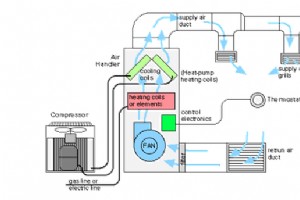
Heating, Ventilating, and Air Conditioning (HVAC) components have been around since the late 1800s, but the modern push for efficiency began in the 1980s when ASHRAE introduced Standards 90.1 and 90.2, setting the benchmark for building energy performance. These milestones paved the way for the next

As the Internet of Things (IoT) and connected devices continue to surge in popularity, security has moved from an afterthought to a central priority. Developers are now trained to address IoT‑specific threats, and the security community—including venues such as Black Hat 2015—has dedicated sub‑confe

The term 'smart security system' may feel paradoxical at first glance. Yet, many of today’s home and office alarms already possess a degree of intelligence—primarily because they’re network‑connected. Initially, alarms linked to telephone lines. As landlines faded and became susceptible to d

ZigBee, Bluetooth, and Bluetooth Low Energy are often compared, but beyond sharing the 2.4 GHz ISM band, they differ significantly in architecture, power usage, and ideal applications. In this article we explore those differences, outline which scenarios each protocol serves best, and illustrate the
While the Internet of Things (IoT) spans many radio technologies, cellular networks remain a popular choice for connecting devices in the field. This article evaluates whether cellular IoT is the right fit for your project by examining coverage, battery life, data usage, and cost compared to low‑pow

While the buzz around the Internet of Things (IoT) often revolves around smart fridges and voice assistants, the most substantial value lies in enterprise‑grade M2M solutions that streamline operations, eliminate waste, and drive revenue growth. Leading companies are already reaping these benefits.

In recent years, machine‑to‑machine (M2M) technology has moved beyond consumer gadgets and into the trash cans themselves, giving rise to what experts call smart waste management. By combining Internet‑of‑Things (IoT) sensors with advanced analytics, waste‑collection operators can streamline operati

Mesh topology is a networking architecture where every node collaborates to route data across the network. First designed for military operations over three decades ago, it now powers modern smart homes, HVAC control, and intelligent buildings. Below is a Wi‑Fi product that implements mesh networkin
Internet of Things Technology