



Optimizing Yellow Flavonoid Dyes: The Crucial Role of pH and Chalk in Natural Dyeing
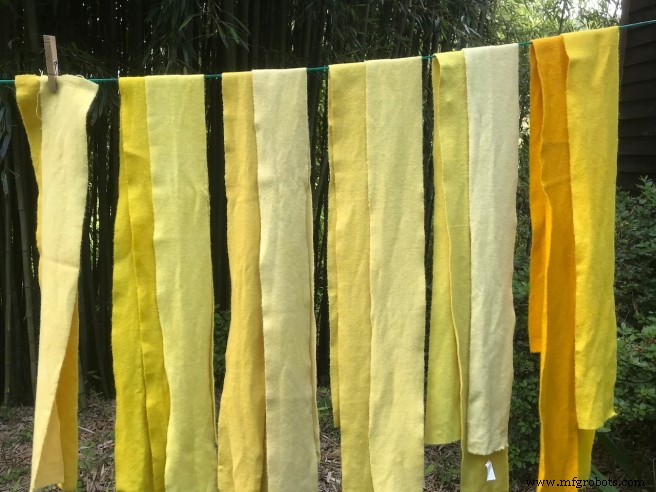
My well water in the North Carolina mountains reads pH 6.0—mildly acidic but otherwise mineral‑free, making it an excellent base for most natural dyes. However, the acidity can interfere with dye uptake, especially when working with yellow flavonoids.
Yellow plant dyes are predominantly flavonoids, which require a mordant to form a stable pigment on fiber. Without a mordant, the yellow will not bind. Many of the local yellow sources also contain tannins or other pigments, but the primary color comes from the flavonoids.
During a workshop with Joy Boutrup at Penland School of Crafts, a student struggled to fix local plant dyes onto mordanted cotton. Joy’s insight—neutralizing the dye bath—solved the problem.
When a dye meets a mordant in fabric, an insoluble lake is created. This lake forms most readily under neutral to slightly alkaline conditions. Alum mordants bond strongly with wool, but cellulose fibers rely on the deposition of the mordant as an insoluble complex; the bond is more fragile.
Many local plants are acidic. Boiling them in already acidic well water pushes the bath’s pH low enough that the dye struggles to bond to the mordant—and can even strip the mordant from cellulose. This explains why an acid is omitted from cochineal baths for cellulose fibers: the mordant would degrade and little dye would attach.
Solution: add a modest amount of calcium carbonate (chalk). Chalk neutralizes excess acid without damaging the dye or fiber. It is not strongly alkaline; excess chalk simply precipitates and rinses out.
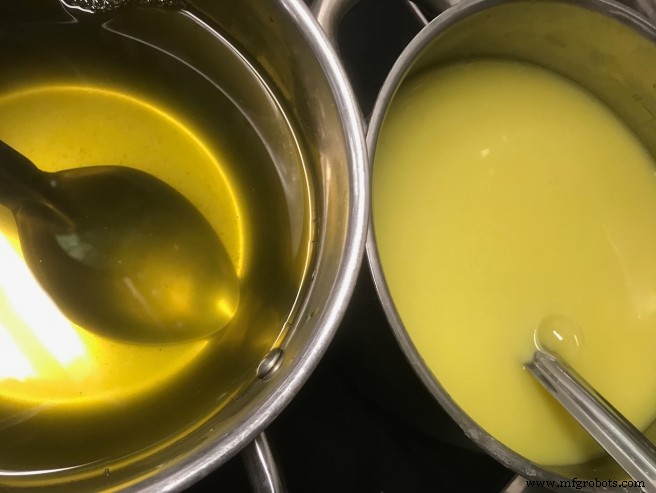
I conducted flavonoid dye tests using broom (Genista tinctoria) and other garden plants, comparing results with and without chalk. All tests used fresh plants at 300% w.o.f. Wool was mordanted with alum; cotton with tannin + alum + soda ash. Each 4‑liter decoction received 1 Tbsp of chalk in one half of the trial.
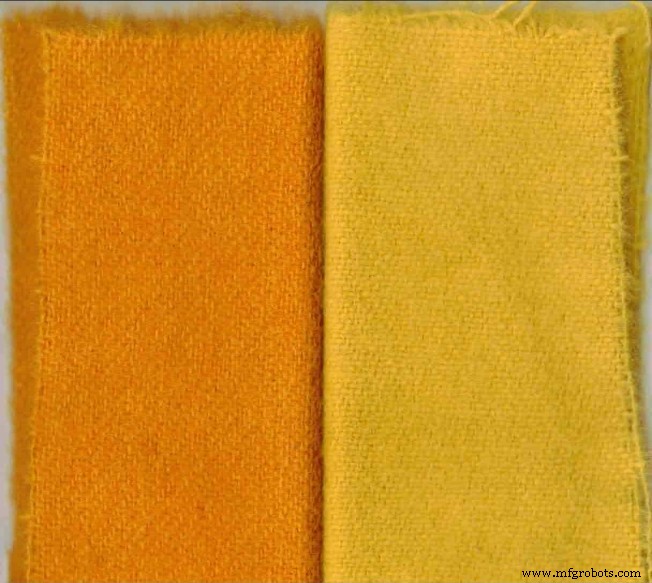
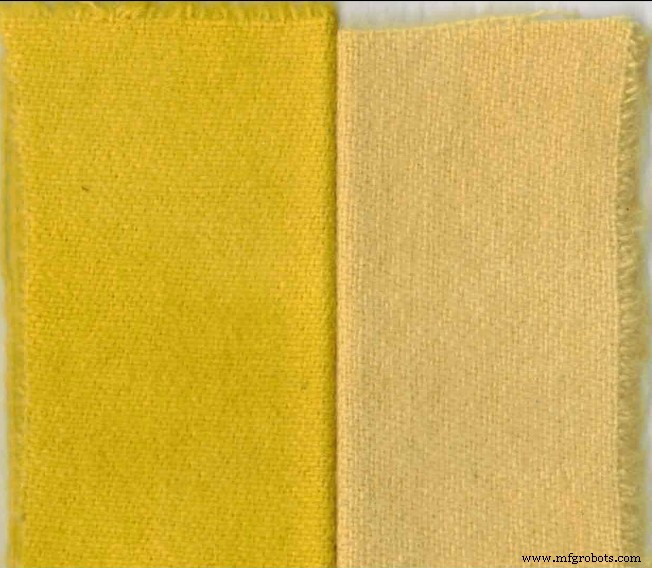
The outcomes were consistent: adding chalk produced deeper, brighter yellows across the tested plants. Dried weld showed minimal change, likely because drying reduces its acidity. In contrast, grape and sumac leaves—most acidic—destroyed the mordant on cotton when chalk was omitted, leaving only tannin‑derived colors.
Below are the plants, their initial pH, and post‑chalk pH readings:
- Genista tinctoria (Broom) – pH 5 → 6
- Wild grape leaves – pH 4 → 6
- Apple leaves – pH 5 → 6.5
- Anthemis tinctoria (Chamomile flowers) – pH 4.5 → 6.5
- Rhus typhena (Sumac) – pH 4 → 6
- Reseda luteola (Weld) – pH 5.5 → 6.5 (both fresh and dried)
Illustrative samples show the effect of chalk on wool dyed with apple leaves, grape leaves, weld (fresh and dried), sumac, and chamomile:
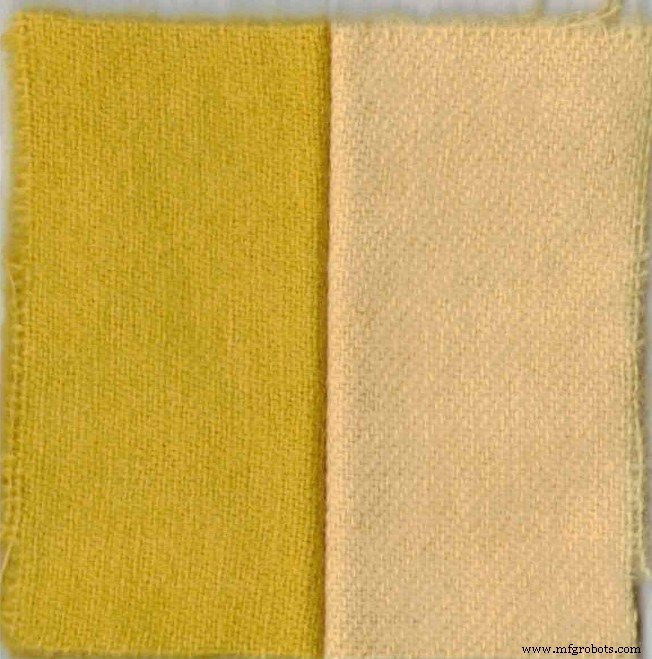
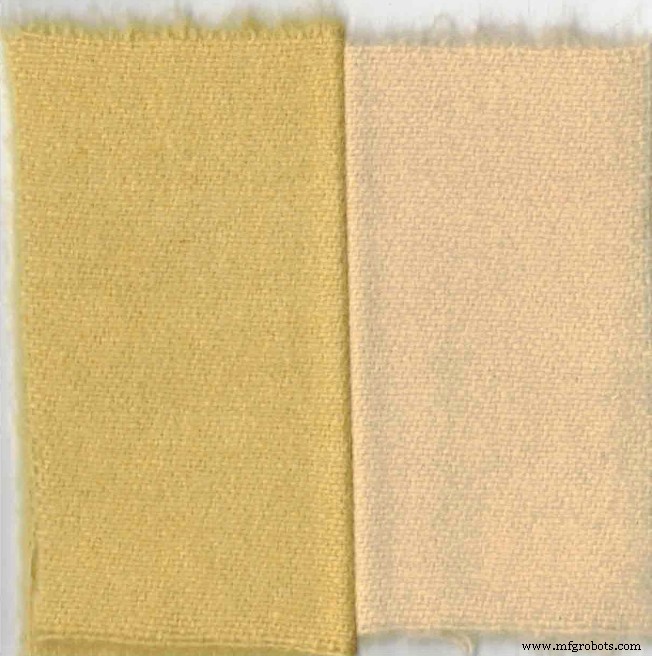
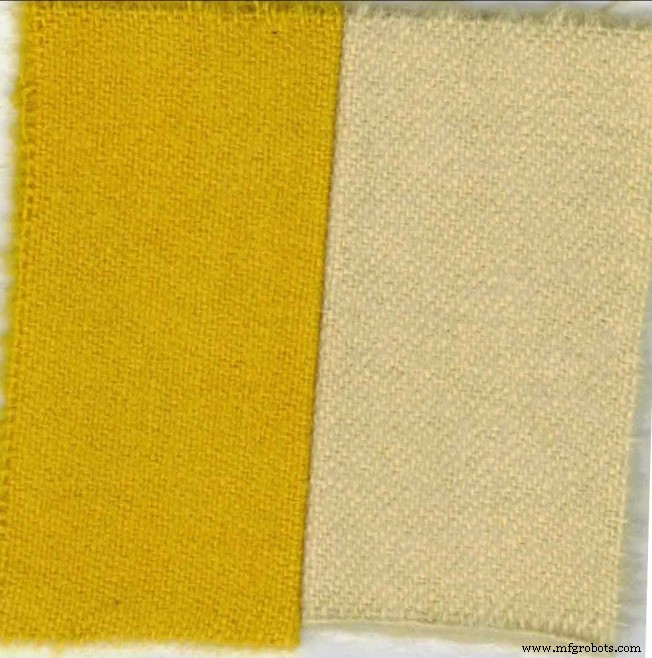
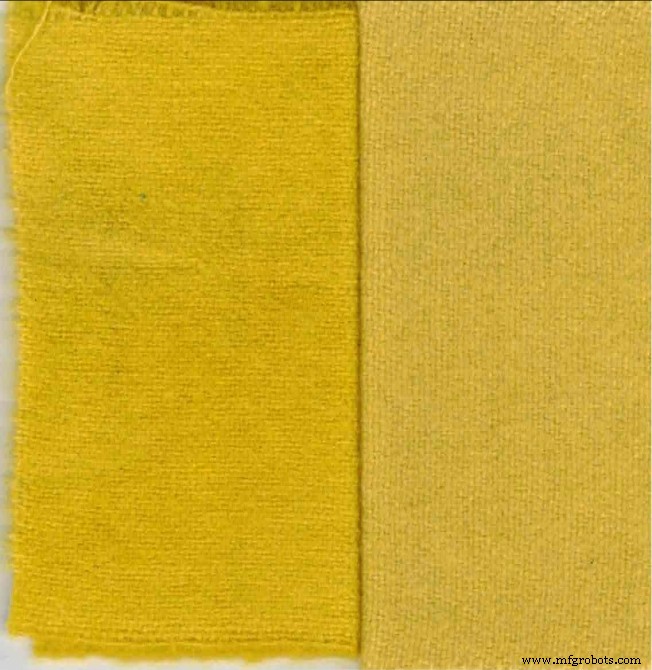
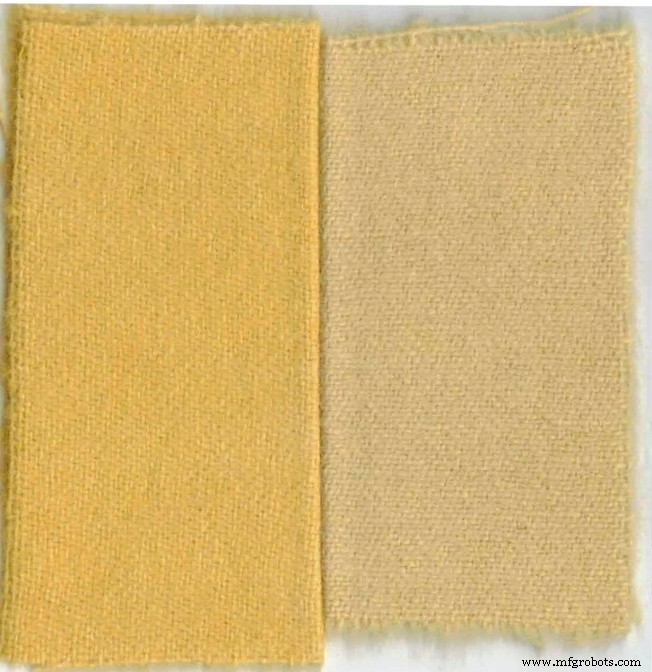
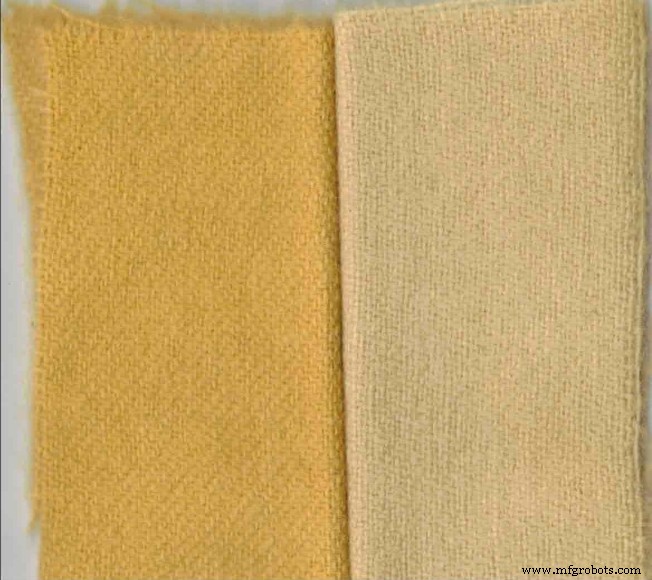
When working with cellulose fibers, especially in acidic conditions, chalk prevents mordant loss and ensures the flavonoid lake forms correctly. If your water is neutral or high in calcium, these tests may be less critical, but chalk will never harm your dye or fiber and can still enhance color yield.
Additional notes: “If they are too sour they will dissolve part of the mordant.” – M. Garcia. My observations confirm that a pH below 4 can strip mordants; adding chalk moderates acidity without over‑neutralizing.
In short, a small dose of chalk is a reliable way to maximize the vividness of yellow flavonoid dyes.
Tip: purchase potter’s chalk (“whiting”) for an inexpensive, high‑purity calcium carbonate source. Check the MSDS before use.
Upcoming webinar: Colors from the Garden (July 13) – part of the John C. Campbell Folks School’s Appalachian Traditions Series. Sign up here.
Dye
- Understanding the Skin Effect: Impact on AC Conductors and RF Applications
- Applications of Basic Dyes Across Industries
- The Complete Guide to Textile Dyes: Types, Applications, and Choosing the Right Manufacturer
- How Acid Dyes Transform Fabrics: Applications & Benefits
- Dyes & Pigments in the Paper & Pulp Industry: Trends, Selection Criteria, and Best Practices
- Global Dye Industry’s Evolution: Eco‑Friendly Shifts, Regulatory Rigor, and Technological Innovation
- The Science of Textiles: A Deep Dive into Acid, Reactive, Leather, and Direct Dyes
- Dyes: The Essential Colorants for Textiles, Paper, and More
- How Inclusions Influence Steel Performance and Strength
- Streamlining Production: Embrace Automation From Day One