



High‑Performance Date Palm Fiber: Sustainable & Cost‑Effective from Agricultural Waste
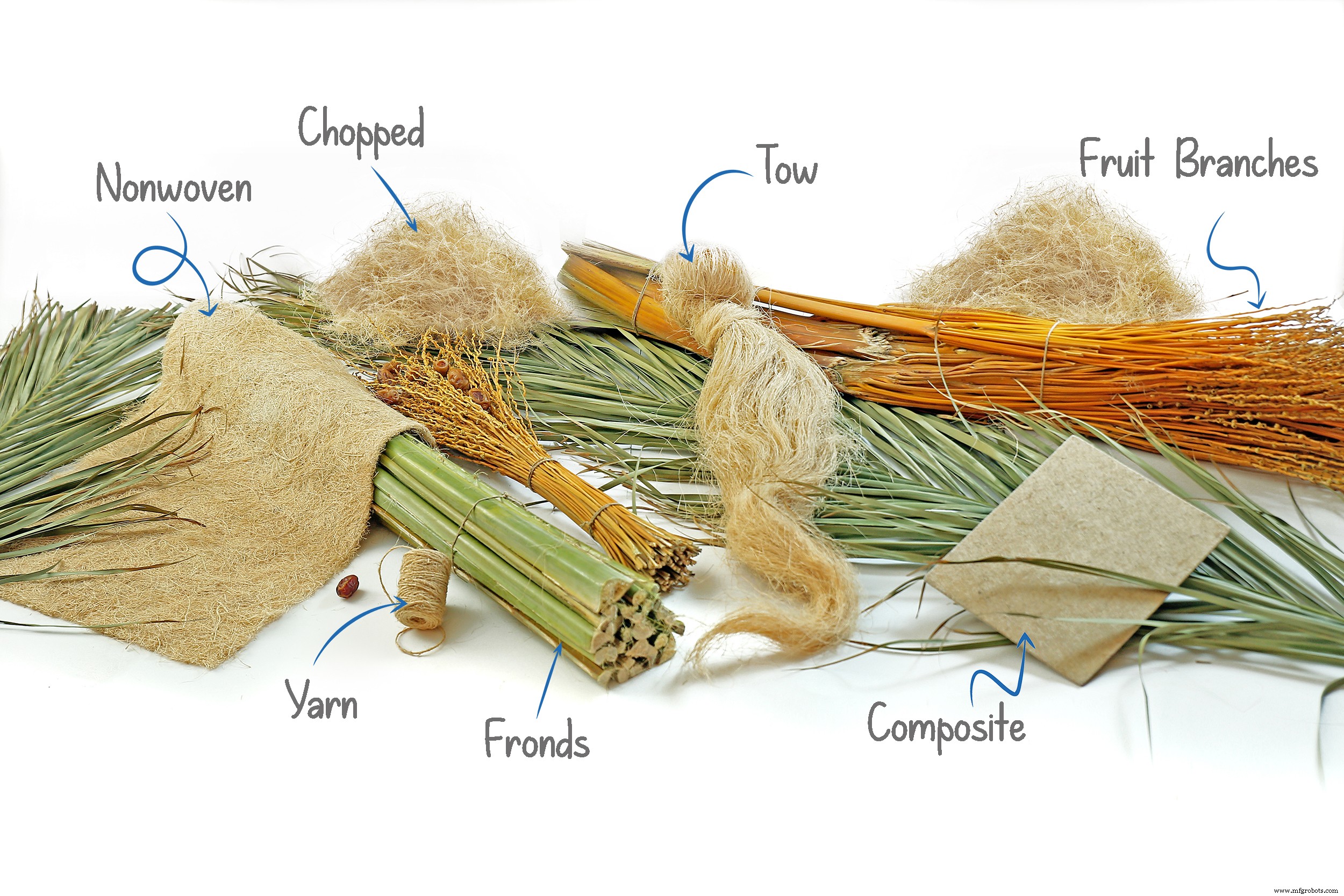
PalmFil is a type of high-performance fibers and reinforcements extracted from the byproducts of date palms, developed by a consortium of five Egytpian researchers specializing in natural fibers. The fiber is designed to be both sustainable and economical in manufacturing — it is compatible with various methods of textile and composite processing and said to offer the light weight and other performance properties required for the automotive industry.
According to Dr. Mohamad Midani, a partner in the PalmFil consortium, there are more than 140 million date palms grown in the Middle East and North Africa, generating more than 4.8 million tons of byproducts from pruning. The PalmFil consortium set out to transform these byproducts into 1.3 million tons per year of natural textile fibers.
“In the 1980s, the shift from natural fibers to manmade fibers was mainly to bridge the gap between the increasing demand for textile fibers and the limited supply of natural fibers,” says Midani. “In order to reverse this shift, there is a need to explore more sources of natural fibers and increase the biodiversity of fiber crops. And that is exactly what we did.” According to Dr. Ahmed Hassanin, another consortium partner, the research was self-funded and represents a five-year collaborative effort.
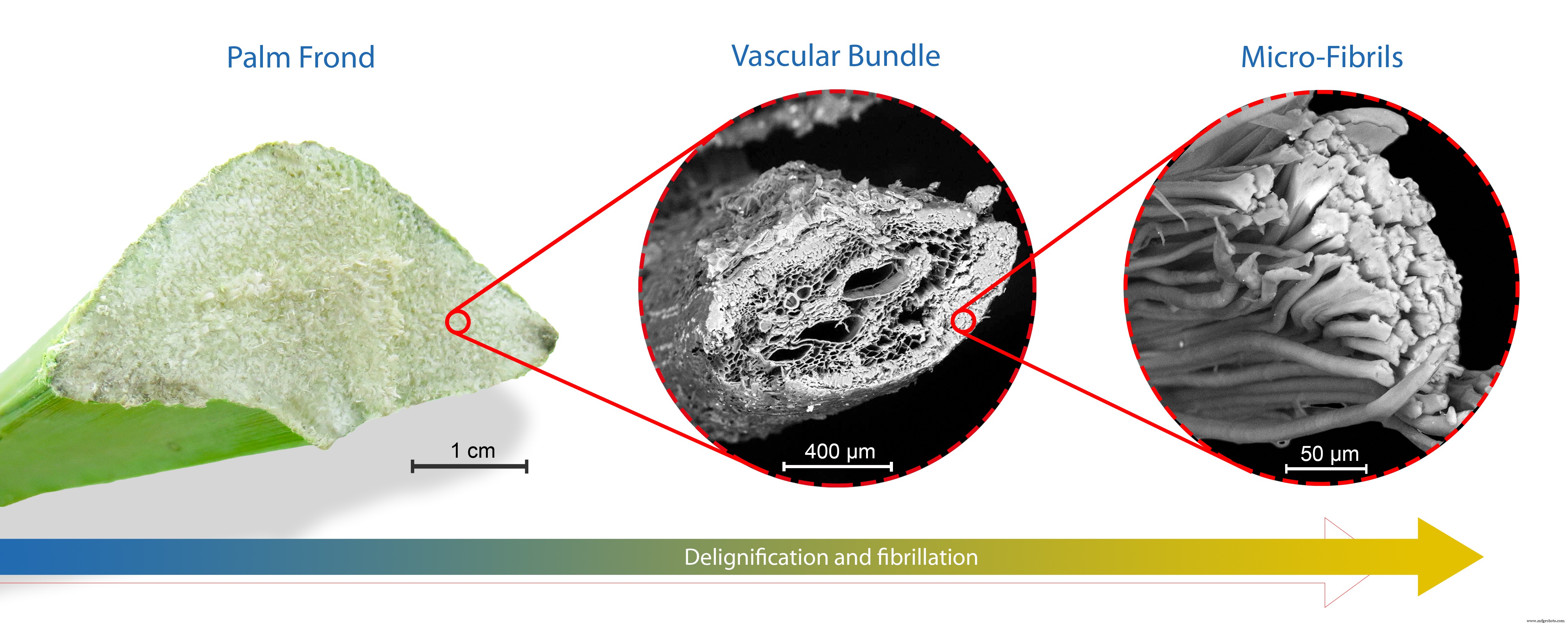
Previous attempts to extract fibers from date palm byproducts, the consortium says, used crushing and grinding methods, which resulted in a biomass rather than textile fibers. The PalmFil consortium claims to have extracted the first long textile fiber from such byproducts and converted it into fiber tow, chopped fiber, spun yarn/roving, nonwoven mat, woven fabric and unidirectional tape.
The fibers can be used in a range of industry applications, including use in composite automotive or sporting good applications, plaster reinforcements, packaging and other consumer products.
The date palm fiber, which comes from renewable bioresources, is said to be 100% biodegradable and compostable and has specific tensile strength five times higher than that of structural steel, and equal to those of flax, hemp and sisal. Its vibration damping and acoustical insulation is said to be higher than those of glass and carbon fiber, with thermal insulation higher than that of carbon fiber. Moreover, it can be easily blended with other long fibers such as flax, sisal and abaca, or it could be chopped and blended with hemp, kenaf and jute.
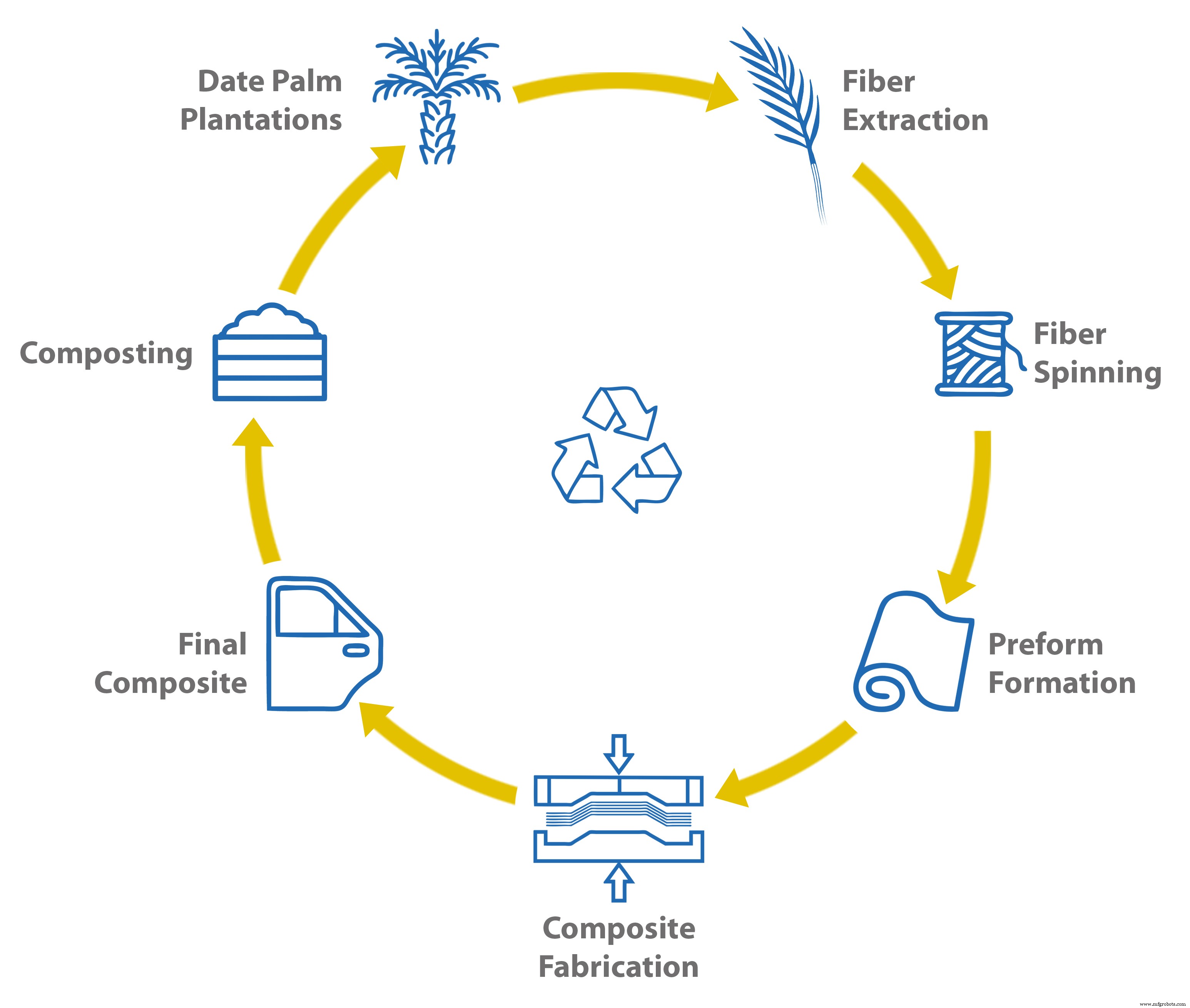
According to the consortium, PalmFil technology also contributes to the circular bioeconomy, following a closed loop cycle from cradle to cradle. Moreover, they say the extraction technology could be applied to byproducts of other palm species such as oil palm, sugar palm, doum palm as well as other agriculture byproducts such as broomcorn.
According to Dr. Tamer Hamouda, consortium partner, comprehensive research has been done to optimize the extraction process and characterize the new fiber, and the fiber has been processed on a full industrial-scale spinning line at the Egyptian Industrial Center of Flax. Hamouda adds that the consortium is currently establishing connections with automotive manufacturers in Europe and conducting research on date palm fiber composites for automotive applications.
“Date palm byproducts have been used for centuries in the Middle East and it is a heritage related material. ... Recent R&D conducted by PalmFil consortium demonstrates the potential of date palm fiber, its use in the modern context and in industrial settings. ... The key to its revival will be the national will and support to encourage the development of a reliable supply chain that can service the various production sectors that could use the fiber,” says Dilip Tambyrajah,secretary general of the International Natural Fiber Organization (Zoetermeer, Netherlands).
The PalmFil consortium is currently seeking partnerships to further develop, scale up and commercialize this technology. For more information on this product and the development team, visit palmfil.com.
fiber
- Carbon Fiber: Composition, Manufacturing, and Future Applications
- Carbon Fiber: A Journey from History to Tomorrow
- The Art and Science of Carbon Fiber Production: From PAN to High-Performance Yarn
- Carbon Fiber in Cars: From Aftermarket Parts to Full‑Body Applications
- Carbon Fiber Manufacturing: From Precursors to Premium Composites
- DIY Carbon Fiber Fabrication: A Step‑by‑Step Guide to Making Carbon‑Fiber Parts at Home
- VTT Pioneers Pectin‑Derived Biobased PEF to Replace Fossil‑Based PET
- Hierarchical Activated Carbon Fibers from Waste Cotton Gloves: High‑Performance Electrodes for Supercapacitors
- Recycling Carbon Fiber: From Skateboards to High-Tech Manufacturing
- CSIRO Advances Carbon Fibers: Superior Quality, Strength, and Cost Savings