



Nine Key Properties of Fiberglass Cloths – Why They’re Essential for Industrial Applications
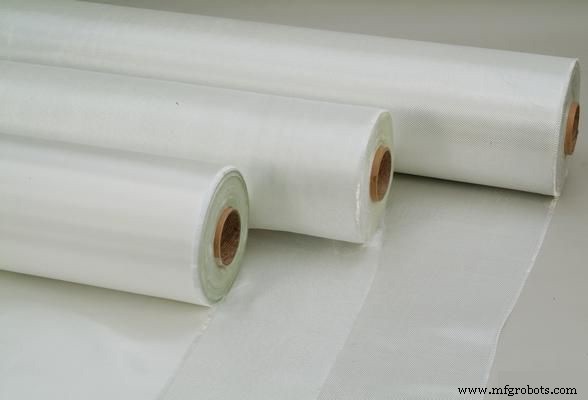
Fiberglass cloths are woven from high‑strength fiberglass yarns and serve as the backbone for fireproofing, heat‑insulation, and composite materials across a wide array of industrial sectors.
1. Chemical Resistance
Like glass itself, fiberglass cloth does not rot, mildew, or degrade, offering exceptional resistance to most chemicals.
2. Dimensional Stability
Fiberglass cloth maintains its shape, with nominal elongation at break of 3–4%. Even near rupture, “E” glass exhibits a 100% elastic recovery, reaching a maximum elongation of 4.8%.
3. High Tensile Strength
The strength‑to‑weight ratio of fiberglass yarn is remarkable—twice that of steel wire of identical diameter.
4. Superior Thermal Properties
Fiberglass cloth has a low coefficient of thermal expansion and a relatively high thermal conductivity, allowing heat to spread more quickly than with organic fibers.
5. High Thermal Endurance
Fiberglass does not burn and withstands the high curing temperatures common in industrial processing. It retains about 50% of its strength at 700 °F (371 °C) and 25% at 900 °F (482 °C). Its softening point is 1,555 °F (846 °C) and the melting point is 2,075 °F (1,121 °C).
6. Low Moisture Absorption
Fiberglass yarn absorbs minimal moisture and remains unchanged both physically and chemically when exposed to water.
7. Electrical Insulation
With high dielectric strength and low dielectric constants, fiberglass cloth excels as an electrical insulator.
8. Product Versatility
Thanks to a broad selection of filament types, yarn sizes, weave patterns, and finishes, fiberglass cloths meet diverse industrial needs.
9. Cost‑Effectiveness
Compared to other synthetic and natural fiber fabrics, fiberglass cloth offers significant cost advantages while delivering superior performance.
fiber
- Arithmetic Properties: Associative, Commutative & Distributive Explained
- Key Fiberglass Properties for Composite Manufacturing Success
- Carbon Fiber: 3 Key Properties That Drive Innovation
- Fiberglass Fabric: Properties, Uses, and Handling Tips
- Fiberglass vs. Polyester for Shade Structures: A Technical Comparison
- The Complete Guide to Fiberglass Production
- Structural Fiberglass Market Outlook 2021: Growth, Applications, and Advantages
- Custom Fiberglass Fabrication—Expert Solutions for Any Industry
- Mastering C# Properties: A Complete Guide
- Wood: Key Properties for Construction & Design