



Molybdenum‑Alloyed Steel: The Key to Lightweight, Fuel‑Efficient Heavy Trucks

Molybdenum‑Alloyed Steel: The Key to Lightweight, Fuel‑Efficient Heavy Trucks
Lowering a vehicle’s mass—especially in the heavy‑truck sector—is a proven strategy to boost fuel economy, slash CO₂ emissions, and advance sustainability. Industry data indicate that a 10 % weight reduction can translate into 6‑8 % lower fuel consumption, with a corresponding drop in greenhouse‑gas output. Molybdenum‑alloyed steel has powered automotive and light‑vehicle structures for over three decades, and its properties are now driving innovation in heavy‑truck design.
Molybdenum‑Alloyed Steel: The Key to Lightweight, Fuel‑Efficient Heavy Trucks
This material is uniquely suited to meet the demands of modern heavy vehicles. By combining high strength with a thin, light construction, it improves performance across key truck components—body panels, engines, suspensions—and reduces overall fuel use and pollutant emissions.
For trailer beams, research shows that adopting a 670 MPa molybdenum‑alloyed steel can cut beam weight by 27 %. The 0.2 % molybdenum content yields a stronger, thinner profile that delivers superior cost performance.
In the transmission system, the drive axle—typically made from 350 MPa steel and weighing 200‑600 kg—can be redesigned with 550 MPa alloyed steel to achieve a 31 % weight reduction. Ongoing development also integrates electric motor support for hybrid powertrains.
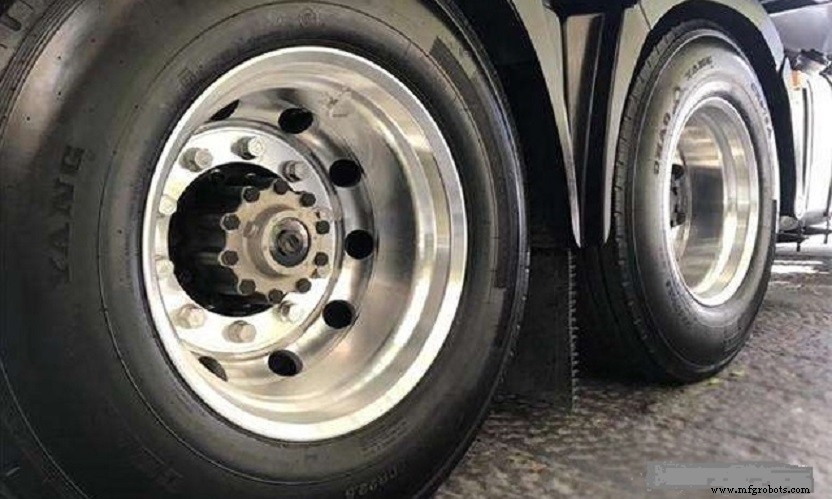
Large‑size truck parts demand high load capacity, impact resistance, and wear durability. The “fifth wheel” is commonly fabricated from molybdenum‑alloyed austempered ductile iron (ADI) with 0.3 % molybdenum, offering 10 % lower density than steel and 20 % lighter weight than comparable aluminum wheels. ADI’s excellent noise‑suppression and self‑lubricating properties further enhance reliability.
Brake systems must dissipate substantial heat, requiring materials with high thermal conductivity. Gray cast iron containing 0.2‑0.4 % molybdenum delivers enhanced strength, thermal conductivity, and wear resistance for brake discs and drums.
Engine efficiency is a critical driver for future performance. Current diesel engines reach ~40 % efficiency, with projections of up to 60 %—on par with hydrogen fuel cells—necessitating higher exhaust temperatures and cylinder pressures. The International Molybdenum Association (IMOA) collaborates with Shanghai University’s foundry R&D to produce molybdenum‑alloyed cast irons that optimize thermal conductivity, strength, and fatigue resistance.
Conclusion
We hope this overview deepens your understanding of molybdenum‑alloyed steel’s role in advancing heavy‑truck technology. For further insight into molybdenum and other refractory metals and alloys, explore Advanced Refractory Metals (ARM).
Headquartered in Lake Forest, California, USA, Advanced Refractory Metals (ARM) is a leading global manufacturer and supplier of high‑quality refractory metals and alloys—including molybdenum, niobium, tantalum, rhenium, tungsten, titanium, and zirconium—offering competitive pricing.
Metal
- High‑Density Tungsten Alloys for Effective Gamma‑Ray Shielding
- Heavy‑Duty Truck Manufacturing: Design, Production, and the Road Ahead
- H13 Tool Steel – High‑Heat, High‑Strength Parts for Metal X Printers
- Choosing the Right Lift Truck: A Guide to the Best Types for Your Business
- Steel Rolling: Precision Manufacturing Process Explained
- Top Stainless Steel Applications Across Key Industries
- How to Select the Best Materials for CNC Machining: A Practical Guide
- Copper Tungsten: The Superior Choice for EDM Electrode Performance
- Three Essential Metals for Precision Fabrication: Carbon Steel, Stainless Steel, and Aluminum
- Steel: The Reliable Choice for Heavy-Duty Fabricated Water Tanks