



The History of Tungsten in Light Bulbs: From 18th-Century Discovery to Modern Applications
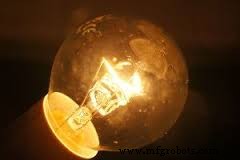
More than 350 years ago, porcelain makers in China introduced a distinctive peach hue into their ceramics using a tungsten pigment unknown in the West. It wasn’t until a century later that European chemists became aware of this element. In 1779, Peter Woulfe examined a Swedish mineral and identified a new metal, though he did not isolate it. Two years later, Wilhelm Scheele succeeded in extracting an acidic white oxide, correctly recognizing it as the oxide of a previously unknown metal.

Refractory Management
The Elhuyar brothers—Juan and Fausto—are credited with the definitive discovery of tungsten in 1783. Working at the Seminary of Vergara in Spain, they isolated the same acidic oxide and, by heating it with carbon, produced metallic tungsten. The element’s chemical symbol, W, comes from its alternate name wolfram. It sits in group VIB of the periodic table, has atomic number 74, a density of 19.35 g cm⁻³, a melting point of 3,410 °C and a boiling point of 5,660 °C.

Tungsten Application
Pure tungsten is a lustrous, silvery‑white metal that remains solid at room temperature. It is never found in its elemental form in nature; instead, it occurs in ores such as wolframite and scheelite, which are mined commercially. Among all pure metals, tungsten boasts the highest melting point, the greatest tensile strength, and the lowest vapor pressure. Its exceptional corrosion resistance allows it to withstand oxygen, acids, and alkalis.

Tungsten wire
Because of its high melting point and minimal vapor pressure, tungsten wire is the material of choice for many high‑temperature applications, including incandescent light‑bulb filaments, cathode‑ray tubes, and vacuum‑tube cathodes. Its excellent conductivity and chemical inertness also make it valuable in high‑precision electrodes, such as those used in electron microscopes.
For more information, please visit: https://www.samaterials.com/8-tungsten
Metal
- Titanium: From Its 18th‑Century Discovery to Today’s High‑Performance Applications
- 3D Printing Drives Innovation in Refractory Metal Parts for the U.S. Navy’s Trident D5 Missile System
- Platinum: From Ancient Alloys to Modern Catalysts – Applications Explained
- Rhenium Metal Powder: Applications in Superalloys, Catalysts, and Precision Instruments
- Tungsten – The Metal of Superlatives: Unmatched Heat Resistance and Purity
- From Fire to Filament: The Evolution and Production of the Modern Light Bulb
- Niobium: Applications in Industry, Jewelry, Gravimetry, and Orthopedic Implants
- Mandrel Explained: Key Functions in Metalworking and Machine Tools
- Metal Bending: When to Apply It for Precision Fabrication
- The Origin of the Metal-Working Lathe: A Historical Overview