



Titanium: From Its 18th‑Century Discovery to Today’s High‑Performance Applications
Titanium: From Its 18th‑Century Discovery to Today’s High‑Performance Applications
Titanium is a lustrous gray transition metal with a melting point of 1,660 °C, a boiling point of 3,287 °C, and a density of 4.54 g/cm³. Its combination of low density, high strength, and exceptional corrosion resistance makes it indispensable across aerospace, defense, energy, automotive, sports, and consumer electronics sectors.

The Discovery of Titanium
The story begins in 1791 when Reverend William Gregor, a priest and amateur mineralogist from Cornwall, England, examined a magnetically‑attracted black sand near Manacán. He identified iron oxide alongside an unknown metal oxide and published his findings in the Royal Geological Society of Cornwall and the Annales de Chimie.
Around the same time, Franz‑Joseph Müller von Reichenstein produced a similar substance but could not identify it. In 1795, German chemist Martin Heinrich Klaproth, studying rutile, isolated the same oxide and named the new element titanium after the Greek Titans, acknowledging Gregor’s earlier work.
The breakthrough to metallic titanium came only in 1910 when American chemist Matthew A. Hunter produced 99.9 % pure titanium, thanks to improved reduction techniques.
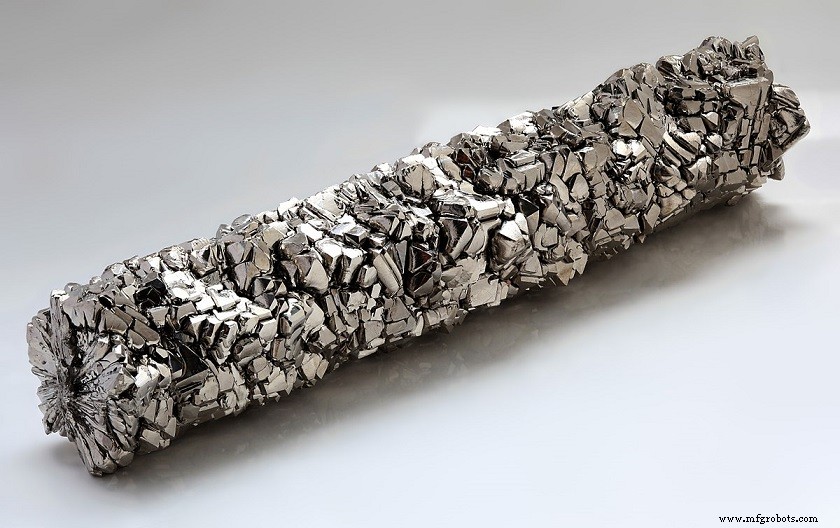
How was titanium discovered and used by humans?
Modern Applications of Titanium
Aerospace – Titanium’s strength‑to‑weight ratio allows manufacturers to reduce aircraft and spacecraft mass, extending range and payload. It forms the core of rocket nozzles, satellite shells, and the cabins of manned missions; notably, 85 % of the 50 pressure vessels on NASA’s Apollo spacecraft were titanium.
Defense and Naval – Russia pioneered the first all‑titanium nuclear submarine, the K‑162, launched in December 1968. The vessel operated safely for over 30 years, demonstrating titanium’s durability under extreme pressure and corrosive marine environments.
Automotive – Since General Motors’ 1956 “Firebird II” all‑titanium showcase, the metal has been used in high‑performance components such as connecting rods, crankshafts, valves, and fasteners, improving engine efficiency and reducing weight.
Military Equipment – Titanium’s low density and high strength make it ideal for armor, missile casings, and machine‑gun frames.
Sports and Recreation – From golf clubs and tennis rackets to fencing masks, climbing gear, and snowboards, titanium offers lightweight durability and resistance to wear.
Consumer Electronics – Smartphones, laptops, cameras, and musical instruments often incorporate titanium casings for a sleek, robust design.
Industrial and Medical – In construction, marine engineering, metallurgy, chemical processing, and biomedical implants, titanium provides long‑term stability and biocompatibility.
Further Resources
To explore titanium and other refractory metals in greater depth, visit Advanced Refractory Metals (ARM), headquartered in Lake Forest, California. ARM is a leading global supplier of high‑quality refractory metals and alloys—including titanium, titanium alloys, molybdenum, tantalum, rhenium, and tungsten—at competitive prices.
Metal
- Titanium in Aerospace: Key Applications & Performance Advantages
- Vanadium: From Discovery to Modern Applications – A Historical Overview
- Titanium in Automotive Lightweight Design: Applications & Benefits
- Titanium in Automotive Engineering: Benefits, Challenges, and Cost Considerations
- Platinum: From Ancient Alloys to Modern Catalysts – Applications Explained
- Titanium Today: From Aerospace to Medicine and Beyond
- From Discovery to Industrial Powerhouses: The Evolution of Refractory Metals
- Titanium: Key Properties, Applications, and Industrial Uses
- Sheet Metal Explained: Uses, Materials, and Fabrication Techniques
- Silicon Aluminum Bronze: Composition, Advantages, and Industrial Applications