



Vanadium: From Discovery to Modern Applications – A Historical Overview
Vanadium: From Discovery to Modern Applications – A Historical Overview
Vanadium (V, atomic number 23, atomic weight 50.9414) is a silvery‑white transition metal known for its high melting point of 1,890 °C. It belongs to the group of refractory metals—alongside niobium, tantalum, tungsten, and molybdenum—because of its resistance to heat and corrosion. These properties make vanadium and its alloys indispensable in metallurgy, aerospace, chemical manufacturing, and advanced battery technology.
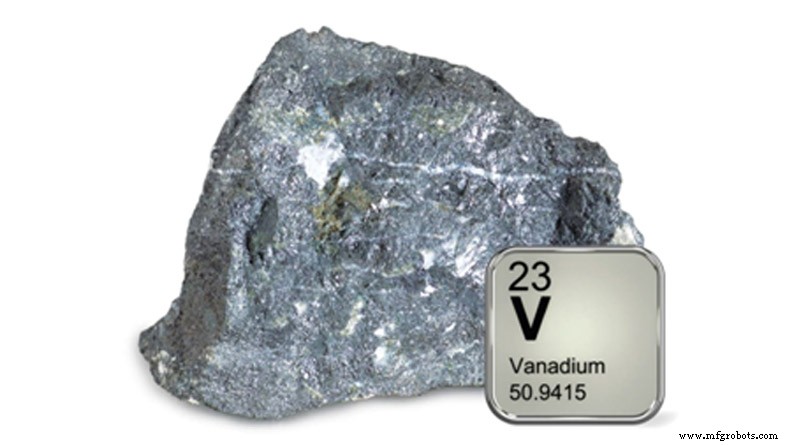
The story of vanadium’s discovery
Early Recognition and Naming
In 1801, Mexican mineralogist Del Río isolated a new element from a lead ore that produced a striking red pigment when its salts were heated in acid. He dubbed it the “red pigment,” unaware that it was a previously unknown metal. In 1830, Swedish chemist Nils G. Sefström discovered a similar substance while smelting pig iron. The vivid coloration of its compounds inspired him to name the element vanadium, after the Norse goddess Vanadis. That same year, German chemist Wuller confirmed that Del Río’s red pigment and Sefström’s element were identical.
Early Extraction Attempts
Vanadium’s presence in minerals was noted in 1834 at the Berezovsky lead mine in Russia. By 1840, Russian engineer Subin observed that pig iron and copper alloys containing vanadium exhibited increased hardness, hinting at its alloying potential. The first true metallic vanadium was produced in 1867 by British chemist H.E. Roscoe, who reduced vanadium chloride (VCl3) with hydrogen. His series of papers (1869‑1871) established the foundational chemistry of vanadium and led to the synthesis of key compounds such as V2O5, V2O3, VOCl3, and VOCl.
Industrial Development and Applications
In 1882, the Le Cruzeite Steel Company produced vanadium phosphate from slag containing 1.1 % vanadium, supplying about 60 t annually to a dye factory that produced aniline black. The late 19th and early 20th centuries saw Russia pioneer carbon‑reduction methods to produce ferrovanadium alloys (35‑40 % V). By 1902‑1903, the aluminothermic route was also tested. A significant breakthrough occurred in 1927 when J.W. Marden and M.N. Rich reduced V2O5 with metallic calcium, yielding high‑purity vanadium (99.3‑99.8 %).
Once its ability to markedly improve steel strength was discovered, vanadium mining expanded worldwide. Today, the most abundant ore types are vanadium‑titanium magnetite deposits found in Russia, South Africa, China, Australia, and the United States. Vanadium is also recovered from vanadium‑uranium ores, bauxite, phosphate rock, carbonaceous shale, petroleum combustion ash, and secondary sources such as spent catalysts.
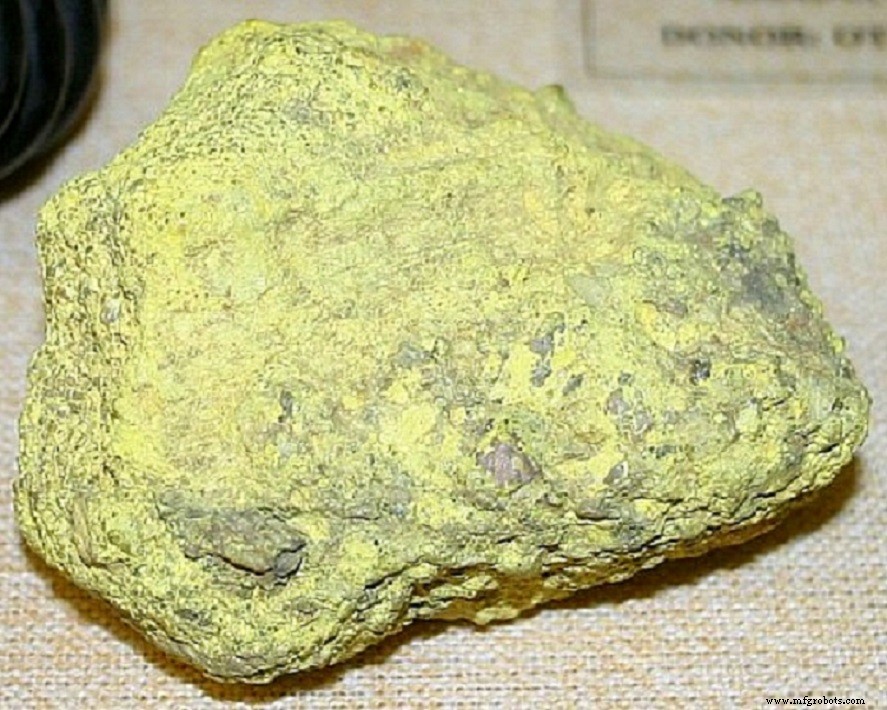
Natural Vanadium Ore
Why Vanadium Matters Today
Vanadium’s high strength-to-weight ratio and excellent resistance to corrosion make it a cornerstone of modern high‑performance alloys. Its role in energy storage—particularly in vanadium redox flow batteries—positions it at the forefront of sustainable technology. As global demand for stronger, lighter, and more resilient materials grows, vanadium’s importance continues to rise.
Further Resources
For more detailed information on vanadium and other refractory metals, visit Advanced Refractory Metals (ARM). Based in Lake Forest, California, ARM supplies high‑quality refractory metals—including tungsten, molybdenum, tantalum, rhenium, titanium, and zirconium—worldwide at competitive prices.
Metal
- Titanium: From Its 18th‑Century Discovery to Today’s High‑Performance Applications
- Vanadium: From Discovery to Modern Applications – A Historical Overview
- Platinum: From Ancient Alloys to Modern Catalysts – Applications Explained
- From Discovery to Industrial Powerhouses: The Evolution of Refractory Metals
- Amber: From Ancient Resin to Scientific Treasure – History, Properties, and Modern Uses
- The Guillotine: History, Design, and Legacy
- Silicon: Properties, Production, and Market Outlook
- The Ukulele: From Portuguese Roots to Modern Craftsmanship
- The Birth of NASCAR: From Moonshine Racers to Modern Motorsports
- How Technology Has Changed Manufacturing of Robots