



From Discovery to Industrial Powerhouses: The Evolution of Refractory Metals
From Discovery to Industrial Powerhouses: The Evolution of Refractory Metals
Refractory metals—elements or alloys that melt above 3,002°F (1,650 °C)—play a vital role in high‑temperature applications. Key members include tungsten, molybdenum, tantalum, niobium, titanium, zirconium, hafnium, vanadium, chromium, and rhenium. Their alloys—such as tungsten‑copper, molybdenum‑chromium, and tantalum‑tungsten—enable advanced aerospace, electronics, and nuclear technologies.
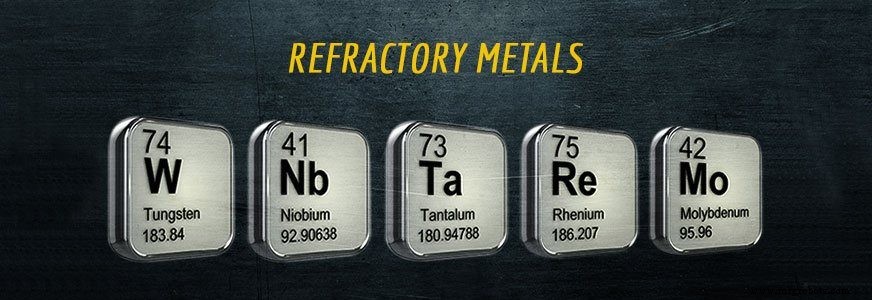
Refractory metals and their alloys
These materials can be shaped into sheets, strips, foils, pipes, bars, wires, and powder‑metallurgy components, enabling versatile manufacturing across industries.
Historical Milestones
The first breakthroughs came in the late 18th century, when chemists began isolating elements with extraordinary resistance to heat. In 1782, Swedish chemist P.J. Hjelm identified molybdenum, followed by Spanish brothers Luer in 1783 who produced the first wolfram (tungsten) powder via carbon reduction. French chemist L.N. Vauquelin isolated chromium in 1798.
Progress continued into the 19th and 20th centuries: C.W. Bromley reduced niobium chloride with hydrogen in 1866; German metallurgist Bolton extracted tantalum in 1903; zirconium and titanium were first isolated in 1824 and 1910, respectively; and rhenium was discovered only in 1925. These discoveries laid the groundwork for the modern refractory metal industry.
Industrialization accelerated during the early 20th century. In 1909, American engineer W.D. Coolidge pioneered the first powder‑metallurgy production of tungsten billets, which later became the filament for incandescent bulbs. By 1910, molybdenum was being processed into rods and wires. The mid‑1940s saw a surge driven by aerospace, electronics, and nuclear demands, prompting rapid advancements in melting and shaping technologies.
Key technological breakthroughs included the 1940s introduction of vacuum white‑arc furnaces and the 1950s development of electron‑beam smelting. These methods enabled high‑purity single crystals—exemplified by A. Cadwell’s 1956 production of 4N‑grade tungsten, molybdenum, and rhenium crystals via electron‑beam suspension smelting.
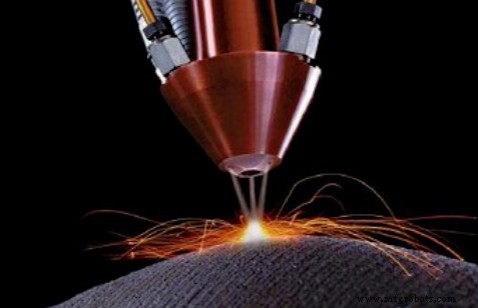
Electron‑Beam Smelting Furnace
The 1960s ushered in new techniques such as cold and hot isostatic pressing, precision casting, and advanced welding, expanding the range of refractory metal products. In 1956, China began its own journey, with Shanghai’s bulb factory producing the nation’s first 0.18 mm tungsten wire, and Beijing’s Electron Tube Factory establishing a full tungsten–molybdenum workshop.
By the 1970s, China’s network of research institutes—Ministry of Metallurgical Research, Shanghai Institute of Nonferrous Metals, and others—had mastered the extraction of virtually all refractory metals and built large‑scale smelting and processing facilities, including vacuum white‑arc furnaces and electron‑beam reactors.
The result was a comprehensive product portfolio: tungsten and tungsten‑copper rocket nozzles, tungsten–rhenium thermocouples, high‑density tungsten alloys, tungsten–silver contacts, molybdenum foils, and precision titanium and zirconium alloy tubes. Today, China produces over 100 varieties of refractory metals and alloys, supplying the global market with everything from sheet and bar to powder and wire.
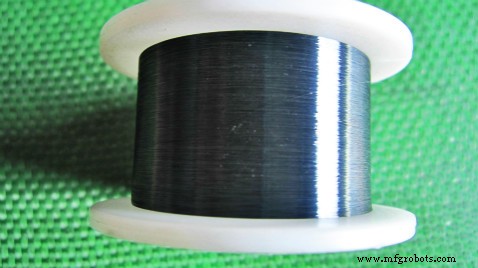
Tungsten Wire
Conclusion
Refractory metals have evolved from laboratory curiosities to indispensable components of modern technology. Their high‑temperature resilience powers everything from aviation engines to advanced research reactors. For more detailed information on their applications and procurement, visit Advanced Refractory Metals—your trusted partner for premium refractory materials at competitive prices.
Metal
- Refractory Metals & Alloys: Essential High‑Temperature Materials for Aerospace
- Titanium: From Its 18th‑Century Discovery to Today’s High‑Performance Applications
- Vanadium: From Discovery to Modern Applications – A Historical Overview
- Abundant Refractory Metals: Properties, Applications, and Emerging Technologies
- What Are Refractory Metals? An Expert Overview of Their Properties and Applications
- How Molybdenum Shapes Modern Industry: Uses, Benefits, and Supply Dynamics
- From Discovery to Industrial Powerhouses: The Evolution of Refractory Metals
- Top CMMS Features & Their 2021 Usage: Expert Insights
- Refractory Metals: Key Properties, Types, and Industrial Applications
- CNC Machining Centers: Evolution, Impact, and Development Insights