



Innovative Fabrication of Artificial Molecules Wins Top Poster Award
Earlier this year, researchers from ETH Zurich and IBM Research – Zurich unveiled a groundbreaking technique for constructing artificial molecules from 1‑µm microspheres, published in Science Advances. These minute particles, roughly the size of bacteria, hold promise for future micro‑robots, photonics, and fundamental biochemical studies.
Songbo Ni, a pre‑doctoral fellow at IBM’s Zurich lab and a student at ETH, was honored with the Best Poster Prize for “Programmable Assembly of Colloidal Molecules” at the Royal Chemistry Society’s Faraday Discussions conference.
Below is an interview with Dr. Ni, outlining the science behind his work and its future implications.
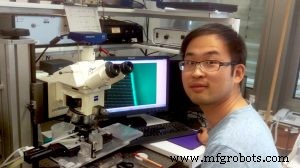
Songbo Ni, IBM Research‑Zurich
What does your research entail, and why is it significant?
Songbo Ni: We’ve developed a method to fabricate hybrid colloidal objects that surpass conventional approaches such as physical vapor deposition or seeded polymerization, which are often limited in composition and geometry. By precisely understanding the geometry of the trapping sites, we can position multiple particles within a single site to create complex, programmable structures.
These multifunctional clusters combine electrical, magnetic, and other properties, moving particle research beyond size reduction toward multifunctionality—integrating diverse elements into a single unit.
How did you assemble the colloidal molecules?
Songbo Ni: Our technique is inspired by the coffee‑stain effect. In a droplet, evaporation is strongest at the edge, causing particles to flow outward and deposit in a ring. We harnessed this principle by placing a water droplet containing microspheres over a template with engineered holes. As the droplet evaporated, surface tension guided the particles into the holes, and moving the droplet over the template allowed us to position particles precisely.
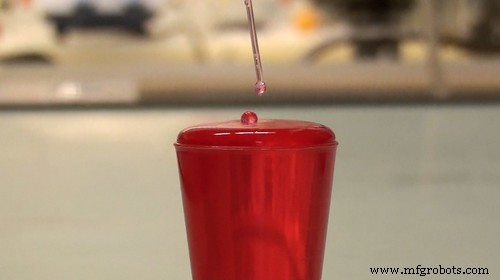
The surface tension of water keeps the liquid from spilling over the sides of the cup.
What are the potential applications of your findings?
Songbo Ni: Initially, our experiments serve fundamental research, offering models to understand natural self‑assembly processes. However, the method is versatile—introducing magnetic particles enables external manipulation, and incorporating drug‑loaded particles could facilitate targeted drug delivery for personalized medicine.
What are your next research goals?
Songbo Ni: We are exploring how to combine different materials in varied geometries to program anisotropy—directional dependence—critical for local motion in micro‑objects like Janus catalytic particles and bacterial flagella. Our goal is to create colloidal objects that act as tiny robots powered by external energy, capable of swimming, mixing, and transporting. These capabilities could revolutionize biophysical and biomedical research.
Nanomaterials
- Digital CMMS Outperforms Pen & Paper in Cutting Facility Downtime
- Optimizing PCB Fabrication: Proven Best Practices for Rapid, Reliable Assembly
- Best CNC Router for Woodworking: Expert Guide to Choosing the Right Machine
- Laser‑Assisted Fabrication of Superhydrophobic PTFE SERS Substrates: A Low‑Cost, Ultra‑Sensitive Platform
- Arkema Receives 2020 Pierre Potier Prize for Innovative Elium Thermoplastic Resin
- Roll Forming vs. Press Braking: Selecting the Best Method for Quality & Cost in Metal Fabrication
- Compression vs. Injection Molding: Choosing the Right Process for Your Product
- Essential Steps to Seamlessly Integrate New Machinery into Your Fabrication Shop
- Top Ironworker Machine Brands for Optimal Fabrication Efficiency
- Injection Molding vs. 3D Printing: Choose the Best Manufacturing Process for Your Business