



Semiconductor Nanoparticles: Properties, Synthesis, and Applications
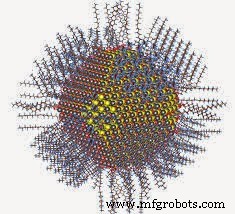
A nanoparticle—also called a nanopowder, nanocluster, or nanocrystal—is a microscopic particle whose at least one dimension is below 100 nm. Because of this extreme size, nanoparticles occupy a unique position between bulk materials and individual atoms or molecules, giving rise to distinctive physical and chemical properties.
Key Physical Mechanisms
- Surface‑dominated behavior: With a high surface‑to‑volume ratio, most atoms reside on the surface, which strongly influences electronic and optical properties.
- Quantum confinement: Electrons are confined in all three dimensions, causing the band gap to widen and discrete energy levels to form. This leads to size‑dependent absorption and emission spectra.
- Recombination pathways: Photo‑excited electron–hole pairs can recombine radiatively (emitting a photon) or non‑radiatively (generating phonons). The balance between these pathways determines optical efficiency.
- Surface passivation: Dangling bonds are stabilized by capping agents—often Lewis base compounds covalently bonded to surface metal atoms—enhancing electronic stability and quantum yield.
Synthesis Approaches
The choice of synthesis route depends on the desired material, size, yield, and dispersion quality.
- Vapor‑phase methods: Molecular beam epitaxy, flame synthesis, and other gas‑phase techniques produce high‑purity nanocrystals.
- Solution‑phase methods: Aqueous and non‑aqueous syntheses, typically involving rapid reduction of organometallic precursors in hot organics with surfactants, are widely used for colloidal nanoparticles.
Common Semiconductor Nanoparticles
- II‑VI: CdS, CdSe, PbS, ZnS
- III‑V: InP, InAs
- Oxides (MO): TiO2, ZnO, Fe2O3, PbO, Y2O3
Applications Across Industries
- Optical and Photonic Devices: Quantum‑confined particles display tunable colors—from deep‑red gold to vivid blue quantum dots—making them valuable in displays, lighting, and solar energy conversion.
- Energy: Nanoparticle‑based coatings can enhance solar absorption in photovoltaics and thermal collectors. Ultra‑small gold particles melt at ~300 °C, far below bulk gold’s 1064 °C, enabling novel heat‑transfer applications.
- Materials Engineering: Adding clay or metal‑oxide nanoparticles to polymers increases glass‑transition temperatures and mechanical strength, producing high‑performance composites.
- Coatings and Surfaces: University College London researchers demonstrated that spray‑paintable TiO2 nanoparticle suspensions form super‑hydrophobic, oil‑resistant, self‑cleaning surfaces that withstand abrasion.
- Thermal Management: Incorporating nanoparticles into industrial chillers can improve cooling efficiency and reduce energy consumption.
- Electronics and Conductors: Silver nanoparticles are used in conductive inks, pastes, and fillers for flexible electronics and biosensors, offering low sintering temperatures and high conductivity.
- Biomedical: Silver nanoparticles release controlled silver ions, providing antimicrobial coatings on textiles, wound dressings, and medical devices.
- Art and Heritage: Colloidal gold nanoparticles, with their vivid colors, have been employed by artists for centuries and continue to inspire modern optical research.
Quantum Dots (Q‑dots)
Semiconductor nanoparticles typically 1–20 nm in diameter are often referred to as quantum dots. They exhibit:
- High quantum yields—often 20× brighter than bulk counterparts.
- Narrow, symmetric emission spectra.
- 100–1000× greater resistance to photobleaching.
- High stability against photo‑ and chemical degradation.
- Wavelength tunability from 400 nm to 4000 nm.
Capping Strategies
Because of their large surface area, quantum dots contain many dangling bonds. Adding a high‑band‑gap capping shell—such as CdS or ZnS—can eliminate these defects and boost quantum yield from ~5% to 55%.
Future Outlook
Ongoing research into nanoparticle synthesis, surface chemistry, and integration into devices promises to unlock new capabilities in optics, energy, and materials science.
For further details on silver and gold nanoparticles, visit Silver Nanoparticles and Gold Nanoparticles.
Nanomaterials
- Arithmetic Properties: Associative, Commutative & Distributive Explained
- Plasmonic Nanoparticles: Harnessing Surface Plasmons for Advanced Photothermal Applications
- Cobalt‑Doped FeMn₂O₄ Spinel Nanoparticles: Size‑Controlled Synthesis and Magnetic Behavior
- Efficient Synthesis and Optical Characterization of Sub‑Micron Selenium Nanocrystals and Nanorods
- PEG‑Coated Gold Nanostars: A Safe, High‑Contrast Agent for CT Imaging with Rapid Renal Clearance
- How Synthesis Route Shapes the Structure, Magnetism, and Hyperthermia Performance of La₁₋ₓSrₓMnO₃ Nanoparticles
- Zinc Oxide Nanoparticles: Antimicrobial Properties, Mechanisms, and Applications
- High‑Performance Polyelectrolyte Microcapsules Encoded with PEGylated Quantum Dots for Advanced Bioimaging
- Mastering C# Properties: A Complete Guide
- Wood: Key Properties for Construction & Design