



Graphene‑Based Loudspeakers and Earphones: Ultra‑Low‑Power, High‑Fidelity Sound
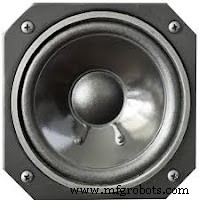
Portable devices—smartphones, laptops, tablets—rely on compact drivers that translate electrical signals into audible sound. Traditional drivers use flexible diaphragms made of paper or plastic. When these thin membranes vibrate, they push air molecules to generate sound waves that reach our ears.
Why Frequency Response Matters
A driver’s quality is judged by how flat its frequency response is. In practice, this means delivering a constant sound pressure level across the entire audible spectrum, from 20 Hz to 20 kHz. Conventional drivers struggle to meet this benchmark while remaining small, efficient, and cost‑effective.
UC Berkeley’s Graphene Driver
Researchers at the University of California, Berkeley have engineered a graphene‑based loudspeaker that rivals, and in some metrics surpasses, many commercial products. The key advantages are:
- Ultralight mass—a 30 nm thick, 7 mm wide sheet of graphene.
- Exceptional strength—allowing the creation of large, ultra‑thin membranes that produce sound efficiently.
- Flat frequency response—maintaining consistent output from 20 Hz to 20 kHz without the need for artificial damping.
- Very low power consumption—operating at only a few nanoamps, far below conventional speakers.
How It Works
The graphene sheet is sandwiched between two perforated silicon electrodes coated with silicon dioxide. This design prevents shorting at high drive amplitudes. When a voltage is applied, electrostatic forces cause the graphene diaphragm to vibrate, creating sound. By modulating the drive voltage, a wide range of frequencies and amplitudes can be produced with high fidelity.
The fabrication process is straightforward and scalable, making it feasible to produce larger‑area diaphragms for bigger drivers. This opens possibilities for ultra‑compact, high‑performance audio devices that consume minimal power.
Nanomaterials
- Sound Sensors: How They Work & Practical Applications
- Graphene‑Polymer Composites for High‑Performance Supercapacitors: A Comprehensive Review
- Assessing the Biosafety and Antibacterial Efficacy of Graphene and Graphene Oxide for Orthopedic Implant Applications
- Hybrid Graphene/WO₃ and Graphene/CeOx Electrodes for High‑Performance Supercapacitors
- Graphene‑Based Materials for Bone Regeneration: Opportunities, Challenges, and Clinical Perspectives
- Graphene Metasurface for Dual-Function Generation and Steering of Vortex Waves
- HOT Graphene and Its Nanotubes: Novel Low‑Dimensional Semimetals and Semiconductors
- Graphene 101: Key Forms, Properties, and Cutting-Edge Applications
- Rapid, Precise COVID-19 Detection Using Graphene Technology
- Graphene: The Ultra‑Strong, Ultra‑Conductive Carbon Layer Changing Technology