



Basalt and Aramid Fiber‑Reinforced Plastics: Advanced Materials for High‑Performance Applications
Fiber‑reinforced plastics (FRPs) combine high‑strength fibers with polymer matrices, yielding composites that outperform standard plastics in tensile strength, stiffness, and thermal resistance. Performance gains are dictated by fiber properties, matrix chemistry, fiber volume fraction, and alignment within the matrix. While carbon fiber dominates automotive and aerospace headlines, other fibers—such as basalt and aramid—offer distinct advantages for specific applications. This article explores these two families of fibers and their roles in modern composites.
Basalt Fibers
Basalt fibers are derived from volcanic rock, specifically the minerals plagioclase, pyroxene, and olivine. The raw basalt is crushed, washed, melted at ~1,400 °C (2,550 °F), and extruded through micro‑nozzles to form continuous filaments. These fibers are exceptionally fine and possess excellent corrosion resistance, high abrasion resistance, and inherent fire‑proofing. They retain performance at low temperatures and are stable under UV and electromagnetic radiation. Prior to 1995, basalt‑fiber technology used in military and aerospace contexts was classified by the U.S. government.
Basalt’s tensile strength surpasses both fiberglass and carbon fiber, and it is only slightly lower than steel’s. Additionally, basalt composites exhibit superior water resistance and chemical stability. Their filaments exceed the human respiratory limit, making basalt a safe, fire‑resistant alternative to asbestos. Common applications include automotive body panels, sporting goods, ship hulls, wind‑turbine blades, concrete reinforcement, and camera tripods.
Aramid Fibers
Aramid fibers are synthetic aromatic polyamides. The Federal Trade Commission defines them as fibers whose backbone contains at least 85 % amide linkages directly attached to two aromatic rings. DuPont first introduced aramids in 1965; they became commercially available in 1973. Leading trade names include Kevlar®, Nomex®, Conex®, Nomax®, Arawin®, New Star®, X‑Fiper®, and Kermel®.
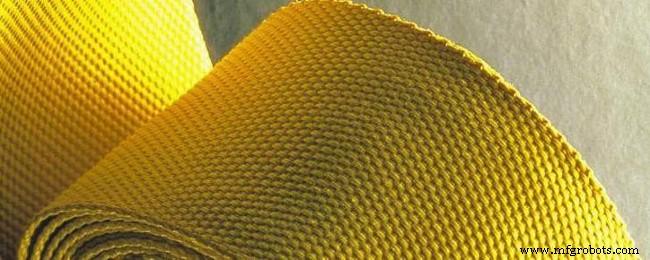 Kevlar® is produced using a specialized aramid weave. The fibers resist corrosion and high temperatures, remain lightweight, and offer exceptional strength and flexibility. Kevlar has no melting point but begins to degrade at 500 °C. Its molecular structure aligns bonds along the fiber axis, granting superior strength, flexibility, and abrasion resistance. Chlorine exposure, however, can degrade the material.
Kevlar is widely used for bullet‑proof vests, body armor, bicycle frames, boat hulls, and brake‑pad replacements. Nomex® is employed in fire‑proof suits, helmets, and gloves. Aramid fibers also appear in high‑performance sporting goods such as tennis racquet strings, hockey sticks, running shoes, and skis.
Other inorganic reinforcing fibers include glass, carbon, and boron. Stay tuned for an upcoming post that covers these materials in depth.
Questions? Let me know in the comments below.
Looking for more information on high‑strength plastics? Download our free guide.

Resin
- Carbon Fiber: A Journey from History to Tomorrow
- Introducing Pultruded Fiberglass Reinforced Plastic (FRP): High-Strength, Durable New Product Line
- Fiber‑Reinforced Plastic (FRP): A Game‑Changing Alternative to Steel
- Basalt and Aramid Fiber‑Reinforced Plastics: Advanced Materials for High‑Performance Applications
- Understanding Glass Fibers in Reinforced Plastics: Production, Types, and Applications
- Fiber‑Reinforced Plastic: Why It Outperforms Steel, Aluminum, and Timber in Modern Applications
- TPU (Isoplast®): A Versatile Thermoplastic Polyurethane for High‑Performance Applications
- Carbon Fiber Reinforced Plastic (CFRP): Strength, Weight Savings, and Emerging Applications
- Fiber Orientation in Composites: Why It Matters for Strength and Performance
- Fiber‑Reinforced Plastics: Benefits, Applications, and Key Properties