Industrial manufacturing
3D printing
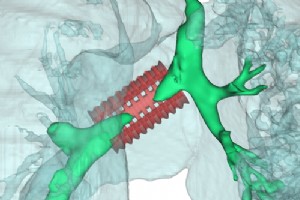
We have written about the growing role of 3D modeling and printing in medical applications before, and its impact on improving people’s lives. But this technology holds ever greater promise in enabling life-saving procedures. In past blogs, we have covered powered prosthetics developed by the Bio
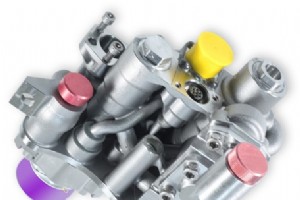
Much has been written about the promise of additive manufacturing, and how soon everything will be 3D printed on demand, ushering in a bright shiny future. 3D printing now exists for such diverse items as shoes, cars and even houses. While traditional subtractive manufacturing and production doesn
There is a new wave of innovative processes and solutions that improve product production throughput, and enable once-impossible product creation. Advances such as model-based design (MBD), additive manufacturing (3D printing), pervasive engineering simulation, and robotics are making it pos

With additive manufacturing - such as 3D printing - growing in adoption, especially in high-tech industries such as aerospace, we speak to Ray Bagley, Director of Product Management at Spatial to build an understanding of the fascinating trend. In this interview Ray examines how subtractive manu

In our interview with Spatial’s Director of Product Management, Ray Bagley, we discuss how 3D printing and additive manufacturing as a whole are changing the manufacturing industry. We also look at some of the core challenges 3D printer manufacturers face when it comes to the continued developme

The use of additive manufacturing software components is growing in high-tech industries. According to the market research firm MarketsandMarkets (M&M), 3D printer production and additive manufacturing outputs grew in value to $3.5 billion in 2017. The leading adopters of additive manufacturin
Since its introduction in the 1980s, IGES (short for “Initial Graphics Exchange Specification) was the main computer aided design (CAD) format used for enabling the sharing of CAD files. A result of the US Air Force’s (USAF) Integrated Computer Aided Manufacturing (ICAM) project from 1976-1984, I
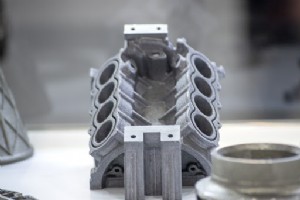
There’s a lot of confusion around what the terms additive manufacturing and 3D printing mean. And that’s hardly surprising. After all, both terms relate to very similar processes. Both additive manufacturing and 3D printing describe a process of creating objects by gradually b
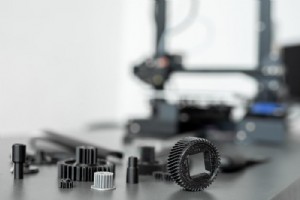
SLS in Additive Manufacturing is used to convert 3D CAD designs into physical parts, in a matter of hours. What is the Selective Laser Sintering definition? SLS stands for Selective Laser Sintering, a 3D printing or Additive Manufacturing (AM) technique. SLS uses a process called sinte
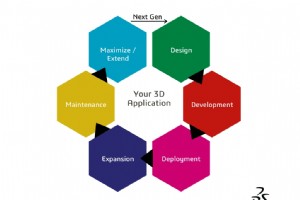
When you hear the term, Application Lifecycle Management (ALM), you likely think about the process that a software application goes through from the initial vision to the product’s eventual sunset. But there’s a way to effectively tweak this model and capitalize on technology companies’ expertise
Ultrasonic Additive Manufacturing (UAM), also known as Ultrasonic Consolidation (UC), is an additive manufacturing (AM) or 3D metal printing technology. UAM belongs to the ‘sheet lamination’ family of AM processes, along with Laminated Object Manufacturing (LOM). Compared to other AM techniques,
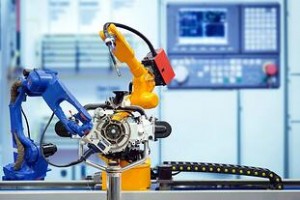
Additive manufacturing (3D Printing) is sweeping across the industrial automation world. Instead of creating molds and removing material, manufacturers can now simply add layers of material to produce items at a lower cost and with less waste. Metal additive manufacturing (Metal 3D Printing
In the past, manufacturing businesses used subtractive processes like molds, cutting, and drilling to create products. While removing material from a larger whole has worked well before, modern additive manufacturing processes are quickly replacing them. According to forecasts, the additive manufa
Manufacturing is a challenge in the aerospace industry. Not only are aerospace parts extraordinarily complex, but they also need to be structurally sound and meet the highest quality assurance standards of almost any industry. To reduce costs and overcome traditional manufacturing challenges, man
The main phases involved in additive manufacturing are that of design and the manufacturing process. Practically, the design work is done on a computer aided design (CAD) suite such as SolidWorks (and others), while the physical production phase - i.e. 3D printing - is facilitated by exporting the
When following a required workflow in a software application, few things are more frustrating to the user than attempting to convert a file and having the operation blocked due to incompatibility. The user will need to repeat their work to output in a different file format or may even need to util
Stereolithography (SLA) belongs to the VAT polymerisation category of 3D printing that utilizes light curable thermoset resins to build parts. It is a powerful 3D printing technology that produces extremely accurate and high-resolution parts that are capable of being used directly in
Direct metal laser sintering (DMLS) belongs to the powder bed fusion (PBF) category of 3D printing and is similar to the SLS technology. In DMLS, however, metal powders are used instead of plastic powders to create metal parts that can be used both for functional prototypes and produ
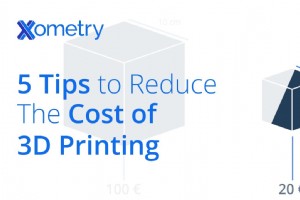
Although 3D printing technology offers many advantages, one of the main concerns in using it, is the cost. Right from design to manufacturing and post processing, a few tricks can have a significant impact on the costs. This article highlights helpful tips to save the cost on 3D prin
Carbon DLS (Digital light synthesis) belongs to the VAT polymerisation category of 3D printing. It uses digital light projection, oxygen-permeable optics, and programmable liquid resins to create products with end-use durability, resolution, and surface finish. This technolo
3D printing