


Industrial manufacturing
Manufacturing process


Monitoring indoor or outdoor temperature with a Raspberry Pi can be done with a minimal setup. This guide shows how to wire a DS18S20 (DS1820) 1‑Wire sensor directly to a GPIO pin, read temperatures in software, and log the data with RRDtool. Raspberry Pi and 1‑Wire The DS18S20, DS18B20, and DS1822
Introduction Accurate temperature monitoring is essential for any laboratory—whether in a home workshop, a school science class, or a research facility. Thermocouple sensors are the standard for measuring wide temperature ranges, but interfacing them with low‑cost single‑board computers can be chal
Hardware Overview Below is a concise list of the Raspberry Pi components required for this boiler monitoring system. The relay unit, which manages the boiler’s burner and pump, remains unchanged from the original PC setup. Raspberry Pi Model B Pi‑Face Digital interface card Dallas Semiconductor (Ma
In a high‑performance computing environment, maintaining optimal ambient temperature is critical. The following guide explains how to build a reliable, real‑time temperature monitoring system using a Raspberry Pi, a USB temperature/humidity sensor, Gnuplot for visual analytics, and Gmail for automat
Step 1: Gather Parts For this DIY enclosure you’ll need a 4 × 2 ft block of construction timber, 25 mm × 8 g screws, and anti‑static bags in the three standard sizes (memory, disk, motherboard). The Raspberry Pi B is used in this example, but the method works for any Pi model. Step 2: Prepare the An
Integrating a weather station with the Citizen Weather Observer Program (CWOP) lets you share accurate, real‑time data with the National Weather Service and the public. In this guide we’ll walk through: What CWOP is and why it matters Connecting a Raspberry Pi‑based Solar‑Powered WeatherPi to CWOP
Neon is the name of the vibrant open/closed sign installed at the entrance of our makerspace. It not only displays whether the space is open or closed, but also manages updates to our website, tweets, and a scrolling LED matrix display. Remote administration is available through a website hosted on
Hardware components: Atmel ATTiny85 × 1 DHT22 Temperature Sensor × 1 DHT11 Temperature & Humidity Sensor × 1 SparkFun Tiny AVR Programmer × 1 Adafruit 4.7K Ω Resistor × 3 Adafruit 10K Ω Resistor × 1
In this tutorial you’ll learn how to build a real‑time remote weather station using a Raspberry Pi 3, a DS18B20 temperature sensor, an LCD display, and PubNub for instant data streaming. Why PubNub? PubNub is a global data‑stream network that powers over 300 million connected devices and streams mor
Introduction Note: This guide was originally written for the FLIR Lepton KIT‑13233, but the FLIR Lepton 2.5 with Radiometry works the same. When our team began testing a Long‑Wave Infrared (LWIR) camera, we were instantly excited by the prospect of “seeing the invisible.” Whether we’re monitoring a
Temperature‑Based Device Control System using the AT89S52 microcontroller and LM35 temperature sensor is an embedded solution that automates household appliances—heaters, fans, coolers, and more—by continuously monitoring ambient temperature. This project is an excellent starter for students in ele
Farhad Abtahi 1,*, Jonatan Snäll 1, Benjamin Aslamy 1, Shirin Abtahi 1, Fernando Seoane 1,2 and Kaj Lindecrantz 1,3 1School of Technology and Health, Royal Institute of Technology, Alfred Nobels Allé 10, Stockholm SE-141 52, Sweden; E-Mails: [email protected] (J.S.); [email protected] (B
“Hello World!” – This is likely the output of the first program you ever wrote when learning how to code. Setting up a device to stream temperature data is quickly becoming the de facto Internet of Things (IoT) “Hello World!” project. If printing “Hello World!” the first time was a long, frustratin
The Bosch BMP085 is a compact, low‑cost I2C sensor that delivers precise barometric pressure and temperature measurements. Acquired from eBay for a few dollars, it’s an ideal component for weather stations, altitude loggers, or any project that needs reliable environmental data. While Adafruit’s BM
Brewing at home is a rewarding hobby, but it brings two perennial concerns: preventing contamination and maintaining yeast‑friendly temperatures. In colder regions, where outdoor temperatures can fall below 60 °F in winter, yeast activity stalls and the risk of off‑flavors rises. Rather than relying
The Problem After renovating my home office I dedicated a closet for all my electronics – servers, NAS, AV receiver, and more. I installed an exhaust fan to vent hot air into the adjoining office, but the closet still stays around 90 °F (32 °C) even with the fan running. Although this is within most
Turn your Raspberry Pi into a reliable personal weather station that sends you real‑time temperature, humidity, and rainfall updates via email. This guide walks you through the required hardware, wiring, housing, and coding steps to get your station up and running in just a few hours. 1. Supplies
At Bloominglabs, our recent acquisition of an ADS‑WS1 weather station—a serial‑output capable unit—prompted a project to bring the data online using a Raspberry Pi 2. The station captures wind direction, speed, rainfall, temperature, and humidity. The Pi, powered via PoE and housed in a waterproof e
Step 1: Wiring the EzTemp Sensor The EzTemp sensor communicates over the Raspberry Pi’s UART interface. Follow the pinout below to establish a reliable connection. RPi GND → EzTemp GND RPi Tx (GPIO 14) → EzTemp Rx RPi Rx (GPIO 15) → EzTemp Tx RPi 3.3 V → EzTemp 3.3 V Notice that a Tx pin m
Introduction After using a Raspberry Pi to log my household electricity consumption, I installed Solar Thermal Hot Water panels and, more recently, Solar PV. That gave me the chance to build a portable “Home Energy Centre” (HEC) – a dashboard that displays real‑time energy production, consumption,
Manufacturing process
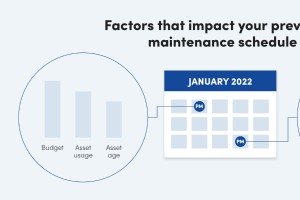
Audit Your Preventive Maintenance Schedule to Maximize Team Efficiency and Cut Costs

Revitalizing Data Warehouses: Why Automation Is the Key to Success

How a CMMS Drives Successful Total Productive Maintenance Implementation

Enterprise IoT: Unlocking Business Efficiency, Productivity, and Asset Optimization
