Industrial manufacturing
Manufacturing process


Story What I Want to Do Select the most affordable, scalable, and user‑friendly components available.Program and deploy a dense network of temperature sensors, all feeding data into a single web gateway.Leverage that data to create smarter automations—smart thermostats, window actuators, presence de
In this project, a Raspberry Pi 4 hosts a lightweight Bottle web server that reads data from an Adafruit DHT11 temperature‑humidity sensor and returns the values in real time. An RGB LED mounted on the board lights up in a distinct color for each request, giving instant visual feedback that the serv
The Life Saver is a DIY Arduino-based device that continuously monitors the interior temperature of a vehicle and notifies caregivers when the temperature exceeds a safe threshold. By displaying the current temperature on an LCD screen and sounding an audible alarm, it provides an early warning to p
Raspberry Pi & HDC2010: A Complete I2C Temperature & Humidity Sensor Setup Guide This guide covers how to integrate the Texas Instruments HDC2010 high‑precision temperature and humidity sensor with any Raspberry Pi model, from Pi 4 to Pi Zero W. The instructions are based on a Debian‑based OS and Py
This Raspberry Pi-based prototype seamlessly integrates QR code and RFID reading with real‑time temperature checks, authenticating visitors against a remote server to control barrier access. In the post‑COVID era, many institutions now mandate a temperature check before granting access to secure pr
BackgroundZirconium (Zr) is a transition metal that ranks nineteenth in abundance within the Earths crust, surpassing elements such as copper and lead. Primarily extracted from the silicate mineral zircon and the oxide mineral baddeleyite, zirconium belongs to the titanium group—together with titani
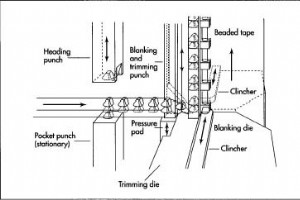
Background Fasteners have evolved from bone and horn pins to today’s sophisticated zippers. Early closures—buckles, laces, safety pins, and buttons—were practical but cumbersome. Buttons with buttonholes remained essential, yet they posed challenges that drove the search for better solutions. In 18
Background Anthropologists trace the use of wool back to the Neolithic Age, when early humans sought protection and warmth from animal pelts. These pelts proved not only cozy but also durable, inspiring the development of rudimentary tools and techniques for processing wool. By 4000 B.C., Babylonia
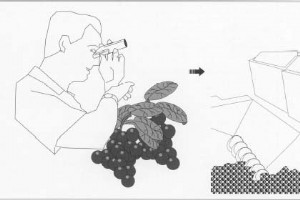
Background Wine is an alcoholic beverage crafted by fermenting grape juice, though a variety of fruits—berries, apples, cherries, and even rice—can also yield fermented wines. The process harnesses natural sugars, acids, tannins, minerals, and vitamins inherent in the fruit to create the complex fl
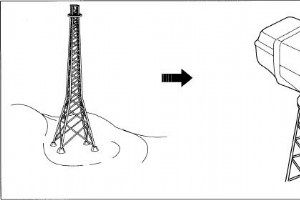
Background A wind turbine transforms the kinetic energy of wind into rotary mechanical energy, which can then be converted into electricity via a generator. For millennia, windmills have powered water pumps and grain mills; the first electric wind turbines emerged in the 1920s, but early models wer

Background The first clocks were simple: observers measured the sun’s position to gauge time, with noon marking the moment the sun was directly overhead. A more objective method soon followed—the sundial, which casts a shadow on a calibrated dial as sunlight strikes a vertical rod at its center. In
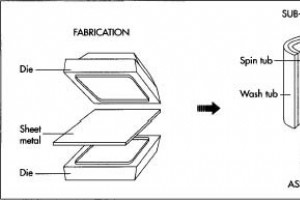
Background Mechanical washing machines appeared in the early 1800s, although they were all hand-powered. Early models cleaned clothes by rubbing them, while later models cleaned clo
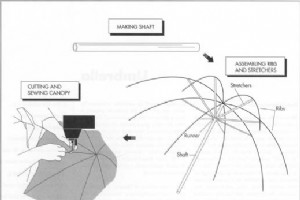
Background The umbrella, today synonymous with protection from rain, originally served as a sunshade. The Latin term umbra means “shade,” a heritage reflected in the word parasol—from French parare “to shield” and sol “sun.” Art and literature from ancient Africa, Asia, and Europe record widespread
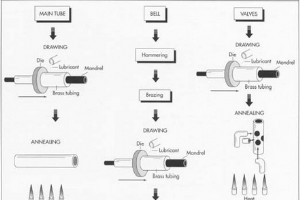
Background A trumpet is a brass wind instrument celebrated for its powerful tone, produced by the player’s lips vibrating against a cup‑shaped mouthpiece. The instrument’s body is a cylindrical tube that loops into a flared bell. Modern trumpets feature three piston valves and small tuning slides t
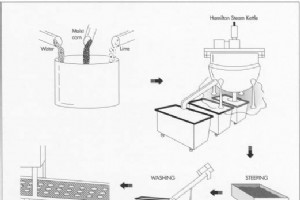
Background The term tortilla was introduced to Mexico by Spanish colonizers and has since evolved to describe the staple flat cakes made from corn or wheat. Originally crafted from ground corn pulp, tortillas were the foundation of the Mexican diet. When wheat arrived, white flour versions gained p
Background A tire is a robust, flexible rubber shell that attaches to a wheel rim, providing traction and cushioning for moving vehicles. Modern tires are found on automobiles, trucks, buses, aircraft landing gear, agricultural machinery, forklifts, baby carriages, shopping carts, wheelchairs, bicy
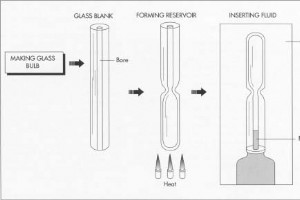
Background A thermometer is a precision instrument that translates temperature changes into readable values. The first qualitative device, the thermoscope, was invented by Galileo around 1592. By 1611, Sanctorius added a calibrated scale, giving the instrument its modern name—derived from the Greek
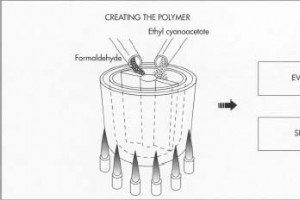
Background Super glue, formally known as cyanoacrylate adhesive, is a high‑strength, fast‑curing glue used across consumer, industrial, medical, and construction applications. It achieves its bonding power by forming a polymeric chain when exposed to moisture. Adhesives can be grouped into five pri
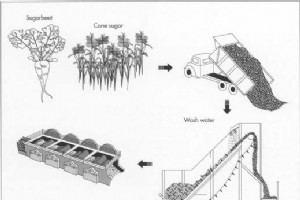
Background Before the birth of Jesus of Nazareth, sugarcane (the source of modern sugar) was cultivated along the Bay of Bengal and spread through Malaysia, Indonesia, Indochina, and southern China. The Arabs introduced a sticky paste—later refined into sugar—to the Western world, bringing the crop
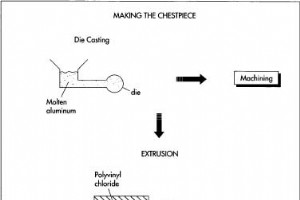
Background A stethoscope is a medical instrument that amplifies internal body sounds—especially those from the heart and lungs—to aid clinicians in diagnosis. Modern stethoscopes are binaural, featuring two flexible rubber tubes that connect a central valve to earplugs. The chestpiece at the tip ca
Manufacturing process