Industrial manufacturing
Manufacturing process

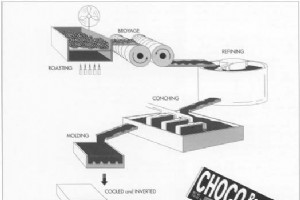
Background Chocolate, in its countless variations—from candy bars and cakes to fruit coatings—is arguably America’s most beloved treat. With a per‑capita consumption of roughly 14 pounds (6 kg) annually, it is a staple in everyday indulgence. The origins of cocoa trace back to the river valleys of
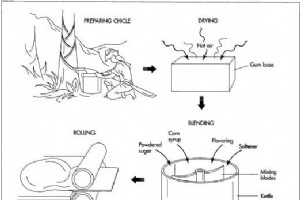
Background Chewing gum is a sweetened, flavored confection that relies on latex—natural or synthetic—as its primary base. While it offers no nutritional value, its long history spans cultures that sought aromatic and refreshing substances for breath and thirst relief. Ancient Greeks chewed mastic t

Background Cheese is a fermented dairy product crafted from the milk of various mammals. Since the domestication of milk‑producing animals around 10,000 B.C., humans have observed milk’s natural tendency to separate into curds and whey. When milk souring begins, it forms curds—lumps of phosphoprote

Background Classroom chalk comes in slender sticks that measure roughly 0.35 inches (9 mm) in diameter and 3.15 inches (80 mm) in length. This simple, low‑cost tool has become the standard for conveying information to large groups of students. Chalk has been used for drawing since prehistoric times
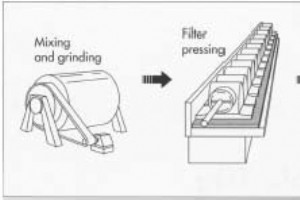
Background Wall and floor tiles—used in both interior and exterior décor—belong to the ceramic family known as whitewares. The earliest documented use of glazed tile dates back to ancient Egypt; the Step Pyramid of Pharaoh Djoser (c. 2600 B.C.) featured colorful glazed panels. Over centuries, tile
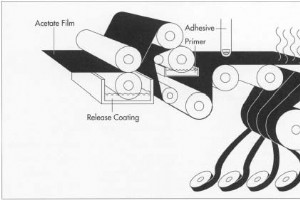
Background Cellophane tape is a pressure‑sensitive adhesive that marries a cellulose acetate backing with a specially formulated adhesive. This combination delivers a reliable surface bond, making it indispensable in labeling, packaging, and general household applications. Early adhesives—derived f
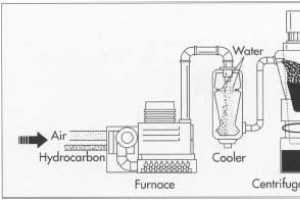
Background Carbon paper remains one of the most affordable and reliable reprographic tools, enabling instant duplication of documents such as credit‑card receipts, legal forms, and handwritten letters. Despite the rise of digital duplication, the simplicity and cost‑effectiveness of carbon paper ke
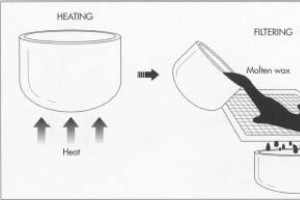
Background Candles are among the oldest portable lighting solutions, providing reliable illumination across countless cultures. Archaeological finds reveal candle‑like objects in almost every ancient society, underscoring their universal importance. Early scholars believe the first candles were cre
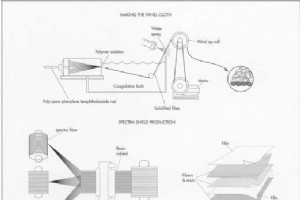
Background Bullet‑resistant vests are lightweight armor designed to protect vital organs from firearm projectiles. Historically, armor evolved from multi‑layer linen in ancient Mycenaean and Persian societies to metal mail and scale armor across Europe, Asia, and the Americas. By the 16th and 17th c

Background Brick is a timeless building material that combines durability, fire resistance, and thermal retention. Small, typically 4 inches wide and twice as long, bricks fit snugly into tight spaces and curved designs, reducing the need for costly structural interventions. Used for more than 5,00
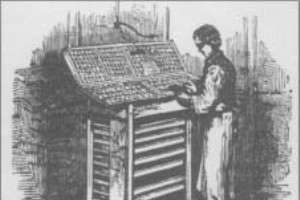
Background A book is generally understood as a written document comprising at least 49 pages that conveys ideas, information, or narratives. Over millennia, the form of the book has evolved alongside advances in communication technology and growing public appetite for knowledge. The earliest record
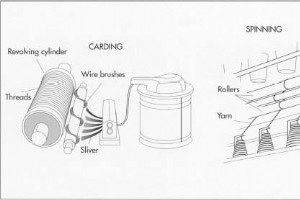
Background Blue jeans are casual pants made from denim, noted for their strength and comfort. They have been worn by sailors and California gold
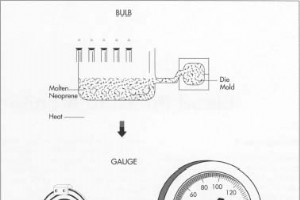
Background Blood pressure is the force exerted by circulating blood against the walls of arteries. The pulse, a rhythmic surge of blood from the left ventricle into the aorta, drives this pressure wave through the circulatory system. Clinicians assess two key points of the wave using a sphygmomanom
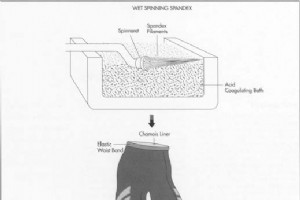
\n\nBackground\n\nBicycle shorts are engineered garments tailored for cyclists. Unlike everyday joggers or beachwear, they feature a tight‑fitting silhouette and a fabric that keeps moisture at bay while maintaining breathability.\n\nWhen you pull a pair out of its box, the shorts retain their shape
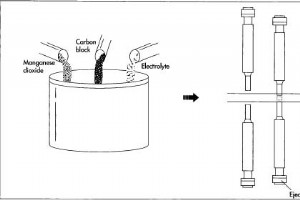
Background Benjamin Franklin’s kite experiment was a landmark moment in early electrical science, but the first true battery—Alessandro Volta’s voltaic pile—was built in 1800. By stacking alternating discs of silver and zinc separated with an electrolyte‑soaked material, Volta created a continuous
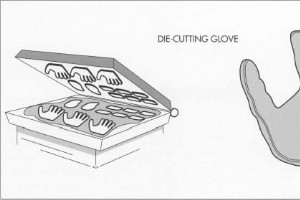
Background In the years following the Civil War, baseball spread across the United States with the speed of a cavalry charge. Yet the idea of wearing a glove was still seen as unmanly. The first recorded players to don leather protection were Charles G. Waite (or Waitt), a first‑baseman for a Bosto

Background Modern baseball, as we know it, traces its lineage back to the English game of rounders. In 1845, New York pioneer Alexander Cartwright formalized the first set of rules that replaced the soft ball used in rounders with a smaller, harder version, setting the stage for the sport’s rapid e
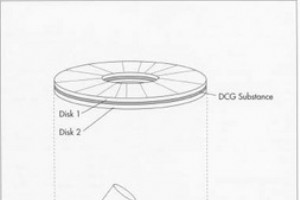
Background Bar code scanners have evolved from simple handheld wands to sophisticated, laser‑driven, holographic devices. At their core, all scanners translate the pattern of black and white stripes into a digital signal that a computer can interpret. The process relies on the differential reflecta
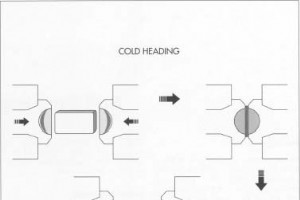
Background Since the earliest days of human engineering, reducing friction has been a core goal. From primitive logs to sophisticated wheel assemblies, the progression has culminated in the modern ball bearing—a component that enables smooth, efficient rotation in everything from bicycles to spacec
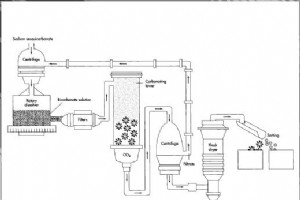
Background Baking soda, chemically known as sodium bicarbonate (NaHCO3), is a white crystalline powder that chemists classify as an acid salt. It forms from a combination of the acid carbonic and the base sodium hydroxide, giving it mild alkaline properties. When heated above 149 °C (300 °F), it de
Manufacturing process