



Pinball: History, Design, and Manufacturing of a Classic Arcade Game
Background
Pinball is a coin‑operated arcade attraction that challenges players to direct small steel balls through a labyrinth of ramps, targets, and bumpers, all under a transparent glass cover. With vibrant lighting and engaging sound, it has captivated audiences—especially younger players—since its rise in the mid‑20th century.
History
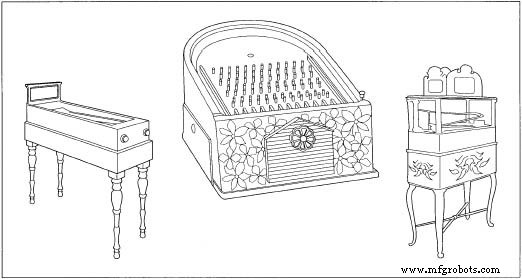
Pinball’s lineage can be traced to the French Bagatelle game of the 17th century, played on wooden boards with marbles and iron pins. Introduced to America by French soldiers, Bagatelle spread across taverns and stage stops by the 1830s, evolving into larger, tabletop versions and, later, children’s toys.
In 1871, Montague Redgrave patented the spring‑loaded plunger that shot balls mechanically onto the playfield—an innovation that remains a staple. Henry Pessers followed in 1889 with a coin‑operated, wall‑mounted version, paving the way for modern pinball’s arcade format.
The 1930s saw the first commercial successes: David Gottlieb’s Baffle Ball (1931) and Ray Moloney’s Ballyhoo (1932) sold tens of thousands of units, even amid the Great Depression. By 1935, electrified tables with automatic scorekeeping and prize payouts had become common.
Pinball faced regulatory challenges in the 1930s, being conflated with gambling. Laws in cities like Los Angeles, Chicago, and New York banned the game, but the introduction of flippers in 1947—first on Gottlieb’s Humpty Dumpty—shifted the focus to skill, leading courts to rule pinball a game of skill in 1956.
The 1970s ushered in colorful, illuminated backglasses and microchip‑controlled scoring, enriching gameplay with speech, complex bonuses, and multi‑level playfields. The rise of video games in the early 1980s triggered a manufacturing slump; by the late 1990s, only Williams Electronics remained, ceasing production in 1999. Today, vintage machines are prized collectibles.
Design Process
Creating a new pinball machine is a multidisciplinary effort that typically spans 12–18 months and can cost up to $1 million. A typical team includes:
- Game Designer – crafts the core concept and coordinates the team.
- Software Developer – builds the game’s operating system and rules.
- Artist – designs backglass, playfield graphics, and animations.
- Mechanical Engineer – designs flippers, bumpers, and other hardware.
- Sound Designer – creates music and effects.
- Electrical Engineer – develops circuitry and wiring schematics.
- Mechanical Designer – consolidates all drawings into a production layout.
- Animator – programs scrolling score displays.
- Model Maker – builds prototype parts.
- Technical Writer – produces manuals and support documents.
- Production Manager – oversees budgeting and vendor coordination.
The process begins with a concept, often derived from an original idea or a licensed property (e.g., film or comic). Designers layout the playfield, positioning ramps, flippers, kickers, and tilt mechanisms. A “white‑wood” prototype—a bare plywood board cut to exact dimensions—is assembled, wired, and played to fine‑tune rules.
Concurrently, artists produce backglass sketches; if a license is involved, these must receive approval from the rights holder. After the white‑wood stage, the design is finalized, the bill of materials is compiled, and the team orders parts to keep the production schedule on track.
Once design is complete, 10–20 fully finished prototypes are produced. These serve for functional testing, safety compliance, and marketing materials. Successful prototypes clear a final pre‑production inspection before mass manufacturing.
Raw Materials
Pinball cabinets are built from inexpensive yet durable plywood for the playfield, wiring boards, and enclosure. Structural components—screws, springs, and frames—are fabricated from stainless steel or aluminum. Playfield elements may be molded from plastics. Strict tolerances and cost‑effective sourcing are essential to maintain quality while controlling expenses.
The Manufacturing Process
Pressuring the Playfield
- High‑pressure rollers imprint the playfield’s layout onto each plywood board, marking assembly points for mechanical units.
Screen Printing
- Backglass and playfield artwork is produced via silk‑screen printing. Stencils isolate up to four colors, allowing intricate designs to be layered precisely around mechanical openings.
Hand Assembly
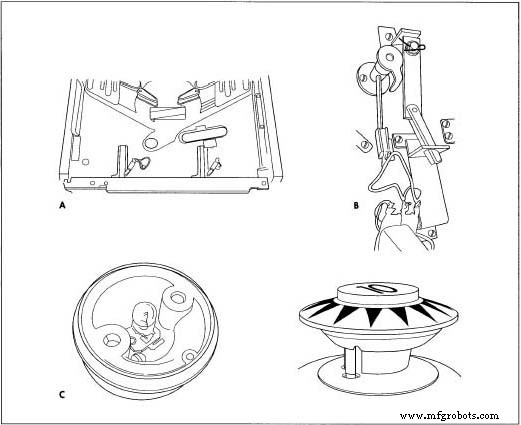
- Most components are assembled manually. This includes wiring of approximately 1,000 parts, installation of flippers, bumpers, and electronic circuits, and integration of the backglass and cabinet.
Quality Control
Quality assurance begins with supplier inspections of parts to ensure dimensional accuracy. The critical evaluation occurs during prototype testing: each of the 10–20 prototypes undergoes playability checks, safety drop tests, and shipping endurance tests. Additional units may be produced for marketing or trade show displays. Only after all prototypes satisfy these rigorous criteria does the machine enter full‑scale production.
Manufacturing process
- Chess: From Ancient Origins to Modern Manufacturing – An Expert Overview
- The Soccer Ball: From Ancient Games to Modern Innovation
- The Evolution and Craftsmanship of American Football: From Ancient Games to Modern NFL Standards
- DIY Arduino USB Gaming Controller – Build Your Own High-Performance Gamepad
- Interactive Joystick Game with Arduino and LED Feedback
- Pixel Chaser: Interactive One-Tap LED Game with Arduino Nano
- DIY LED Roulette Game – Build a One‑Person Arcade with Arduino Nano
- Binary Switch Game – Arduino UNO Project
- Build an Arduino Tic‑Tac‑Toe Game on a Touchscreen: A Step‑by‑Step Tutorial
- Build an Arduino Memory Game (Simon Clone) – Step‑by‑Step Tutorial