


Industrial manufacturing
Manufacturing process


This guide walks you through building a Raspberry Pi‑based photosensor that logs light levels and triggers alerts. Perfect for monitoring dark spaces like closets or equipment lockers, or simply keeping track of ambient illumination. We’ll use LEDs as the output indicators, but the circuit can be ad
The Raspberry Pi lacks built‑in analog inputs, yet that doesn’t preclude reading analog sensors. By combining a few resistors and a capacitor, you can employ a simple step‑response technique to determine resistance—ideal for potentiometers, photoresistors, thermistors, and more. Background This appr
In July 2015 I completed a high‑school internship at Colorado State University, where I designed a short‑range infrared proximity sensor for the Raspberry Pi. The sensor can power line‑following robots, motion‑activated cameras, and more. Below is a complete guide – from components to code – that de
Unlike many microcontrollers, the Raspberry Pi offers only digital GPIO pins. They can source or sink high (3.3 V) and low (0 V) logic levels, but they cannot read analogue voltages directly. Fortunately, a simple RC‑charging technique lets you extract a range of values from variable‑resistance sens
For this hands‑on lab, gather your Satellite CCRMA kit, a laptop equipped with an Ethernet adapter, and a pair of headphones with a 1/8″ (2.54 mm) stereo jack. The following items are optional but can enhance the experience: Various breadboard‑friendly sensors and LEDs. A set of compact battery‑pow
NOTE: This is an advanced tutorial, not suitable for Linux beginners. In this guide we’ll show how to detect and track table tennis balls—or any clearly visible circular object—using OpenCV on a Raspberry Pi. The technique is valuable for robotics projects, sports analytics, or hobbyist experimentat
In this guide we walk you through creating a reliable 433 MHz smart‑home controller that bridges your Raspberry Pi to the Sensorflare platform, allowing you to command any RF‑controlled device with confidence. Components you’ll need: 433 MHz transmitter module Raspberry Pi (any model) Jumper wires
The ppDAQC Pi‑Plate is a versatile data‑acquisition interface that seamlessly connects sensors to a Raspberry Pi. With eight analog and eight digital inputs, it supports up to sixteen independent channels of real‑world data, making it ideal for industrial monitoring, research labs, and DIY projects.
Introduction The Bosch BMP180 is a high‑accuracy digital barometric pressure sensor that communicates over I2C. In this guide you’ll learn how to wire it to a Raspberry Pi, enable the I2C bus, and read temperature and pressure with a ready‑to‑run Python script. Module Overview The module is a compa
Lightning can be detected using the electromagnetic pulse generated by a strike. The AS3935 Franklin Lightning Sensor IC from ams (Austria Mikro Systeme) offers a reliable, low‑cost solution that can sense lightning up to 40 km away, filter out electrical noise, and differentiate between cloud‑to‑gr
Learn how to monitor indoor air quality using an Arduino, a Shinyei PPD‑42 particle sensor, and the OpenSensors MQTT broker. This step‑by‑step tutorial demonstrates how to collect real‑time particulate data and publish it securely to a public data stream. Introduction For this project we wanted a s
Node‑RED provides an elegant, low‑code solution for fusing diverse IoT devices and cloud services. This guide walks you through connecting a Texas Instruments SensorTag to the Blynk mobile platform using a Raspberry Pi Zero equipped with a RedBear IoT pHAT. Hardware Overview SensorTag – collects t
Track the 230 VAC mains with a compact, low‑cost circuit that delivers a clean digital signal to any microcontroller. While a 12 VAC approach works for low‑voltage monitoring, it is unsuitable for high‑voltage mains because of excessive power dissipation. The circuit below resolves that issue with a
Deploying a reliable home‑security system on a Raspberry Pi with Home Assistant (HA) is straightforward once you understand the key components: a motion sensor, an alarm panel, and camera‑based video capture. This guide walks you through the complete setup—from wiring the HC‑SR501 PIR sensor to conf
Deploy a computer‑vision‑enabled motion sensor on a Raspberry Pi 3 equipped with a PiCamera. The device detects human faces and transmits presence information via UPnP over the local network to SmartThings. I will start by assuming that you have a Raspberry Pi 3 with a working camera and Open CV in
Learn how to create a reliable Flask API on a Raspberry Pi that reads temperature, pressure, humidity, and more from a GY‑91 multi‑sensor module. The guide walks through wiring, software setup, and sample code that you can adapt for your own projects. Connect the Sensor via GPIO The GY‑91 board use
Learn how to build a portable, interactive laser projector that responds to motion using Zigbee sensors, the Gravio Edge computing platform, and a Chromecast dongle. This guide walks you through setting up a Raspberry Pi 4, configuring Ubuntu 20.04 LTS, integrating PIR sensors, and triggering ani
Learn how to use a single KY‑033 line‑tracking sensor to detect whether a door is open or to sense a line crossing, all with a Raspberry Pi. The following guide covers wiring, installation, and a ready‑to‑run Python script. About This Project This concise example demonstrates how the Elegoo 37‑1 Sen
Hardware Requirements Raspberry Pi 3 (or newer) HC‑SR04 ultrasonic distance sensor(s) Resistor pair: 330 Ω (for ECHO) and 470 Ω (for ground divider) Jumper wires Breadboard Wiring Diagram Sensor pins connect to the Pi as follows: VCC → Pin 2 (5 V) GND → Pin 6 (ground) TRIG → Pin 12 (GPIO18) ECHO
Abstract Learn how to connect and read data from a GPS module and an MPU‑9150 IMU on a Raspberry Pi using I²C and UART interfaces, and process the information in real time for autonomous navigation. Keywords: I2C communication, UART communication, Adafruit Ultimate GPS Breakout, Sparkfun MPU‑9150 Br
Manufacturing process
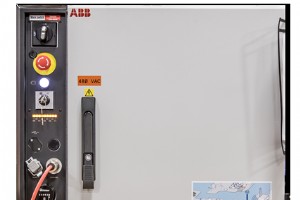
Your Comprehensive Source for ABB Robot Controllers
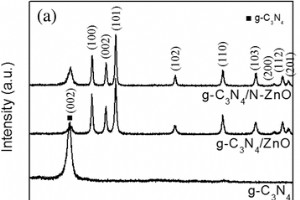
Enhanced Visible‑Light Photocatalysis of Methylene Blue and Phenol with N‑Doped ZnO/g‑C₃N₄ Nanocomposites
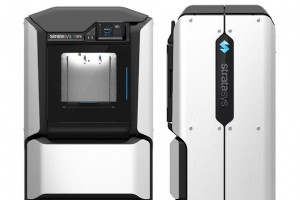
Stratasys F123 Series: Rapid, Quiet, and Cost‑Effective 3D Printing Innovation

Markforged’s Role in COVID‑19: Accelerating 3D‑Printed Medical Supplies
