



C++ Programming Basics: What Is C++ and Why It Matters
What Is C++?
C++ is a general‑purpose, object‑oriented programming language that emerged from C in the early 1980s, created by Bjarne Stroustrup at Bell Labs. It extends C’s low‑level control with powerful abstractions such as classes, templates, and exception handling, making it both fast and safer for large‑scale software development.
Languages Most Widely Used Today
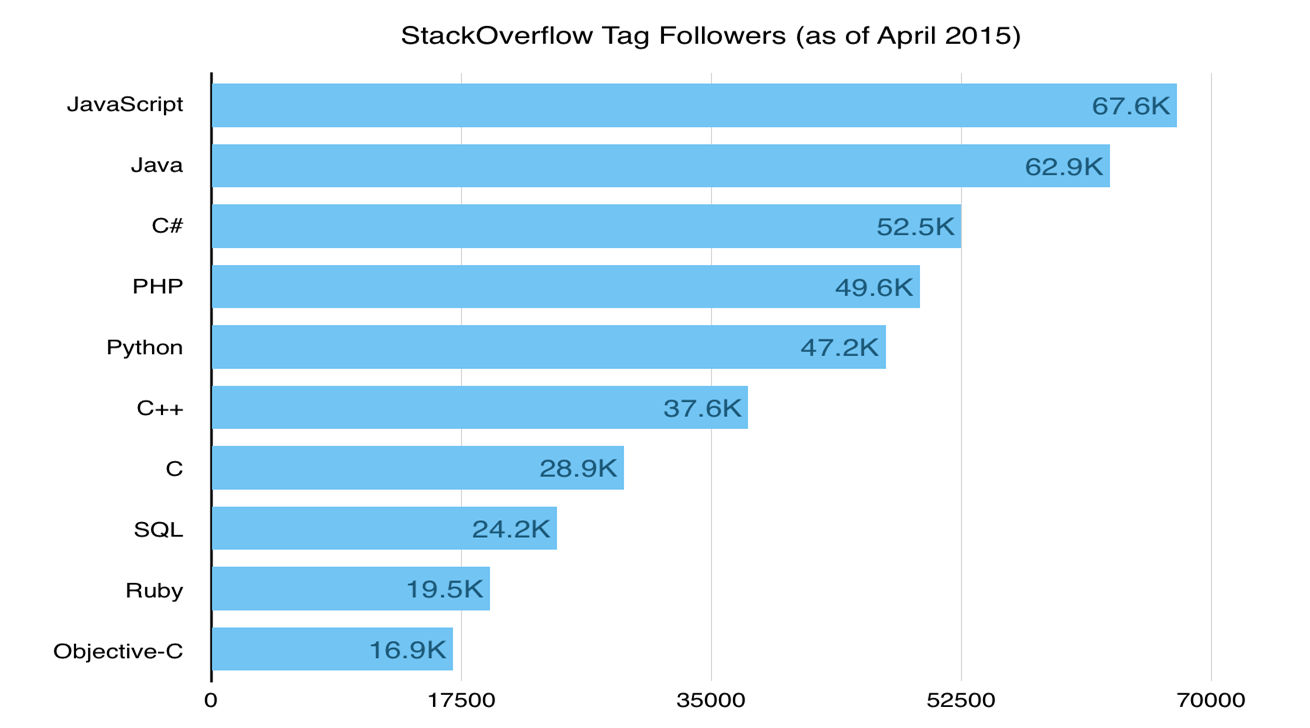
In the current tech landscape, the most popular languages are Java, C++, Python, and C. Lower‑level languages like Assembly, C, and C++ still dominate when performance and close‑to‑hardware control are required.
Below is a visual representation of language popularity from Stack Overflow (source: Stack Overflow Developer Survey):
Is C++ the Best Programming Language?
The answer depends on the task. For compute‑intensive applications, real‑time systems, and scenarios where fine‑grained memory control is essential, C++ excels. GUI‑centric tasks are often more productive in higher‑level languages such as Python or Visual Basic. Nevertheless, C++ remains the backbone of many high‑performance platforms and has a thriving ecosystem of libraries and tools.
Who Uses C++?
Numerous industry giants rely on C++ for critical components:
- Amadeus – airline ticketing
- Bloomberg – financial data services
- Amazon – e‑commerce infrastructure
- Google – search engine and cloud services
- Facebook – social media platform
Key technologies built in C++ include:
- Java Virtual Machines
- JavaScript engines (e.g., Google’s V8)
- Web browsers (Chrome, Firefox, Safari, Edge)
- Microsoft .NET framework components
Applications that demand low latency, high concurrency, or direct hardware interaction—such as networking, graphics, and database systems—often choose C++ for its performance guarantees.
Five Fundamental Concepts of C++
1. Variables
- Serve as named storage locations for data.
- Defined once, used throughout the scope in which they are declared.
- Strong typing prevents accidental misuse and improves program safety.
2. Control Structures
- Direct the flow of execution:
if,switch,for,while, etc. - Enable branching, looping, and function calls to build complex logic.
3. Data Structures
Organizing data efficiently is essential. Rather than declaring dozens of individual variables, C++ offers arrays, vectors, maps, and custom structs/classes to manage collections of data in a scalable way.
4. Syntax
Each language has a grammar that dictates how statements must be formed. C++ syntax combines C’s procedural style with object‑oriented and generic programming constructs, allowing concise and expressive code when followed correctly.
5. Development Tools
Integrated Development Environments (IDEs) such as Visual Studio, CLion, and Eclipse CDT streamline coding, debugging, and build management. Additional tools—compilers (gcc, clang, MSVC), profilers, and version control systems—are critical for modern C++ workflows.
Real‑World Applications of C++
Operating Systems
Major OS components—from Windows kernel to Linux drivers—are written in C++ to leverage its performance and type safety.
Games
Game engines like Unreal Engine rely on C++ to provide the speed needed for rendering, physics, and AI calculations.
Web Browsers
Rendering engines such as Blink (Chrome) and Gecko (Firefox) are implemented in C++ to maximize rendering throughput.
Libraries
High‑performance libraries—TensorFlow’s core, Boost, and the Standard Template Library—use C++ for speed and extensibility.
Graphics and Multimedia
Real‑time graphics APIs (OpenGL, Vulkan) and media frameworks often wrap C++ for efficient memory handling.
Banking and Finance
Core banking systems like Infosys Finacle process millions of transactions daily, demanding low latency and high reliability that C++ provides.
Cloud and Distributed Systems
Scalable file systems and distributed databases (e.g., Ceph) are built in C++ to interact closely with storage hardware.
Embedded Systems
Medical devices, wearables, and automotive control units commonly use C++ for deterministic performance and resource constraints.
Compilers
Compilers for languages such as Rust, Swift, and even C++ itself are frequently written in C++ to achieve high compilation speeds.
C Language
- Basic Oxygen Steelmaking: How the World’s Leading Steel Production Process Works
- Mastering C++ Input and Output: A Practical Guide
- C++ Default Function Arguments: How They Work & Best Practices
- How to Pass Arrays to Functions in C++: A Practical Guide
- Top 15 C++ Online Courses to Master the Language (2024 Update)
- C Programming Language: Fundamentals, History, and Applications
- Pointers in C: A Comprehensive Guide to Types, Usage, and Best Practices
- Python vs. C++: Key Differences & Which Is Right for You
- Understanding C++: Core Syntax and Object‑Oriented Foundations
- Master C++ Web Programming with CGI