Industrial manufacturing
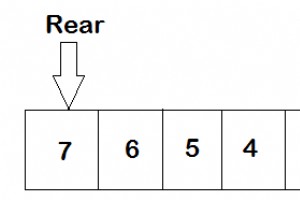
What Is a Queue in Python? A queue is a data structure that stores items in a linear order. Items are added at the rear and removed from the front, following the First‑In, First‑Out (FIFO) principle. The queue exposes two logical ends: front and rear—enqueue at the rear, dequeue from the front. In t

What Is Python Yield? The yield keyword behaves like return, but instead of handing back a value immediately, it returns a generator object that can be iterated over. When a function containing yield is invoked, execution pauses at the first yield statement and hands control back to the caller with
What is Python timeit()? Python timeit() is a built‑in module designed to measure the execution time of small code snippets with high precision. By default it runs the statement one million times and reports the fastest run, which helps you compare performance of different implementations. Syntax t
Python’s built‑in map() applies a function to every item in an iterable (list, tuple, set, string, dictionary, etc.) and returns a new iterable. It’s a cornerstone for functional‑style programming in Python. What You’ll Learn Syntax and core parameters How map() works under the hood Using map() wit
What is Python range? Pythons range() is a built‑in generator that produces a sequence of integers based on a start, stop, and optional step. If the start value is omitted, it defaults to 0, and the sequence increments by 1 until it reaches the stop value (exclusive). For example, range(5) yields 0,
Python round() Function Explained The round() built‑in is a staple for numerical work in Python. It returns a value rounded to a specified number of decimal places, defaulting to the nearest integer when no precision is provided. Syntax round(number, ndigits=None) number – The numeric value to roun
Python abs() Function – Quick Reference abs() is a native Python function that returns the absolute value of a numeric input. It works seamlessly with integers, floats, and complex numbers, making it essential for mathematical operations, data cleaning, and signal processing. Syntax abs(value) Param
Lambda functions, often called anonymous functions, let you write small, throw‑away routines in a single line. They’re handy in functional‑style code, especially when used with map, filter, and reduce. What Is a Lambda Function? A lambda is a function defined with the lambda keyword instead of def.
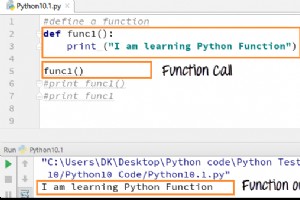
Mastering Python Functions: Definition, Calling, Indentation, Arguments & Return Values Functions are the building blocks of any Python application. They encapsulate reusable logic, keep code DRY, and make your programs easier to read, test, and maintain. In this guide we’ll walk through every step
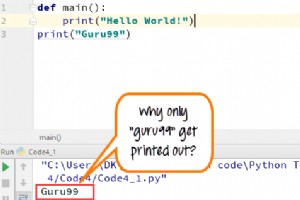
What is the Python Main Function? The main function in Python marks the entry point of a program. When a script is executed directly, the interpreter runs code sequentially. Code inside def main() runs only if the script is the primary module, not when imported elsewhere. Let’s walk through a clear
What is Python String.find()? The String.find() method in Python returns the index of the first occurrence of a specified substring within a string. If the substring isn’t found, it gracefully returns -1 instead of raising an exception, making it a convenient choice for substring searches. In this g
In Python, len() is a built‑in function that returns the number of items in an object. Whether you’re working with strings, lists, tuples, dictionaries, or other collections, len() gives you a quick, efficient way to determine size without performing any costly iteration. Syntax len(value) Parameter
What is Python String format()? Python String format() is a function used to replace, substitute, or convert the string with placeholders with valid values in the final string. It is a built-in function of the Python string class, which returns the formatted string as an output.
Master Python’s str.count(): How to Count Characters & Substrings with Examples The str.count() method is a lightweight, built‑in tool that returns how many times a specified substring appears in a string. Whether you need to tally single characters, multi‑character patterns, or count within a speci
Mastering Python’s strip() Method Python’s strip() is a built‑in string method that trims unwanted characters from both the beginning and the end of a string. By default, it removes all leading and trailing whitespace, but you can also specify a set of characters to strip. The method never alters th
In Python, every entity is an object—including strings. A string is simply a sequence of characters enclosed in quotes. Example:var = Hello World! This guide walks you through the most common string operations, backed by real examples and best‑practice tips. Accessing Characters with Slicing String
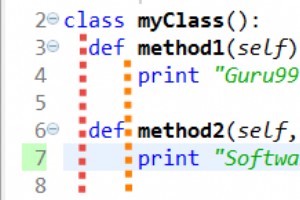
Python Object‑Oriented Programming (OOP) Python’s OOP model lets developers model real‑world entities as objects defined by classes. The language prioritises code reuse and modularity, making it straightforward to create and extend classes. What Is a Class? A class is a logical container that bundle
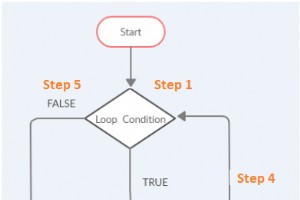
Loops are the backbone of most programming languages, enabling repetition over sequences such as lists, tuples, strings, dictionaries, and sets. In Python, two looping constructs—for and while—serve this purpose. The loop continues until its condition becomes false, but the flow can be altered using
Master Python Loops: For, While, Break, Continue, and Enumerate Explained Loops are the backbone of iterative programming. They let you execute a block of code repeatedly until a condition is met. Python offers two primary looping constructs: for (iterators) and while (condition‑based). What Is a Lo
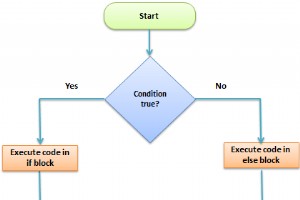
What Are Conditional Statements in Python? Conditional statements enable a program to execute different blocks of code based on Boolean expressions. In Python, the if statement is the core construct that drives this decision‑making process. In this guide, we’ll explore how to use if, else, elif, and
Python