



Holcim (US) Inc.: The A-Team – Driving Reliability Excellence Across 16 Plants
"If you have a problem, if no one else can help, and if you can find them, maybe you can hire … the A-Team."
For fans of classic TV, the image of Colonel John "Hannibal" Smith assembling a highly skilled squad to tackle global missions comes to mind. At Holcim (US) Inc., a similar concept is alive and thriving, this time focused on maintenance and reliability across the company’s 16 production plants.
Steve Lindborg, Maintenance & Reliability General Manager, has curated a team of specialists who travel the nation, turning inefficient equipment and processes into high‑performance assets and supporting colleagues at every site.
Colleagues describe Lindborg as a recruiter who "insists on getting the top people." He waits until the right fit is found, and his team members possess the credibility and experience to drive tangible change.
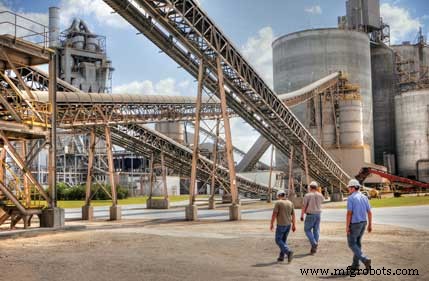
The 14 experts Lindborg assembled for his M&R group are:
- Dennis Wilken – Regional Reliability Specialist
- Sam Brubaker – Regional Reliability Specialist
- Quentin McGahey – Regional Reliability Specialist
- Mamoun Abulibdeh – Senior Maintenance & Reliability Specialist
- Sidney Hand – Condition‑Based Maintenance Specialist
- Les Kellogg – Senior Maintenance Planner
- Jimmy Lukowski – Senior Mobile Equipment & Hydraulics Specialist
- Nate Cross – Maintenance Engineer
- Mike Ifurung – Electrical Specialist
- Kurt Ziegler – Mechanical/Kiln Specialist
- Ivo Dantas – Automation Specialist
- Fred Harding – SAP Specialist
- Brian Mitchell – Manager of Program Integration
- Al Montoya – Manager of Process Improvement
"Steve demands results. He gets results. Corporate likes that," says Wilken, his long‑time right‑hand man.
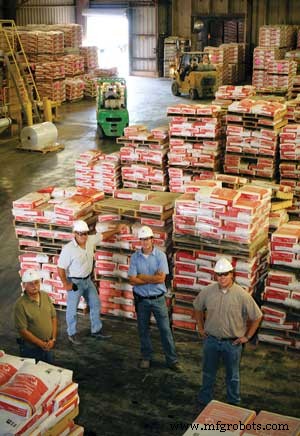
Les Kellogg (left), Jimmy Lukowski, Nate Cross and Sam Brubaker are four members of Holcim’s maintenance and reliability A-Team.
Photos by Craig Mahaffey, Sposa Bella Photography
Why Reliability Matters
In the cement industry, limestone dust and other particulates can coat large production equipment, causing corrosion, fluid contamination, bearing damage, and inspection challenges. This environment demands a proactive, data‑driven approach to reliability.
"This isn’t an easy industry; it’s hard‑rock mining," notes Lindborg. Traditional solutions have involved pouring resources into asset problems, but sustainable success requires innovative thinking.
Holcim’s heritage of progressive thought dates back to 1997 when Hans Burger, VP of Maintenance and Equipment Reliability at Holcim Ltd., launched the Maintenance Cement (MaC) system—an integrated framework for work control, planning, and scheduling that optimizes resources and reduces costs.
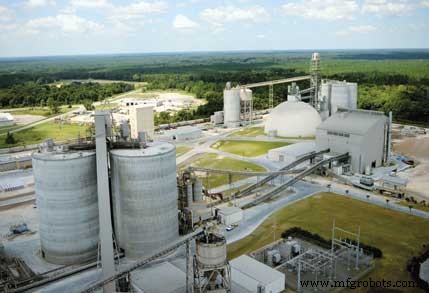
The Holly Hill, S.C., plant is located 60 miles northwest of Charleston.
Despite early successes, sustaining MaC’s momentum proved challenging once corporate leadership stepped back. Lindborg identified this gap and, with support from the Manufacturing Performance Center (MPC), re‑established a firm focus on M&R.
Key to this effort was the creation of a regional support organization—MPC—under Filiberto Ruiz, Senior Vice President of Manufacturing. The center’s mandate included promoting implementation, sustainability, and best‑practice standardization across all Holcim (US) facilities.
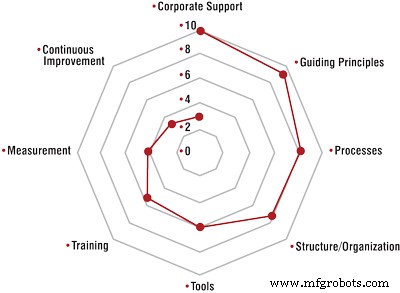
Figure 1. Spider web diagram illustrating the performance trajectory of a traditional initiative.
M&R Within the MPC
While many corporate centers of excellence focus on process, quality, and capital, Holcim’s MPC uniquely elevated maintenance and reliability to a core function, ensuring it received the visibility and resources needed to avoid arbitrary budget cuts.
"If the maintenance organization isn’t visible and seen as a key factor, it’s vulnerable to arbitrary cuts in budget and manpower at any time," says Wilken.
Lindborg’s recruitment strategy focused on proven talent from across the industry. His team includes veterans such as Wilken (40 years of experience), Kellogg (ex‑Anheuser‑Busch and paper industry), Hand (20 years in chemical), Lukowski (27 years in heavy construction), Brubaker (upcoming engineering star), and Cross (recent engineering graduate with experience at Geocycle).
"I didn’t want people who were legends in their own mind; they had to work well with others, show value on the plant floor, and possess outstanding technical skills and real‑world experience," explains Lindborg.
The team-building process was rigorous, with each member selected for their ability to collaborate and deliver results.
“When I interviewed, this sounded like the A-Team,” says Lukowski. “Bringing people from diverse backgrounds together for a common purpose is incredibly powerful.”
Beyond hiring, Lindborg championed the importance of M&R to Holcim’s CEO, Patrick Dolberg. Six months into his tenure, Dolberg publicly declared safety and reliability the company’s top priorities, giving the M&R group the executive backing it needed.
“He promised me that this was how it was going to be,” says Lindborg. “That commitment was the tipping point for reliability in the company.”
Executives granted Lindborg the freedom to pursue reliability initiatives on his terms, a privilege few companies afford. Filiberto Ruiz supported the M&R group’s work across all focus areas.
Holcim now believes that plants that are reliable, high‑quality, well‑trained, and environmentally responsible will achieve superior cost‑efficiency and competitiveness.
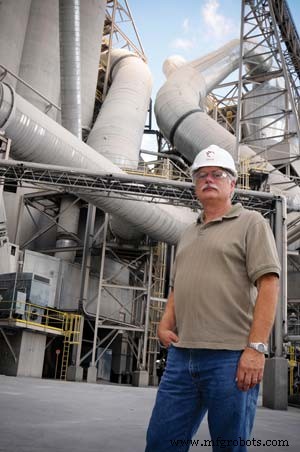
Les Kellogg serves as the senior maintenance planner.
The A-Team’s Mission
The M&R group crafted a clear vision: “Drive plant performance to reliability and availability targets at the lowest sustainable cost.” The mission was to deliver measurable, value‑added support at the plant level through real‑time technical expertise and long‑term maintenance systems, while fostering personnel exchange for professional growth.
Unlike typical corporate initiatives that remain confined to headquarters, M&R members operate on the shop floor. Between 50% and 75% of their time is spent traveling to plants, where they collaborate directly with plant maintenance managers to identify gaps, propose solutions, and implement best practices.
Regional reliability specialists cover clusters of plants, serving as technical references, trainers, and process enablers. Their role is to maintain the momentum of MaC, coordinate activities, and ensure continuous improvement.
When a plant faced a costly $1.3 million upgrade for its multi‑cyclone system, a regional specialist leveraged lessons from other sites to recommend a cost‑effective solution, illustrating the value of shared knowledge.
Specialists across disciplines—CBM, mobile equipment, SAP, automation, electrical, mechanical, and kiln—perform assessments, lead major projects, conduct root‑cause analysis, and troubleshoot pressing issues. Their collaborative approach keeps them embedded in the plant, working side‑by‑side to establish preventive maintenance routines and lasting improvements.
Beyond on‑site visits, the team maintains regular communication through monthly conference calls, e‑mails, webinars, and intranet posts. Sidney Hand further expanded this network by launching Roundtable, a forum where plant vibration analysts exchange ideas and technical support.
Persistent support prevents the “deadly spiral” of declining initiative performance and keeps the M&R group at the forefront of plant operations.
Initially perceived as corporate, the M&R team is now viewed as integral plant staff due to their deep involvement on the floor.
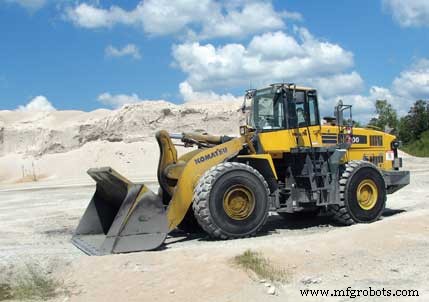
Holcim plants manufacture more than 14 million metric tons of cement and related materials each year.
Critical Assessment
The M&R group’s mantra is assessment and standardization. In 2007, Wilken conducted assessments at 13 sites to gauge maintenance maturity, revealing widespread inconsistencies and value‑less activities.
Key findings led to five recommendations: manage resources aggressively, better understand equipment condition, document processes, provide relevant training, and manage the maintenance business.
To address resource allocation, the group developed standardized risk‑analysis tools, equipment‑history tasks, and Excel templates that rank equipment criticality. This data‑driven approach informs maintenance strategies—preventive, predictive, or run‑to‑failure—and guides investment decisions.
Condition monitoring documents, created by Nate Cross and colleagues, combine criticality rankings with real‑time status indicators (visual, oil, vibration, thermography, etc.), delivering a color‑coded view of each plant’s most urgent issues. Wilken’s reliability map offers a single‑page snapshot of plant reliability, enabling plant managers to communicate key challenges and progress to executives.
These tools empower maintenance managers to defend budget decisions with hard data, fostering a culture of accountability and continuous improvement.
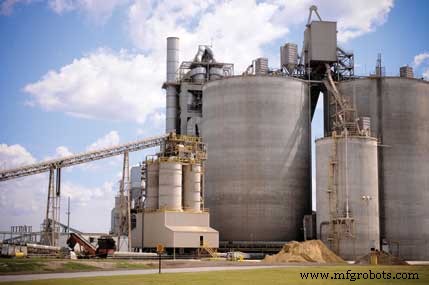
Holcim (US) has 16 cement plants, including this one in Holly Hill, S.C.
Standardization Efforts
The M&R group champions consistency across plants by promoting best practices tailored to each site’s unique needs. They standardize equipment—such as Emerson Process CSI vibration systems—and define procurement guidelines for critical assets like variable‑frequency drives and roller mills, simplifying support and spare‑parts management.
Design for maintainability is emphasized in new capital equipment acquisitions, ensuring long‑term reliability.
Standard nomenclature, achieved through an SAP item standardization project, eliminates disparate naming conventions that previously hindered inventory optimization and work‑order accuracy.
Work‑control standardization—supported by Fred Harding and Les Kellogg—focuses on SAP training, report generation, and template development, streamlining planning and scheduling.
Certification programs are underway for hourly and salaried workers, covering vibration, lubrication, and reliability engineering. All M&R team members hold the Certified Maintenance & Reliability Professional (CMRP) designation, underscoring a commitment to industry excellence.
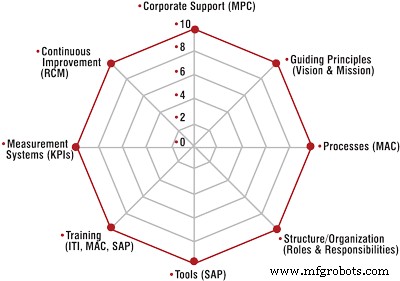
Figure 2. Spider web diagram showing the performance of a truly sustainable initiative.
Building a Solid Reputation
Just as the TV A-Team celebrated successful missions, Holcim’s M&R team reports a steady climb in reliability metrics—from a 6 out of 10 rating to a significant improvement—reflecting tangible progress.
“It’s a big difference from what it was. We have built a solid foundation, but we have a long way to go,” says Lindborg. Success, he notes, is measured by plant performance and sustained growth.
“Not surprisingly, maintenance and reliability has the reputation within the company as an organization that gets things done,” says Wilken.
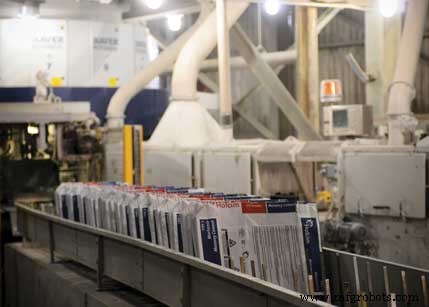
Holcim (US) employs more than 2,400 people across the country.
About Holcim (US) Inc.
Company: Holcim (US) is a wholly owned subsidiary of Holcim Ltd. and is one of the United States’ leading producers of cement and mineral components. The company operates 16 production plants and over 75 distribution facilities, supplying more than 14 million metric tons of cement and related materials annually. In 2007, sales reached approximately $480 million, and the firm employed over 2,400 people.
Plant sites: Holcim (US) operates in 16 states, with plants located in Ada, Okla.; Artesia, Miss.; Camden, N.J.; Catskill, N.Y.; Clarksville, Mo.; Devil’s Slide, Utah; Dundee, Mich.; Hagerstown, Md.; Holly Hill, S.C.; Mason City, Iowa; Midlothian, Texas; Portland, Colo.; Bloomsdale, Mo.; Theodore, Ala.; and Trident, Mont. An additional plant is under construction in Ste. Genevieve, Mo.
Parent company: Holcim Ltd., headquartered in Zurich, Switzerland, was founded in 1912. With operations in more than 70 countries and nearly 90,000 employees, the company recorded 2007 net sales of €16.4 billion.
Getting to Know Maintenance Legend Hans Burger
Hans Burger, VP of Maintenance and Equipment Reliability at Holcim Ltd., has driven progressive M&R practices for over 15 years. He hosts a month‑long preventive maintenance course in Switzerland and an annual international maintenance manager conference, fostering global knowledge exchange.
Mission Strategy: What the M&R Group Provides
Technical Support:
- Staff technical positions with top talent.
- Locate technical staff to provide closest support to plants.
- Focus on larger facilities while ensuring all plants receive support.
- Drive best practices in assigned areas.
- Compile and monitor critical equipment condition.
- Respond to plant needs in training, procurement, consulting, and third‑party services.
Maintenance Systems:
- Staff regional reliability specialist positions with experienced personnel.
- Prioritize plants with the greatest impact.
- Drive Maintenance Cement (MaC) as the primary tool for continuous improvement.
- Coordinate M&R activities regionally for optimal results.
- Assist technical staff with program development and implementation.
- Serve as regional point of contact for corporate maintenance support.
Personnel Exchange:
- Respond to exchange opportunities as appropriate.
- Provide professional development to M&R staff for potential plant assignments.
“The Punchline.”
Dennis Wilken summarizes the organization’s role: "In order to improve overall plant performance through investments made in maintenance, we must provide technical and process expertise, act as the repository of corporate memory, enforce consistency, and support plants to achieve sustainable, continuous improvement over the long term."
Equipment Maintenance and Repair
- How Industrial Maintenance Has Evolved: From Reactive to Predictive
- Your Comprehensive Predictive Maintenance Checklist: Boost Efficiency, Cut Downtime & Drive ROI
- How Predictive Maintenance Drives Efficiency and Cuts Downtime
- The Evolution of Maintenance Practice: From Reactive Fixes to Proactive, Risk‑Based Strategies
- Unlocking Operational Excellence: The Strategic Advantage of Optimized Maintenance Scheduling
- Optimizing Maintenance: Cost‑Effective Predictive Strategies for Manufacturing Leaders
- What Maintenance & Reliability Leaders Are Prioritizing Right Now
- How Maintenance KPIs Drive Asset Reliability and Business Value
- Unlocking Reliability: How Condition‑Based Maintenance Drives Predictive Success
- Mastering Proactive Maintenance: Elevate Reliability and Reduce Downtime