



Plain vs. Rolling Element Bearings: Choosing the Right Bearing for Your Application
Plain bearings, also known as sleeve, plane, journal or babbitt bearings, are engineered for a wide array of sliding or oscillating applications—including door hinges, automotive ball joints, and tractor‑trailers’ fifth wheels. When full rotation is required, a plain bearing transforms into a sleeve that surrounds the shaft, offering smooth motion without the need for a sealed housing.
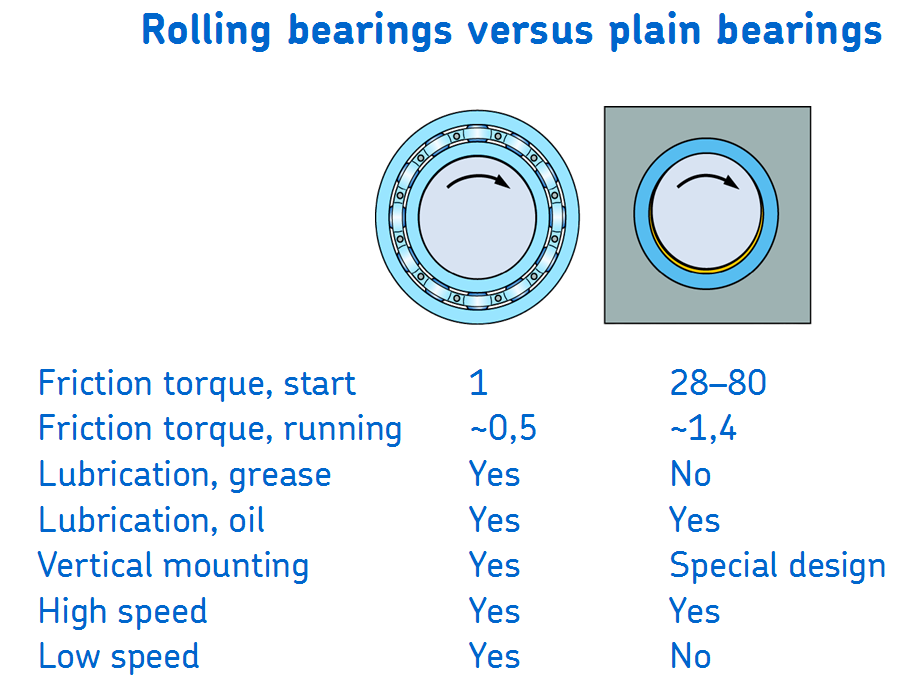
- High startup torque typically disqualifies plain bearings for equipment that frequently starts and stops.
- Maintaining a full fluid film demands up to three times the energy of a comparable rolling element bearing, even after startup losses are excluded.
- Grease‑lubricated journal bearings often struggle to sustain a thick oil film without constant replenishment.
- Vertical or thrust‑loaded configurations require specialized Kingsbury or Mitchell designs, which can drive up cost. Most rolling element bearings come in standard sizes, so switching to a rolling bearing may be all that’s needed to handle thrust.
- Plain bearings are usually optimized for a single speed, whereas rolling element bearings tolerate a broader speed range—ideal for variable‑speed drives.
In power‑generation or heavy‑load scenarios where high power density can permanently deform a rolling element raceway, plain bearings may be the safer choice. The API 610 Standard provides detailed guidance on selecting plain versus rolling element bearings for industrial machinery.
Quality Professionals See Salary Upswing, ASQ Survey Finds
Choosing Controllers and Recorders for Food & Beverage Production
Equipment Maintenance and Repair
- Schaeffler Arcanol: The Ultimate Fifth Element for Bearing Performance
- The Core Responsibilities of a Reliability Engineer: Safeguarding Asset Performance
- The Hidden Key to Successful Condition‑Based Maintenance
- Jaw‑in‑Shear Couplings: Reduce Downtime, Save Time, and Cut Inventory Costs
- Why Human Engagement Drives Reliability Success
- How to Extend Bearing Life: Proven Repair Strategies and Savings
- Choosing the Right Wire for Electrical Discharge Machining (EDM): Speed, Precision, and Finish
- Maximize Cat® Equipment Efficiency with the Right Fluids & Filters
- Boost Productivity with the Perfectly Sized Excavator
- Choosing the Right Hotend: A Guide for FDM 3D Printing