


Industrial manufacturing
Equipment Maintenance and Repair


In today’s fast‑moving manufacturing landscape, sustaining a competitive edge hinges on delivering superior quality, exceptional service, and, critically, cost‑effective production. While trimming costs remains a staple strategy, the most sustainable advantage often comes from investing in solution

MRO—Maintenance, Repair, and Operations—drives uptime, productivity, and profitability in every manufacturing organization. Without disciplined MRO management, downtime rises, processes become chaotic, and costs spiral out of control. Procurement is the backbone of a robust MRO strategy. It goes bey

Effective management of in‑house industrial maintenance remains one of the most demanding challenges in manufacturing. Maximizing equipment uptime requires expertise, efficiency, and experience—qualities increasingly scarce in today’s competitive talent pool. ATS delivers a third‑party maintenance

Effective maintenance goes beyond simply replacing worn components or checking fluids on a set schedule. A robust maintenance strategy must be underpinned by a clear framework that defines preparation, execution, and evaluation. Work Execution Management (WEM) is that framework – the bedrock of eve

How ERP Drives Efficiency in Manufacturing Operations In manufacturing, where every minute of downtime can translate into lost revenue, achieving peak efficiency is a perpetual challenge. Enterprise Resource Planning (ERP) systems provide a unified platform that brings all facets of production—plan
\nManufacturers face a universal challenge: equipment degrades over time, diminishing in value each year. Grasping equipment depreciation is essential because it influences multiple facets of your business, from tax filings to maintenance strategies and capital replacement cycles.\n\nTax and account

Lean maintenance and lean manufacturing are inseparable. When you focus on customer value, maintenance becomes a critical lever—without it, lean manufacturing stalls, and without lean manufacturing, maintenance efforts are misdirected. If your organization is pursuing lean manufacturing, embed lean

Adopting Total Productive Maintenance (TPM) transforms manufacturing by aligning every employee with the goal of flawless, accident‑free production. When TPM is fully integrated, machines operate at their rated speed, downtime is minimized, and every product meets quality standards. These outcomes m

Reflecting on the early stages of the COVID‑19 pandemic reveals one critical lesson for industry: agility. Companies that embraced agility could pivot quickly, while less‑agile firms faced shutdowns or reduced capacity. In this context, agility means the capacity to adapt operations and processes r

The manufacturing industry has been battling a pervasive skills gap for over a decade. Unlike many sectors where a vacancy may linger for weeks or months, filling a skilled maintenance role can take a year or more. With an estimated 2.5 million manufacturing jobs expected to remain vacant over the

In today’s high‑speed manufacturing environment, proactive and predictive maintenance is no longer optional—it’s essential. By extending beyond traditional preventive upkeep, advanced maintenance strategies unlock significant cost savings, efficiency gains, and higher overall equipment effectiveness
Effective plant leadership hinges on keeping staff engaged and driven. For maintenance managers, fostering a motivated team translates directly into safer operations, higher reliability, and superior productivity. Below are five expert‑backed tactics that help ensure your maintenance crew stays ent

Data capture, performance monitoring, and remote equipment control are cornerstone practices of Industry 4.0 and the Industrial Internet of Things (IIoT). By providing real‑time insight and remote command capabilities, these tools dramatically improve facility and equipment productivity, performan

The COVID‑19 pandemic forced manufacturers to rethink every facet of their operations—from on‑site safety protocols to supply‑chain resilience. The adjustments made during the crisis are not merely temporary fixes; they are shaping a lasting, safer, and more efficient manufacturing landscape. What D

In early 2020, ATS in partnership with Plant Engineering Magazine surveyed a broad cross‑section of manufacturing leaders—including engineers, maintenance supervisors, and plant managers—to gauge the most pressing challenges and the effectiveness of current maintenance practices on productivity and

During the COVID‑19 crisis, the mantra of business as usual vanished, reshaping every industry. Manufacturing, even in steady‑demand sectors, had to rethink workflows, adopt new safety protocols, and ensure workforce well‑being—all while striving to meet production targets. For facilities that face

The “three-legged stool” framework—people, processes, and technology—recurs across business strategy, underscoring that all three legs are essential for stability. In manufacturing, this triad is the foundation of productivity, safety, and profitability. Without any one component, the entire operati

Maintenance remains a critical function in every industrial plant. As manufacturing technology evolves, a proactive maintenance strategy delivers greater value than ever. Smartphones and tablets have reshaped everyday life—and business. The manufacturing sector must tap this ubiquitous technology to

In any industrial facility, maintenance is essential, but the timing of that maintenance can make or break productivity, efficiency, and product quality. Scheduled maintenance is planned in advance, while unscheduled maintenance reacts to unexpected failures. Though both are necessary, a proactive

Manufacturing is becoming increasingly data‑driven, and sensors are at the heart of this transformation. By capturing real‑time metrics, they enable plants to boost productivity, reduce downtime, and streamline maintenance. Key Findings from a Forrester Research Study Forrester’s latest study—commis
Equipment Maintenance and Repair
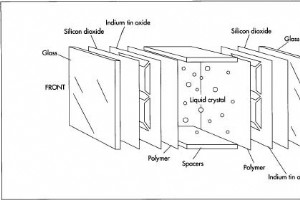
Liquid Crystal Display (LCD): Technology, Manufacturing, and Future Outlook

Influence of Accumulated Laser Energy on Nanoparticle Morphology in Pulsed Dewetting of AgCu Thin Films

Why Manufacturers Prefer Polyurethane Blades for Conveyor Belt Cleaning
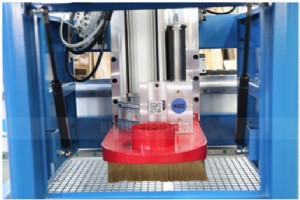
1325 4×8 ft CNC Wood Router with Boring Head – Now Available for Indonesia
