


Industrial manufacturing
Equipment Maintenance and Repair


Predictive maintenance (PdM) programs can lose momentum quickly, even after delivering significant cost savings and operational improvements. The most common trigger is the departure or promotion of the program’s champion.When a champion is promoted for successfully reducing maintenance spend and en
Surveys reveal a wide gap in preventive maintenance (PM) effectiveness: some organizations claim up to 90% success, while others report less than 40%. To understand what truly drives a high‑performance PM program—alongside condition‑based monitoring such as inspections—requires a deeper look at str
Half a quarter of a century ago, I left the U.S. Navy’s nuclear submarine program. The precision, discipline, and preventive‑maintenance culture I’d witnessed onboard set a benchmark that I now compare to the civilian sector. In the years that followed, I saw a stark contrast. Many factories operat
At industry conferences, I frequently encounter the claim that preventive maintenance is too costly and often the wrong approach—particularly when it comes to time‑based inspections. While this perspective is common, it’s essential to examine the evidence and determine when it truly applies. Reliabi
Many organizations chase the latest buzzwords without laying the foundation to support them. Preventive maintenance (PM) and condition‑based maintenance (CBM) are classic examples. This guide is not exhaustive but serves as a starting point for conversations about building a robust PM program. Elim
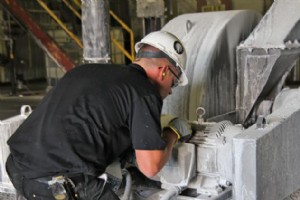
Defining what we mean by inspection is the first step. An inspection can be objective—measured with an instrument such as a vibration analyzer, infrared camera, voltmeter, flow meter, or ultrasonic device—or subjective, relying on visual, auditory, tactile, or olfactory cues. Regardless of the meth
I recently came across a fascinating music anecdote: the legendary rock band Chicago finally released their long‑suppressed album “Stone of Sisyphus.” The record, recorded in the early 1990s, had only circulated in bootleg form for years. The story reminded me of a myth I once used in maintenance t
Like the mythic Sisyphus, maintenance teams often feel they’re endlessly pushing a ball uphill, only to see it roll back down. Even after conducting preventive inspections and addressing identified issues, many teams find themselves repeatedly tackling the same faults, a frustrating “three steps for
Preventive maintenance (PM) is the backbone of reliability‑based maintenance. For that reason, PM attainment has become a key performance indicator (KPI). Yet many organizations find that maintenance is not the sole owner of this metric. While maintenance still drives the program—designing the sched
Boost Maintenance Productivity Through Strategic Planning In a world where downtime is costly, turning every minute of a mechanic’s shift into productive work is paramount. Industry surveys consistently reveal that only about 35 % of a maintenance team’s available time is spent actually turning wren
Reliability is the backbone of any manufacturing operation. Achieving it demands clear communication, seamless cooperation, and precise coordination among all teams. This article explores why the three Cs—communication, cooperation, and coordination—are essential and how they shape a resilient organ
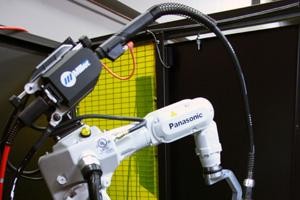
When you invest in automation, the objective is clear: unlock higher productivity and superior quality that set your welding operation apart and drive profitability. Achieving that vision requires more than a robot; it demands consistent, repeatable parts, streamlined workflow, skilled operators, an

For decades I’ve championed the use of checklists for equipment changeovers and startups in manufacturing plants. I’ve debated, reasoned, pleaded, and even shed real tears to convince colleagues of their value. When the New England Journal of Medicine published a study showing that hospitals employ

Every seasoned maintenance professional has likely been dismissed at some point as “out of touch with the real world.” Below are the candid observations that separate theory from practice on the shop floor. Paging systems are almost always occupied by ongoing maintenance requests, making it diffic

During a recent visit to a large pharmaceutical plant in North Carolina, I had the opportunity to observe the day‑to‑day operations of 18 skilled maintenance craftspersons who support a million‑square‑foot facility. The plant’s maintenance team, led by a dedicated coach, was part of a broader work‑
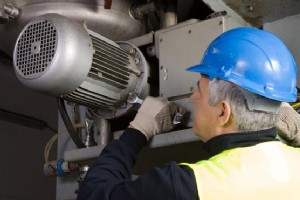
Autonomous operator maintenance means the operator, fully trained and certified, performs the upkeep tasks traditionally handled by a technician. It’s not a new concept—it’s a natural evolution of the skilled workforce that has kept machines running for decades. Before electronic ignition and compu
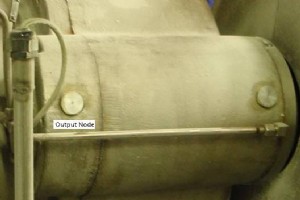
A recent acoustic emission (AE) study uncovered a potential critical bearing failure, prompting a planned preventive action that saved a leading food manufacturer from significant cost and unplanned downtime. The AE equipment, along with the primary inspection tools, was supplied by Holroyd Instrume
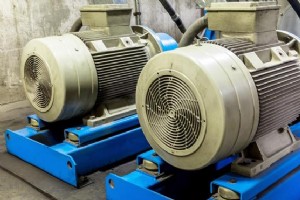
Nuclear submarines exemplify high‑reliability engineering, featuring built‑in redundancy. Typically, each system is divided into port and starboard halves, with two pumps per side—four pumps in total. Each side can operate independently on a single pump, and the halves are cross‑connected, allowing

The equipment registry is one of the most important tools in your kit when it comes to maintenance and reliability. It can be the foundation of your planned maintenance, lubrication, training and repair programs, as well as help with regulatory compliance and safety programs. Your spare parts manag

It can feel like new weight‑loss gadgets appear every week. One such device is a plastic wrap you strap around your stomach, promising you’ll sweat and shed pounds. While the concept works—any airtight wrap will increase perspiration—the real lesson is why we chase gimmicks instead of proven fundame
Equipment Maintenance and Repair

3D‑Printed Surgical Models Enable Historic Separation of Rare Head‑Fused Twins

Accurate Aluminum Casting Shrinkage Calculations for Sand Casting Success
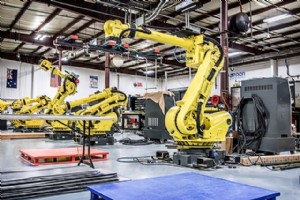
Articulated Robots: Expand Your Manufacturing Capabilities with Advanced Multi-Axis Technology
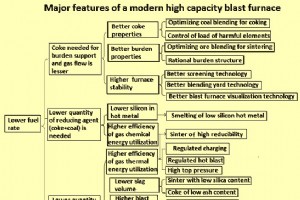
Modern High-Capacity Blast Furnaces: Core Features & Advantages
