Industrial manufacturing
Equipment Maintenance and Repair


FRACAS (Failure Reporting, Analysis & Corrective Action System) is a disciplined, closed‑loop process that lets organizations capture failures, diagnose root causes, and implement corrective actions. By integrating data across design, production, and field operations, FRACAS turns failure incidents

When you step into a plant where maintenance falls behind, the first thing that catches your eye is often the disarray of the spare‑parts storeroom. A seasoned maintenance professional will instantly spot poorly stored, unsorted, and unlabelled parts. While many facilities focus on visual upgrades—
Types of Maintenance Every year, organizations lose billions to unplanned downtime and sub‑par asset quality. To combat these losses, companies deploy a mix of maintenance strategies—each designed to protect critical equipment and minimize production loss. Although the terminology varies across sec

American Airlines has announced a $550 million investment in its Tulsa, Oklahoma maintenance facility— the largest capital outlay in the carrier’s history for a maintenance location. The upgrade will span roughly seven years and will modernize virtually every building on the complex. The Tulsa site
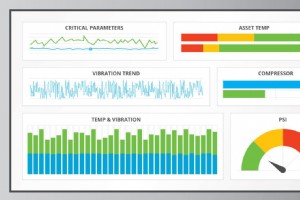
Condition‑based maintenance (CBM) is a data‑driven approach that monitors asset health in real time, triggering interventions only when measurable deterioration is detected. What Is Condition‑Based Maintenance? Unlike traditional preventive maintenance—where schedules are set by calendar or mileage
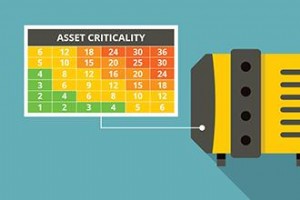
Criticality analysis is a structured process that assigns a risk‑based importance rating to each asset. By quantifying how a failure could impact your operations, you can focus resources where they matter most. What Is Criticality Analysis? According to ISO 31000:2009, risk is the effect of uncerta

Do you view predictive maintenance (PdM) as a core reliability program, or as merely a reactive tool? Most people—myself included for years—treat it that way. A paradigm shift occurred when I revisited the definition of reliability. Reliability is the consistent ability of an asset to perform its r
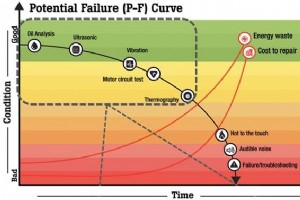
The most effective maintenance strategy is tailored to each asset, not a blanket approach. By analyzing each piece of equipment, organizations can chart a path that delivers the greatest reliability and ROI. Today, maintenance professionals increasingly rely on predictive maintenance (PdM) and cond

In industrial maintenance, two prevailing philosophies shape how equipment is managed. The first, commonly adopted, treats maintenance as a reactive fix‑it task. The second, increasingly proven, views maintenance as a proactive effort to keep equipment running. Though often conflated, these app

Why Ownership Matters Partnerships like the one I’ve forged with Noria empower leaders to rethink reliability from the ground up. The core of that rethink is ownership—when leaders own outcomes, they drive performance, reduce downtime, and eliminate the need for costly, reactive fixes. Research sho

Maintenance Management is the systematic stewardship of a company’s assets, ensuring optimal performance while managing time and budget. It moves beyond manual logs to sophisticated computerized maintenance management systems (CMMS) that consolidate planning, tracking, and optimization of all mainte
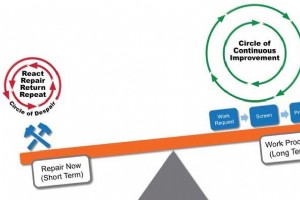
I recently visited a plant in South America for an assessment. Over the past two to three years, the team had implemented several initiatives, yet their production lines remained far from stable reliability, hovering in the high 70 % range for Overall Equipment Effectiveness (OEE). The business con

A familiar scene in many facilities: a radio crackles on the desk while a technician urgently calls for parts to fix a critical outage. The planner, already on the line, dives into the CMMS to pull data and then switches to frantic vendor calls to expedite parts. If this sounds like your daily r
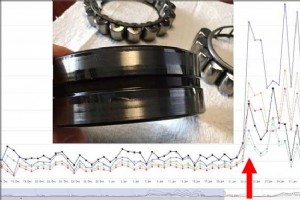
If you run a quarterly or monthly route‑based vibration inspection and still see unexpected failures, the root cause is often the limited snapshot nature of the method. Many bearing and motor defects can evolve rapidly—sometimes within days—without leaving a clear warning in a single on‑site chec
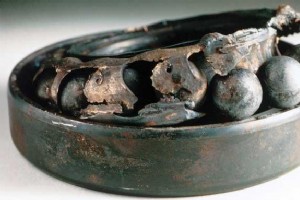
Reliability engineering is fundamentally about foreseeing and forestalling failures. By cataloguing every potential failure mode, you can design detection, mitigation, or prevention strategies that stop problems before they manifest. Failure Reporting, Analysis, and Corrective Action System (FRA
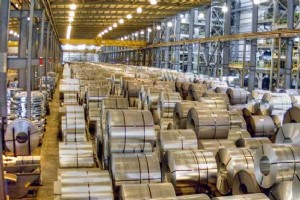
Since the mid‑1970s I have advocated for a close partnership between Operations and Maintenance—essentially, Operations + Maintenance = Production. Adding Stores and Engineering to this equation only strengthens the result. A truly collaborative partnership is one of the most critical factors tha

In my previous post I promised to explore the historical roots of leadership and the qualities that distinguish a true leader. Few professionals dedicate eight years to a Ph.D. in leadership theory followed by seven years of postdoctoral research; this overview distills that scholarship into a c
Ever hear operations say, “You just fixed that last week—why is it breaking again? You can’t fix anything.” It’s a frustration that plagues many maintenance teams. The root cause? Often, well‑meaning maintenance tasks are executed with a human error component. Human error drives many maintena

During the ongoing COVID‑19 crisis, many companies face severe financial pressure, and maintenance budgets are often the first to be cut. If you oversee maintenance, you may be asked to reduce costs by a specific percentage within a tight deadline. Facing this challenge can feel overwhelming, but t
Reliability engineering, a core discipline of systems engineering, focuses on ensuring product dependability throughout its lifecycle. One of the most effective tools in this field is the bathtub curve, which illustrates three distinct failure phases: infant mortality, random (constant) failures, a
Equipment Maintenance and Repair