Industrial manufacturing
Equipment Maintenance and Repair


Whether your facility manufactures food, paper, vehicles, or electricity, its day‑to‑day operations hinge on a network of complex machinery. A single fault—from an HVAC glitch to a major component failure—can halt production for hours or even days, eroding revenue and damaging reputation. While bre

\nIn 1927, Thomas Parnell began the pitch‑drop experiment to measure the viscosity of a tar‑like substance. The apparatus has produced only eight drops in over 90 years, a fact that illustrates how rarely critical events can be observed—yet they have enormous implications for production reliability.
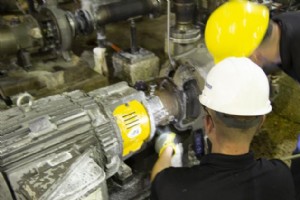
Electric motors are ubiquitous in industrial settings, yet many operators still equate turning speed with reliability. In reality, a motor that starts and runs can still harbor hidden faults that will surface later, causing costly downtime. This guide explains how to identify those hidden failure mo

Today’s maintenance leaders face relentless pressure to deliver uptime, control costs, develop talent, and meet regulatory standards. The role has evolved from simple task execution to steering a mini‑business unit that drives profitability. Organizations that cling to a reactive mindset incur high

According to a 2017 Aberdeen Group study, the manufacturing sector loses more than $50 billion each year to unplanned downtime. Yet many firms still struggle to benchmark maintenance performance and roll out programs that deliver measurable results. A robust maintenance strategy not only cuts downt

Maintenance managers are masters at making existing schedules work, but that does not mean the schedule is optimal. In many facilities, staffing plans are inherited, copied from a neighboring site, or created after production demands are already set. An effective schedule must balance business prio

Pratt & Whitney has announced a substantial investment to expand its military aftermarket services in Oklahoma. The multimillion‑dollar upgrade will enhance existing facilities at the Oklahoma City Air Logistics Complex on Tinker Air Force Base, creating more than 100 new jobs over the coming years.

When maintenance planning lacks structure, storerooms experience erratic parts usage, inflated safety stock, higher expenses, and widespread frustration. An under‑configured Computerized Maintenance Management System (CMMS) can worsen the problem. This article explores how to dismantle silos and fo

As the senior maintenance manager at EPCOR’s Gold Bar wastewater treatment plant in Edmonton, Alberta, I bring 29 years of experience spanning mining, forest products, oil & gas, electric power generation, and utilities. My core responsibilities? Developing and sustaining lean, reliable maintenance

Culture change is among the toughest transformations a plant can undertake. At Conagra’s 45‑year‑old canned‑meat facility in Montrose, Iowa, profit margins are narrow and the maintenance department is often understaffed. Day‑to‑day operations still idolize the “Tarzan” hero who swoops in, fixes a p

Proactive maintenance is the key to preventing equipment failure before it occurs. A well‑structured maintenance schedule empowers plant managers to craft reliable production plans, turning maintenance from a cost center into a strategic advantage. Lack of a Maintenance Plan The core responsibility

Maintenance and reliability often feel like a tug‑of‑war: managers must juggle limited time, budgets, and talent. Turning this chaos into a disciplined, results‑oriented program requires focused planning and a clear roadmap. There is no single “one‑size‑fits‑all” playbook. Every plant, facility, or

Maintenance teams often face tough conversations when they lean heavily on reactive maintenance. Even seasoned professionals view it as an ad‑hoc approach. Yet, when paired strategically with preventive and predictive tactics, reactive maintenance can reduce costs and elevate the overall maintenanc

In most manufacturing plants, maintenance and production teams often find themselves at odds. Yet, both departments are indispensable; one cannot thrive without the other. This article explores how to transform tension into partnership, focusing primarily on maintenance while highlighting parallels

Nearly two decades after the term “big data” entered the lexicon, manufacturers are realizing that the real advantage lies not in sheer volume, but in the relevance and precision of the data they collect. When analytics are tightly aligned with a company’s strategic goals, operations become more ef
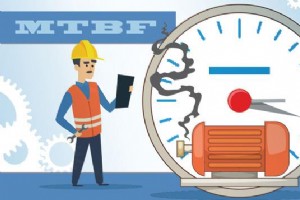
MTBF—Mean Time Between Failures—is a key metric used to anticipate the interval between inherent failures of equipment operating under normal conditions. In this article we cover the calculation, common misconceptions, and actionable ways to enhance MTBF. What Is MTBF? MTBF represents the expected

Autonomous maintenance equips operators with the skills to carry out routine upkeep, driving higher efficiency and stronger overall equipment effectiveness (OEE). Below, we outline how to implement, sustain, and reap the benefits of this transformative strategy. What Is Autonomous Maintenance? In au

MTTR is a key maintenance metric that measures the average time required to diagnose and fix equipment failures, giving insight into a maintenance team’s response efficiency. What Is MTTR? When you hear the phrase “mean time to…,” you’re looking at an average interval between two events. Mean time

Bridging Gaps in MRO Management Managing a maintenance, repair and operations (MRO) supply chain is complex, primarily because it involves multiple departments—finance, procurement, engineering, reliability, and maintenance—each with distinct priorities. When these departments act in silos, decisio

Years ago, I sought approval to add another machinist. My boss cautioned, “If you had twice as many men, they’d stay busy. If you had half, the mill would keep running.” The experiment that followed proved him right: after trimming the maintenance crew, the plant’s reliability rose and output incre
Equipment Maintenance and Repair