


Industrial manufacturing
Equipment Maintenance and Repair


Ludeca Inc., a leading provider of laser alignment and condition‑monitoring solutions, has launched an industry‑focused blog to empower maintenance and reliability professionals. The platform, Ludeca Blog, delivers practical guidance on integrating predictive and preventive maintenance—covering lase
Over the past five decades, maintenance has transitioned from a trade‑only discipline to a core business function that directly influences corporate profitability. Today, top‑tier organizations view maintenance as an integral part of operations, staffed by engineers, planners, and skilled technician

Run‑to‑failure maintenance is a deliberate strategy that only triggers repair when equipment actually breaks. When applied correctly, it can reduce overall maintenance spend while maintaining reliability. Below, we explain when this approach is appropriate, how to plan it, and how a CMMS can streaml
For decades, predictive maintenance has been highlighted as a cornerstone of modern asset management. By continuously monitoring equipment in real‑time—using vibration analysis, thermal imaging, or other sensor‑based techniques—organizations can spot emerging problems before they evolve into costly

What is Preventive Maintenance? Preventive Maintenance (PM) is a proactive strategy that schedules routine service—such as oil changes or component replacements—based on time, mileage, or usage thresholds. By performing these tasks before a failure is likely, PM aims to extend the life of equipment
What is Reactive Maintenance? Reactive maintenance—also known as emergency or breakdown maintenance—is an unplanned response that restores equipment after a failure. Because it is executed on the fly, it often incurs high costs: unexpected production downtime, overtime, expensive call‑outs, and the
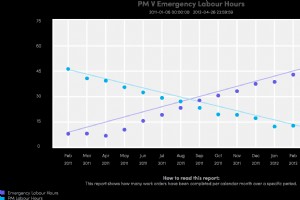
Three Proven Strategies to Restore Control Over Your Preventive Maintenance Program Preventive maintenance (PM) is a systematic schedule of planned actions designed to forestall breakdowns and extend equipment life. Across industries, rigorous PM programs have consistently shown reduced asset deteri
In asset management, a reliability culture is the strategic shift that enables an organization to see the full picture of asset reliability—the probability that equipment operates without failure over a defined period under normal conditions. Bruce Wesner, former Managing Principal at Life Cycle Eng

Guest blog by Julia Scavicchio, formerly of Better Buys. Maintenance has long been the backbone of reliable operations—keeping existing technology running smoothly. In recent years, the industry has embraced a wave of digital transformation, and mobile maintenance sits at the forefront of this shift
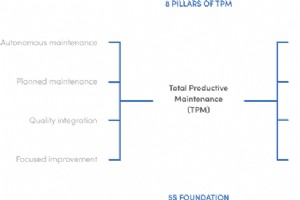
You’ve undoubtedly heard the term “TPM” – short for Total Productive Maintenance – you’ve probably encountered the term in various contexts. As Greg Folts explained on the Rooted in Reliability podcast, the acronym can mean different things, but most people focus on autonomous maintenance. In truth,
Having explored the foundations and pillars of Total Productive Maintenance (TPM), the next challenge is execution. An effective TPM rollout requires a thoughtful, staged approach—otherwise even the best‑intentioned initiatives can falter. Below is a concise, expert‑driven roadmap to help you launch
In our recent Fiix blog, we outlined the practical steps for launching a TPM program grounded in the 5S foundation and eight pillars. But which tools, techniques, and software can help you execute that plan? LeanProduction.com identifies a range of proven methods and solutions that can drive measura
At Fiix, we’ve explored a spectrum of maintenance strategies—most recently, Total Productive Maintenance (TPM). While each maintenance team may adopt a unique approach, the question remains: how does maintenance fit into the broader context of manufacturing? To answer that, let’s turn to lean manufa
If you’ve followed Fiix’s recent posts, you’ll know that maintenance plays a pivotal role in lean manufacturing. Yet lean is just one of many operational philosophies. In this article we dissect Six Sigma, highlight its commonalities with lean, and illustrate where they diverge. What sets lean and S
In this article we explore the obstacles manufacturers face when adopting predictive maintenance (PdM) and show how a robust preventive maintenance (PM) program can smooth the transition. Table of contents Implementing predictive maintenance: a realistic roadmap The distinction between preventive
Maintenance strategies can be complex. While most agree on the categories—reactive, run‑to‑fail, corrective, routine, preventive, condition‑based, predictive, and prescriptive—their real‑world application varies widely. The right choice for an asset isn’t a luxury; it’s a necessity for reliability,
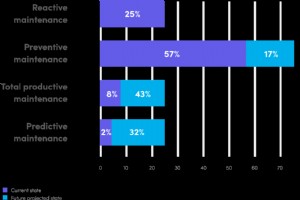
“The best‑laid plans of mice and men often go awry.” If you work in reliability, this sentiment is all too familiar. Every organization vows to streamline its maintenance operations, only to have those plans sidelined by unexpected repairs and breakdowns. Unplanned maintenance backlog remains a perv
A classic anecdote: In 1928, Alexander Fleming, a researcher at St. Mary’s Hospital in London, returned from holiday and observed a Petri dish where mold had inhibited bacterial growth. That discovery led to penicillin, the first true antibiotic, which transformed medicine by treating previously unt
This article details five common energy‑wasting practices in manufacturing maintenance, explains their financial and environmental impact, and offers actionable solutions powered by data‑driven maintenance software. Table of Contents Why Energy Conservation Matters for Manufacturers Top Five Sourc
This article was written by Erik Hupje, Maintenance and Reliability Leader. The Origins of Preventive Maintenance For most of human history, maintenance was reactive: we fixed equipment only after it failed. This First‑Generation approach prevailed until the World War II era. By the 1950s, a shift t
Equipment Maintenance and Repair
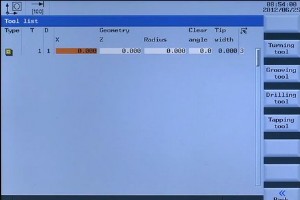
Sinumerik 808D CNC Lathe: Step‑by‑Step Tool Offset Setup – Video Tutorial Part 7
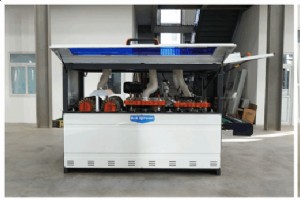
Blue Elephant CNC Sends Sliding Table Saw H45E & Auto Polishing Machine to Malawi
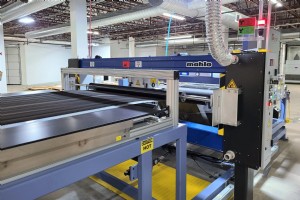
Boston Materials Boosts Carbon Fiber Production with New 60‑inch Roll‑to‑Roll Line

Expert Guide: Maximizing Efficiency with Welding Contact Tips & Nozzles
